
Busy nights and seasons
Holiday pub crawls: checking IDs when guests move between bars
Published November 25, 2026 · 5 sources linked
How does a bar check IDs when a pub crawl comes through?
A crawl wristband or stamp shows only a check at another door, so a bar can check each guest's ID at its own door. North Carolina's rules say a wristband is not a reasonable indication of age at the time of sale, and Washington, DC licenses the organizers of crawls of 200 or more and asks how they will check IDs. DC and Massachusetts law bar selling alcohol to an intoxicated person, including a guest who arrives intoxicated from an earlier stop.
Pub crawls at a glance
- A crawl wristband
- Shows a check at another door, not at this one
- A DC crawl license
- Held by the organizer of a crawl of 200 or more participants
- Guests arriving intoxicated
- DC and Massachusetts law bar selling alcohol to an intoxicated person
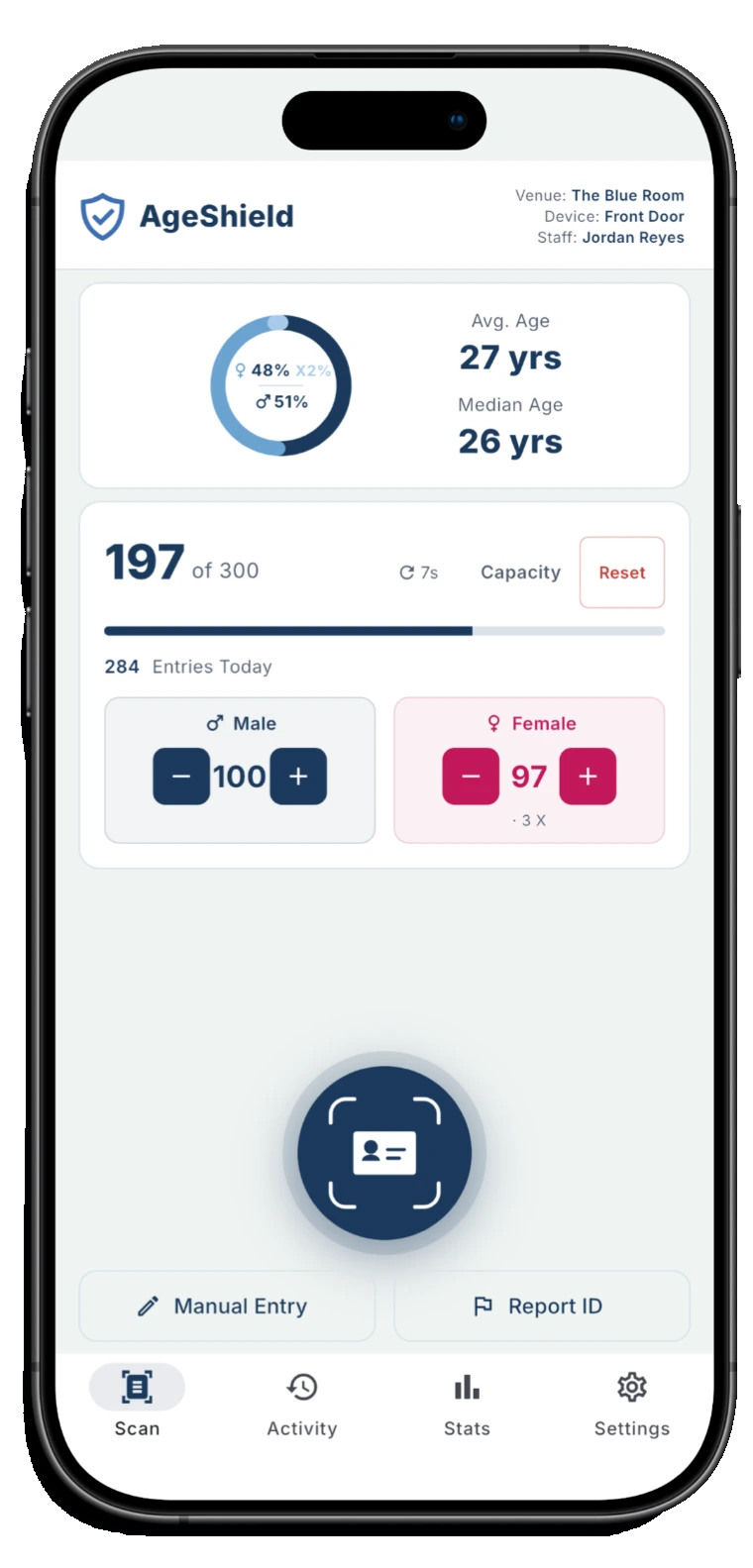
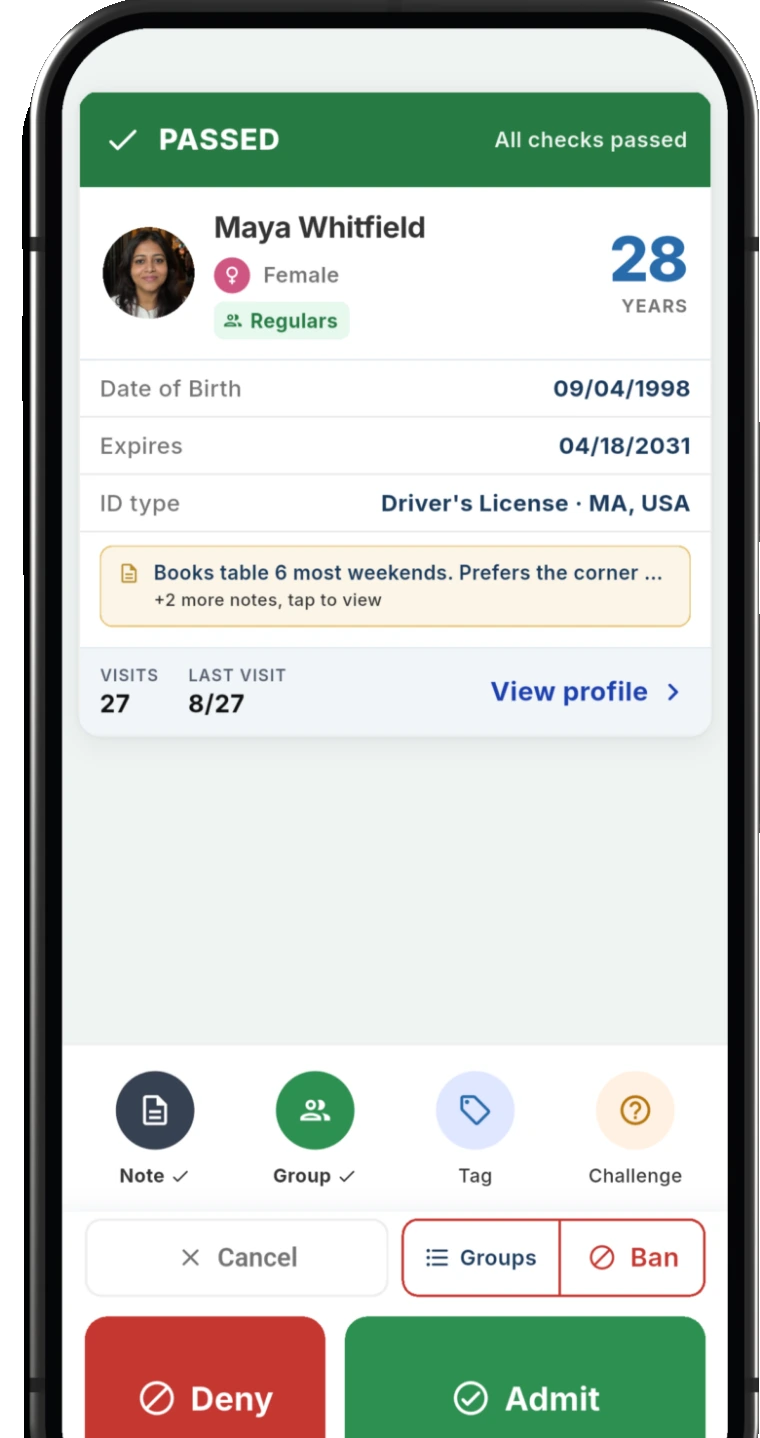
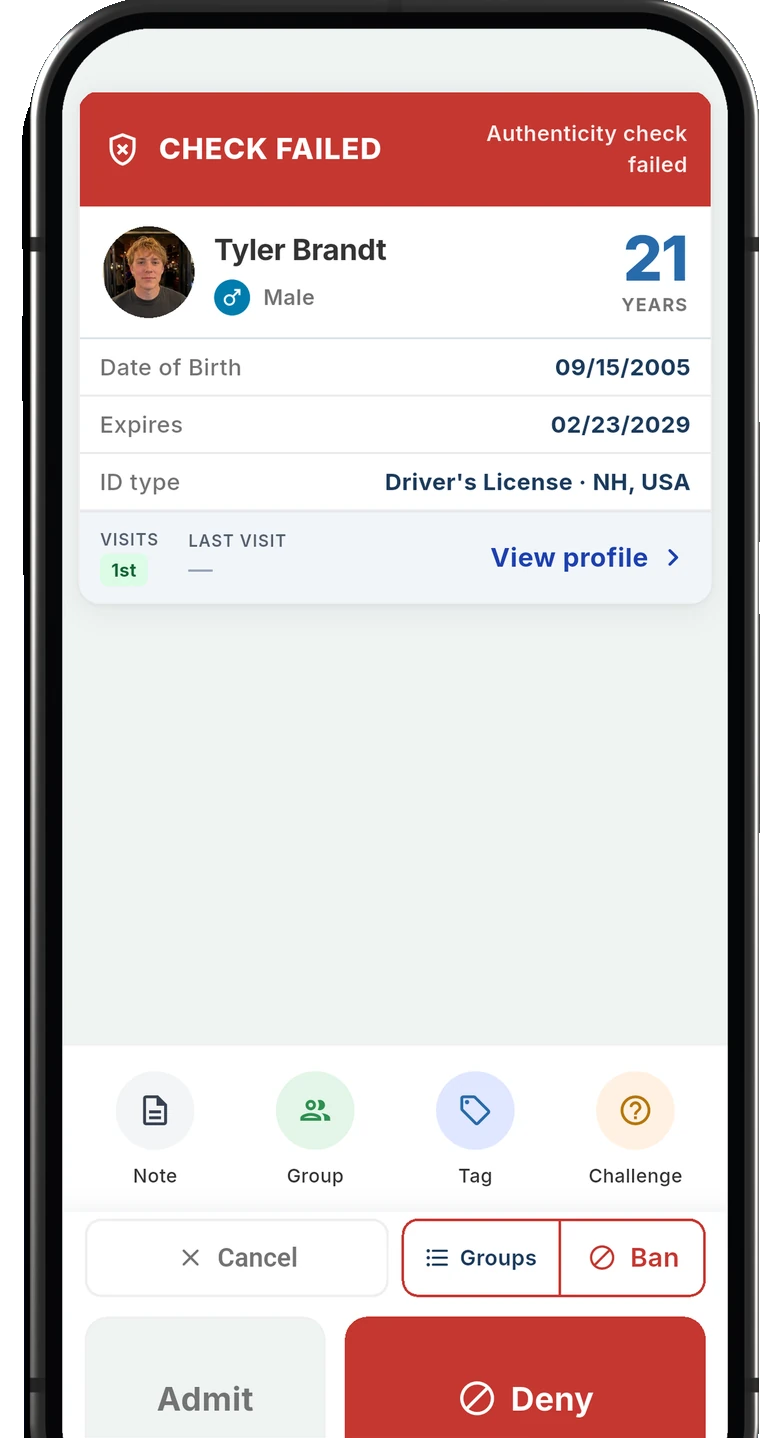
AgeShield ID Scanner
Check every crawl guest at your own door
Three devices scan at once on every plan, so a second lane can open when the crawl arrives. A scanned US or Canadian license or state ID barcode is checked for signs of forgery, and every admit and deny is recorded.
What a crawl changes at the door
A pub crawl takes a group of guests from bar to bar along a route. Washington, DC's alcohol rules define a crawl event as an organized group of establishments within walking distance that take part in promoting an event featuring the sale or service of alcohol during a set time. Where a crawl has a registration point, participants may leave it with a wristband or a stamp that marks them as part of the crawl.
Guests arrive in groups, may already have been drinking and leave for the next stop. If the group arrives in costume, Halloween ID checks covers matching a face to the photo.
23 DCMR 712, Pub crawls (District of Columbia Municipal Regulations)
What a crawl wristband shows
A band from the organizer or a stamp from the previous stop shows a check at a door this venue does not run. It does not show which ID they saw, whether the photo matched or whether the band has changed hands since. The bar re-entry policy covers how bands and stamps get passed on.
North Carolina addresses bands directly. Its ABC Commission's rule says wristbands, ink stamps and similar devices are not reasonable indications of a buyer's age at the time of sale, for the seller's defense in the state's underage sales law. The North Carolina guide covers which IDs that defense rests on.
A venue can give the crawl band one job: telling staff who is on the crawl, for the organizer's drink prices or a set arrival time. Each crawl guest then shows an ID at this door like any other arrival, and the band never stands in for it.
14B NCAC 15B .0201, General guidelines (North Carolina ABC Commission rules, Cornell LII copy)
Where the crawl is licensed: Washington, DC
Washington, DC licenses the organizer of a crawl of 200 or more participants. The organizer files an event form at least 60 days before each crawl, with a security plan that gives the name and number of security staff contracted for the event, a plan for controlling underage drinking and the method for checking participants' identification. The plan is posted at the registration area.
The same rules set duties for each bar on the route. A licensed establishment may not take part in an unlicensed crawl, and checking that the crawl is licensed is its responsibility. It posts a copy of the organizer's license for the whole crawl, and the Board does not approve crawl applications for July 4, October 31 or December 31. The Washington, DC guide covers ID scanning in the District.
23 DCMR 712, Pub crawls (District of Columbia Municipal Regulations)DC Alcoholic Beverage and Cannabis Administration, Pub crawl license
The organizer and the licensee
The organizer sells tickets, sets the route and times and, where a plan is required, describes how participants' IDs will be checked. The bar holds the liquor license. DC law bars a retail licensee from letting an underage or intoxicated guest drink at its establishment, and North Carolina's rules make the permittee responsible for everyone who sells or serves alcohol on its premises.
Before agreeing to be a stop, a venue can settle with the organizer:
- Whether the crawl needs a license where the venue is, and its number
- How many guests are expected and when they reach this stop
- How the organizer checks IDs, and what its band or stamp means
- Who to call on the night about a guest the door turns away
D.C. Code 25-781, Sale to minors or intoxicated persons prohibited14B NCAC 15B .0201, General guidelines (North Carolina ABC Commission rules, Cornell LII copy)
When the group arrives at once
A crawl can reach a stop in a wave, with much of the group arriving at once. If the organizer gives an arrival time for this stop, a second lane can open for the wave and close after it. How long an ID check takes on a busy night covers lanes and line rules.
Each guest hands over their own ID and answers for themselves. A crawl roster identifies ticket buyers, not who is 21 or older. Three devices scan at once on every AgeShield plan, so the second lane has its own phone, and live headcount counts every admit with a warning at capacity. The ID scanner for bars shows the setup at the door.
Leaving for the next stop, and coming back
Crawl guests leave by design, though some return for a coat or because the group split. Where every stop sees the same crawl band, the band cannot show whether a guest was inside this bar earlier. The house re-entry rule decides whether a returning crawl guest walks back in or is checked as a new arrival.
Where returning guests are scanned again, AgeShield's re-entry warning flags the same ID scanned inside the window the venue sets, from 1 minute to 24 hours, and shows how long ago it was last scanned. It warns rather than blocks and requires guest records to be on.
Intoxicated arrivals and refusals
A crawl guest reaches the door after one or more earlier stops. Washington, DC prohibits selling or delivering alcohol to an intoxicated person or anyone who appears to be intoxicated, and a retail licensee there may not let either drink on its premises. Massachusetts says it in one sentence:
No alcoholic beverage shall be sold or delivered on any premises licensed under this chapter to an intoxicated person.
Neither text says anything about where the guest had their earlier drinks. Who decides on a crawl guest who arrives intoxicated belongs in your bar door policy before the night.
Turning away one member of a group can bring the rest of the group to the rope. Use the usual refusal line with that guest rather than the group. Contact the organizer about the participant. How to refuse entry at a bar has lines for each reason. Bars on one route may also want to warn each other about a guest, and whether they can pass on a banned list is a state-law question, covered in can bars share a banned list?.
D.C. Code 25-781, Sale to minors or intoxicated persons prohibitedMassachusetts General Laws, chapter 138, section 69
Where a scan fits on a crawl night
AgeShield checks a crawl guest the same way as anyone else: age against the venue's minimum, expiry and the Banned list. A scanned US or Canadian license or state ID barcode is checked for signs of forgery, and every admit and deny is recorded.
On the Pro plan, staff can tag a visit with an event, such as the crawl. AgeShield does not accept mobile IDs yet, so a crawl guest needs the physical card.
AgeShield ID Scanner
A phone for each lane when the crawl arrives
AgeShield ID Scanner runs on the phones your staff already carry, with three devices scanning at once on every plan. Every crawl guest gets the same checks as any other arrival, and live headcount warns when the room reaches capacity.
Common questions
Does a pub crawl wristband count as proof of age?
North Carolina's ABC Commission says wristbands, ink stamps and similar devices are not reasonable indications of age at the time of sale. A band shows only that someone checked the guest earlier at another door, so a bar can use it to spot crawl guests and still ask each one for an ID.
Who holds the pub crawl license in Washington, DC?
The organizer of a crawl of 200 or more participants. A participating bar may not take part in an unlicensed crawl, is responsible for checking that the crawl is licensed and posts a copy of the organizer's license for the whole crawl.
Can a licensed pub crawl run on New Year's Eve in DC?
No. Washington, DC's Board does not approve pub crawl applications for December 31, or for July 4 or October 31. DC's rules do not require a license for a crawl of fewer than 200 participants.
Can a crawl guest show a digital ID instead of the card?
AgeShield does not accept mobile IDs yet, so a scan needs the physical card. Whether a state's alcohol law accepts a mobile ID as proof of age is set by that state.
Sources
- 23 DCMR 712, Pub crawls (District of Columbia Municipal Regulations)
- 14B NCAC 15B .0201, General guidelines (North Carolina ABC Commission rules, Cornell LII copy)
- DC Alcoholic Beverage and Cannabis Administration, Pub crawl license
- D.C. Code 25-781, Sale to minors or intoxicated persons prohibited
- Massachusetts General Laws, chapter 138, section 69
This page is for informational purposes only and is not a substitute for professional legal advice. We research each rule and link its source, so you can check it against your own venue. Questions are welcome at support@ageshield.bar.
Hosting a stop on a holiday pub crawl?
Tell us what type of venue you run and we'll point you to the published rules we know of that may apply.