
Busy nights and seasons
Halloween ID checks at the door: costumes, masks and fake IDs
Published October 19, 2026 · 2 sources linked
How do you check IDs when guests are in costume?
Costumes hide the details staff use to match a guest to an ID photo, so Halloween calls for a firmer routine than an ordinary weekend night. Masks, hats and sunglasses come off for the check while staff compare the nose, chin, ears and eyes rather than hair or makeup. A quick question from the ID can then expose a real card that belongs to someone else.
The Halloween check at a glance
- Halloween 2026
- Saturday, October 31
- Off for the check
- Masks, hats, hoods and sunglasses
- Match the face by
- Nose, chin, ears and eyes
- Do not rely on
- Hair, eye color and makeup
- If still unsure
- Ask a question from the ID
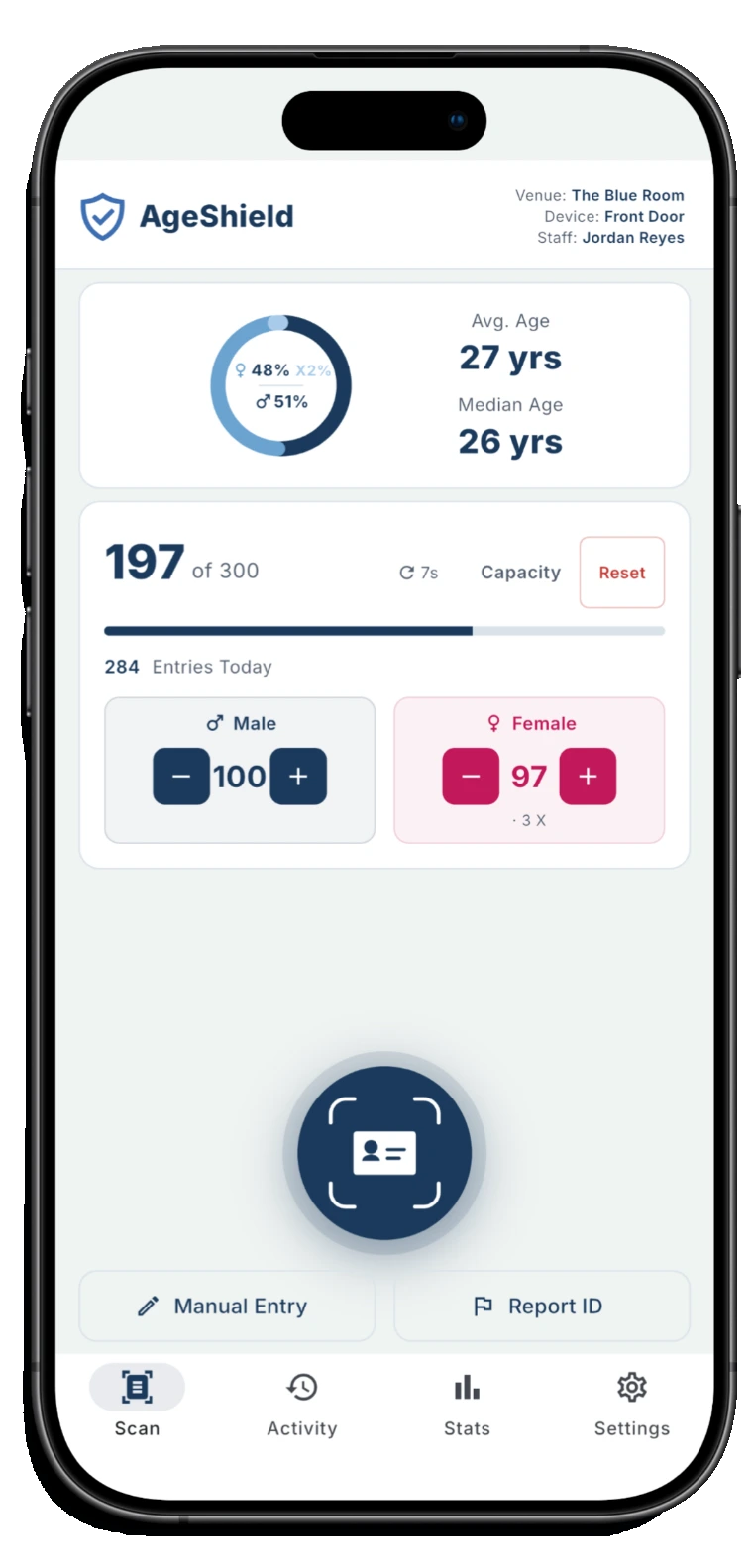
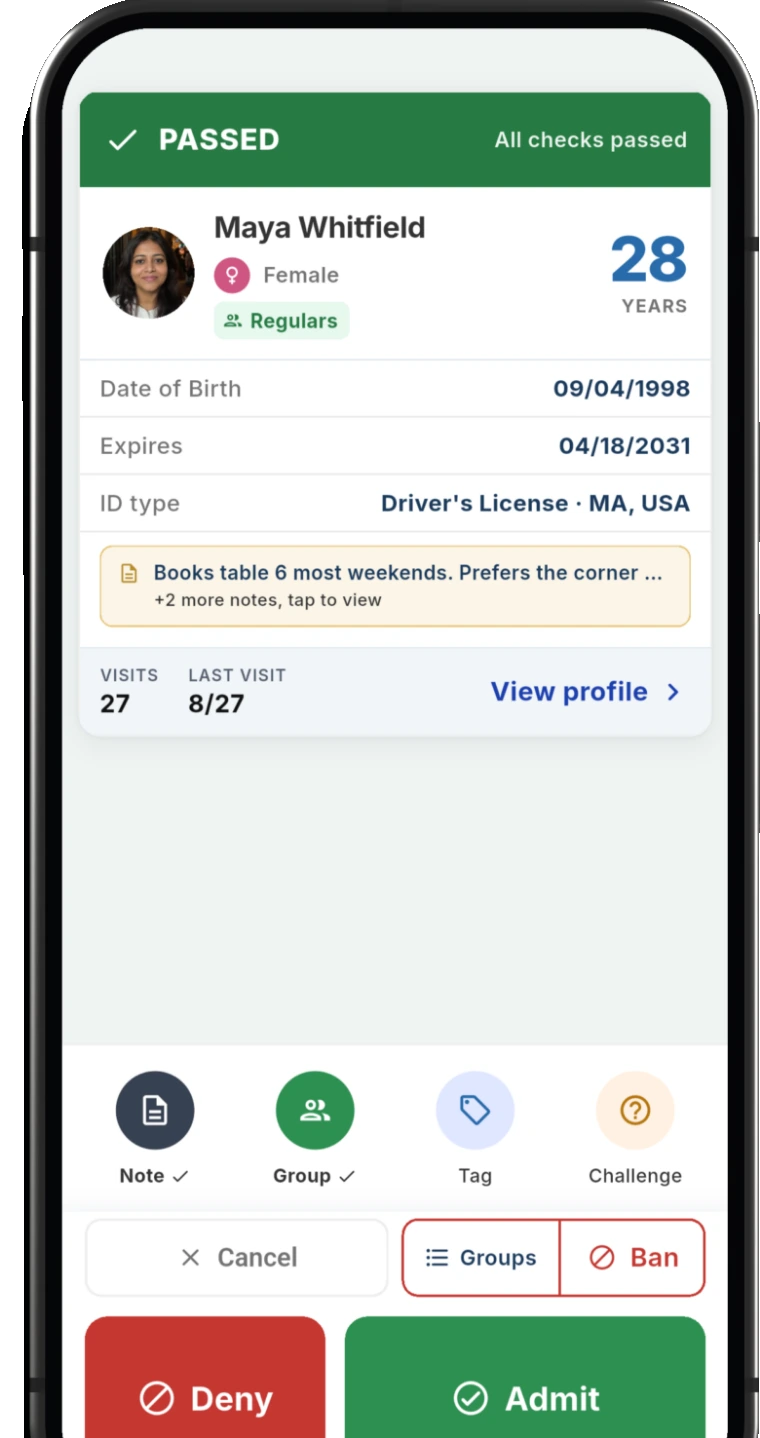
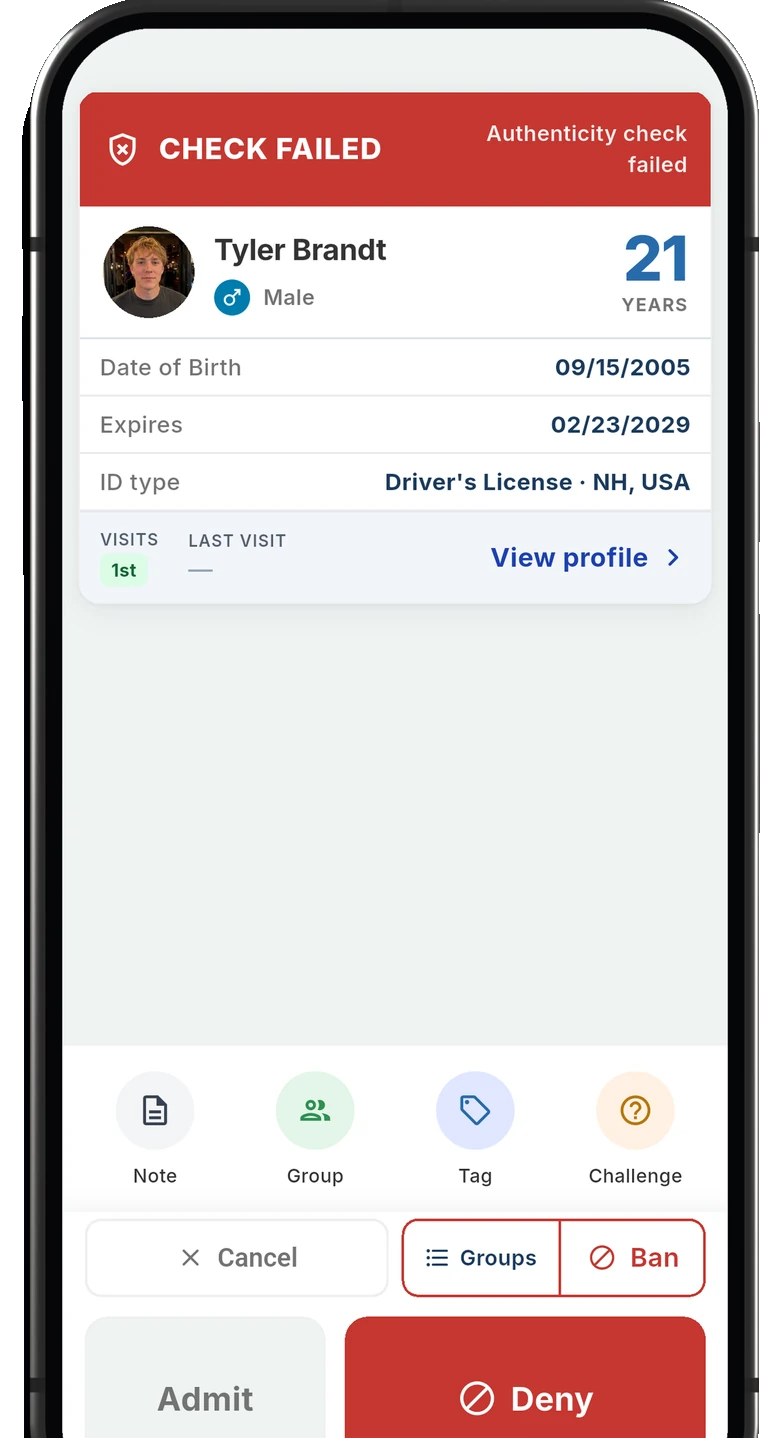
AgeShield ID Scanner
A second scanning lane for the busiest night
Every plan includes three devices, so a second checker can scan on their own phone. Scans of US and Canadian licenses and state IDs check the barcode for signs of forgery, and every scan is kept as a record of the night.
Why Halloween is different at the door
On an ordinary night, door staff match a guest to the ID photo partly by hair, eye color, build and height. On Halloween, wigs, colored contacts, face paint, masks and platform shoes can change every one of those. In 2026, Halloween falls on Saturday, October 31, so the costumes arrive on a weekend night.
That matters most for a borrowed ID: a real license or ID card that belongs to an older friend or sibling. A barcode check reads the card, not the person holding it, so the photo match is the check that can catch it. California's alcohol regulator describes its four-step ID check as a way to spot false or borrowed identification.
California Department of Alcoholic Beverage Control, Checking Identification
A door routine for Halloween night
It is the usual check in a fixed order, with one addition: the face is uncovered before the photo comparison. Running it the same way for every guest keeps the line moving and makes a refusal less personal.
Say the rule before the line forms
Post it at the door and in the event listing: masks, hats and sunglasses come off for the ID check. Guests who read it in advance arrive ready for it.
Uncover the face
Ask the guest to remove a mask, hat, hood or sunglasses for the few seconds the check takes. The costume goes straight back on afterwards.
Take the card in hand
Ask for the ID out of the wallet or card holder, as the California and Oregon alcohol regulators both advise, so staff can feel it and turn it over.
Check the card
Scan it or read it: the date of birth, the expiry and any sign the card was altered. Our guide on how to spot a fake ID covers what to feel and look for.
Match the face, not the costume
Compare the nose, chin, ears and eyes with the photo. Hair, eye color and makeup can all be part of a costume tonight, and platform shoes change height.
Ask when unsure
Ask a question from the ID when the photo match leaves doubt. A wrong or hesitant answer means the card alone is not enough to get in.
Minors can alter their hairstyles, eye makeup, and eye color or grow a beard/mustache. Therefore, focus on the shape of their nose, chin, ears and eyes. These features do not change.
Face paint or prosthetics that cover the face are the hard case, because they hide shape as well as color. A routine can treat them like a mask: if staff cannot make the match, the card alone is not enough that night.
California Department of Alcoholic Beverage Control, Checking IdentificationOregon Liquor and Cannabis Commission, Tips for Checking ID (Responsible Vendor Program)
Questions that catch a borrowed ID
Someone carrying a friend's ID may have memorized the birth date, so the better questions are details that take more rehearsing. The California and Oregon alcohol regulators publish questions like these for staff who check IDs.
- How do you spell your middle name?
- What is the ZIP code on your ID?
- What month were you born? A number instead of the name of the month is a warning sign.
- How old are you? Then check the answer against the date of birth.
- Do you have a second ID? Oregon's regulator notes that people with fake IDs rarely carry a backup.
Ask one guest at a time, so a friend in the group cannot answer for them. When a group hands over a stack of IDs together, check each card against its own face.
AgeShield checks the barcode on US and Canadian licenses and state IDs for signs of forgery, but no barcode check catches a real ID that belongs to someone else. The app's challenge questions give staff a question from the ID and reveal the answer for the questions it can, so staff know straight away whether the guest got it right. Whether the guest passed, failed or skipped it is saved with the visit.
Oregon Liquor and Cannabis Commission, Tips for Checking ID (Responsible Vendor Program)California Department of Alcoholic Beverage Control, Checking Identification
Staffing and the line
Unmasking and an extra question add seconds to every check, and on a busy night those seconds become the line. A second lane at the peak keeps the line moving without shortening the check itself.
A second lane needs a second checker and a phone. AgeShield runs on staff phones with three devices on all plans, and the ID scanner app for bars and clubs keeps scanning when the signal drops, then syncs once the phone is back online. Its live headcount counts every admit and warns at capacity.
Give the unmasking a place: a spot just past the rope and out of the line, where a guest can take off a mask without an audience. Before doors open, walk the team through the order of the check, the questions and what to do when a guest will not unmask. The door card to download puts all three on one page.
Re-entry after a costume change
Guests may step out to smoke, change costumes or come back later in a different look. A hand stamp or wristband tells staff the guest was checked, and a guest with neither goes through the full check again. A new costume does not change the face, so a re-check matches the face to the photo again rather than to the outfit staff remember.
The opposite risk is a guest who got in and then hands the ID to a friend outside. Once a venue sets a re-entry window in the hub, from 1 minute to 24 hours, AgeShield shows an amber warning when the same ID is scanned again inside it, with how long ago it was last scanned. It is a warning rather than a block and needs guest records on.
When a guest will not unmask
A calm sequence staff can follow:
- First, check that it is a costume. For a face covering worn for religious or medical reasons, call the manager rather than applying the Halloween rule.
- Explain that every guest in a mask is asked tonight: the check needs a face to match the photo.
- Offer a spot to the side where the guest can unmask out of the line and put the costume back together afterwards.
- If the answer is still no, hand the ID back and say the guest cannot come in tonight. Keep it about the house rule.
- Do not argue and do not call the ID fake. A refusal to unmask says nothing about the card.
Writing the Halloween rule into your bar door policy gives staff a rule to point to at the rope instead of a judgment call. If the card was already scanned, a deny tap in AgeShield records the decision.
Download the one-page door card
Halloween door card
The check in order, the questions to ask and what to do when a guest will not unmask, on one page for the door.
Common questions
How do bars check IDs when guests wear masks on Halloween?
A door routine can ask the guest to step aside and remove the mask, hat or sunglasses for the few seconds the photo comparison takes, then the costume goes back on. Staff then compare the shape of the nose, chin, ears and eyes with the photo. Posting the rule at the door and in the event listing means guests arrive ready for it.
Do colored contacts and face paint make an ID photo harder to match?
Yes. Contacts change eye color and makeup and wigs change how a face looks at a glance, so staff compare the shape of the nose, chin, ears and eyes, which California's alcohol regulator notes do not change. When face paint or prosthetics hide that shape, a routine can treat them like a mask.
Will an ID scanner catch a borrowed ID on Halloween?
Not on its own. A scanner reads the card and can check its barcode, but a real ID that belongs to someone else passes that check. The face match and a question from the ID, such as the middle name or the ZIP code, are the checks that can catch it.
Do staff check an ID again when a guest comes back in a different costume?
A hand stamp or wristband tells staff the guest was already checked, and a guest with neither can go through the full check again. On a re-check, staff match the face to the photo rather than to the outfit they remember.
Sources
Getting the door ready for Halloween weekend?
Tell us how your door runs on a busy night and we'll answer by email, or set up scanning on your own phones first with the free trial.