
Records, privacy and banned lists
Can bars share a banned list between venues?
Published October 27, 2026 · 22 sources linked
The short answer
It depends on the state and on where the list's details came from. Utah, Montana and Rhode Island limit information from an ID scan to checking age, and New York, Pennsylvania, New Jersey, Connecticut and Hawaii bar passing scan information to a third party. Most of these rules are about what a scan reads, while Illinois, Arizona, New Hampshire and Utah also reach details taken from the ID by other means.
The state rules at a glance
- Scan information limited to checking age
- Including Utah, Montana and Rhode Island
- Scan information barred from going to a third party
- Including New York, Pennsylvania, New Jersey, Connecticut and Hawaii
- License details kept electronically
- A misdemeanor in New Hampshire, unless the state authorizes it
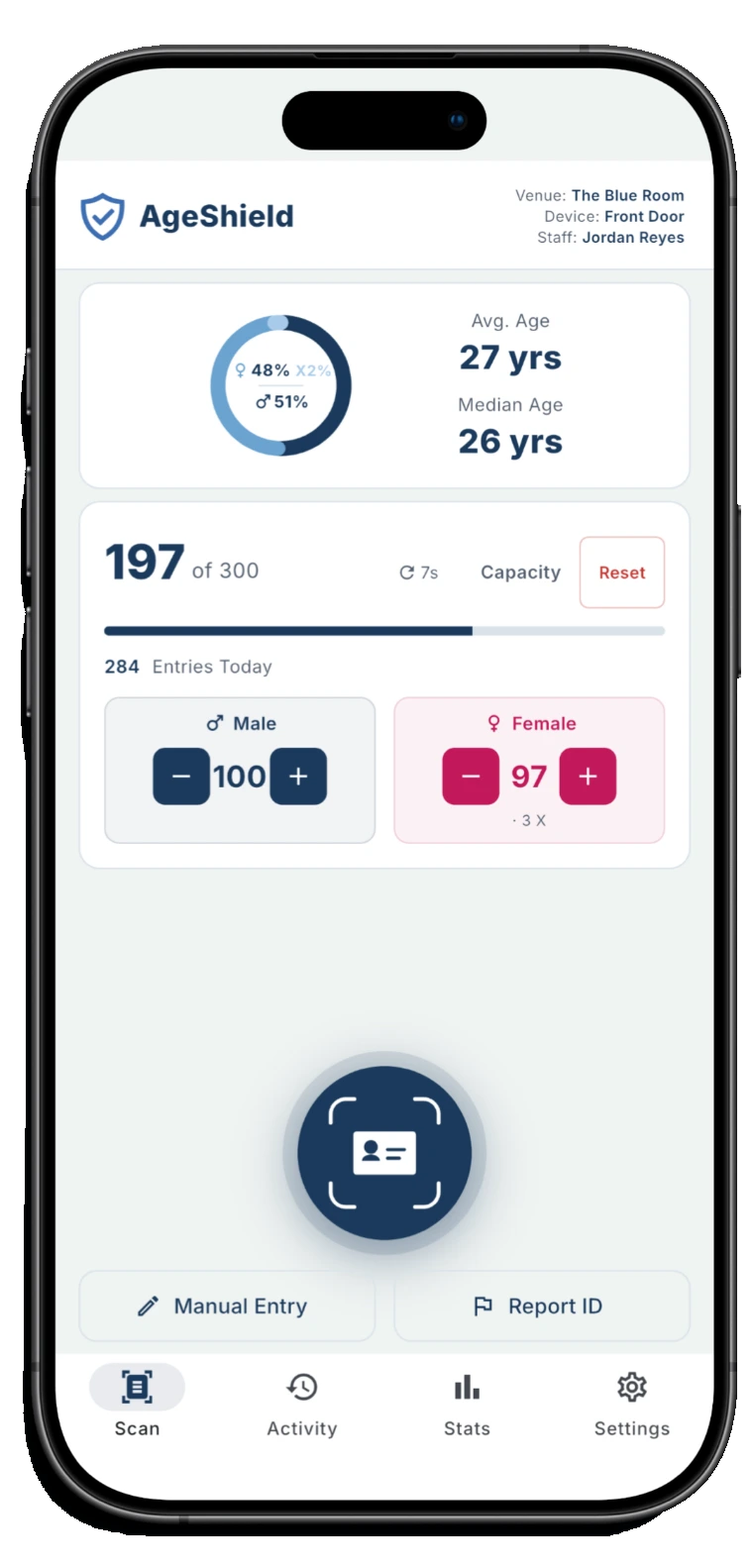
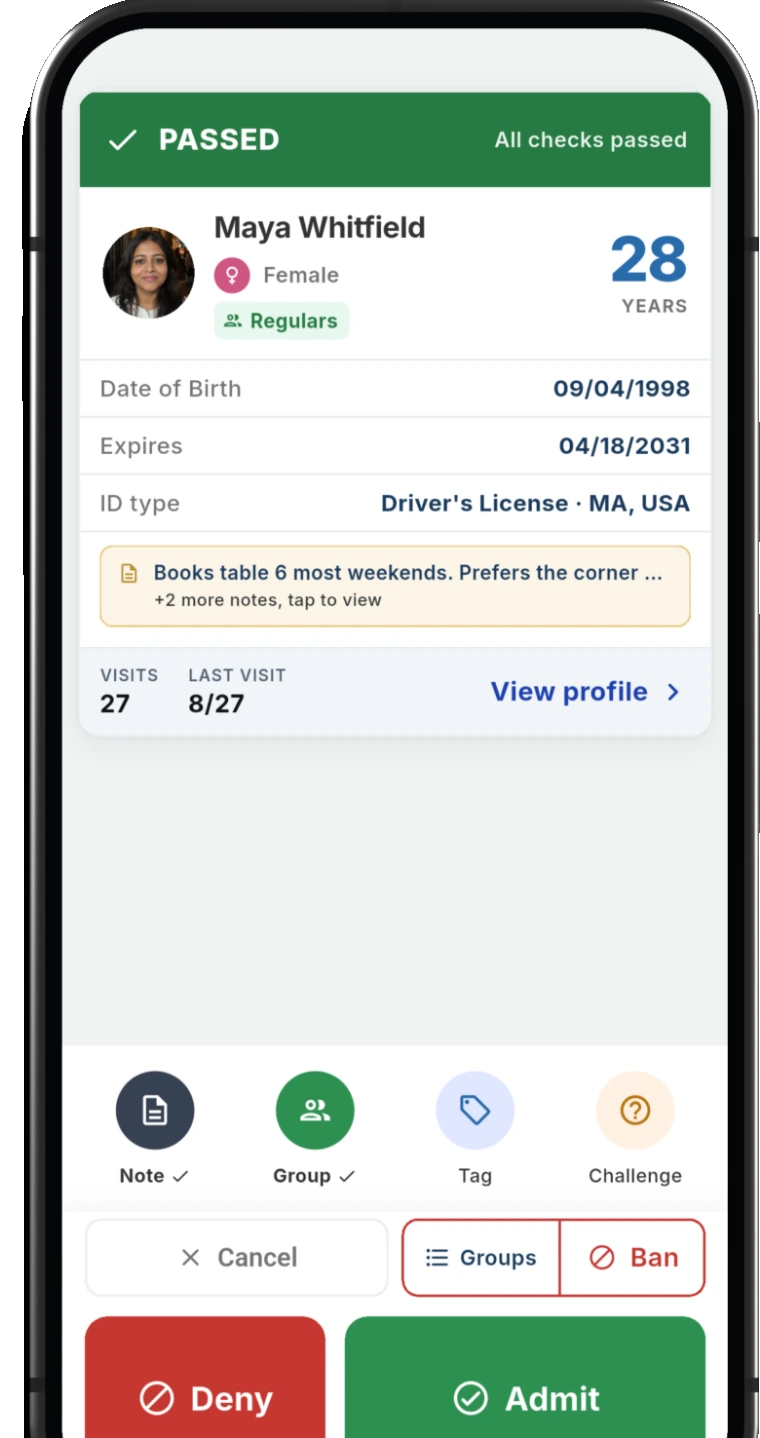
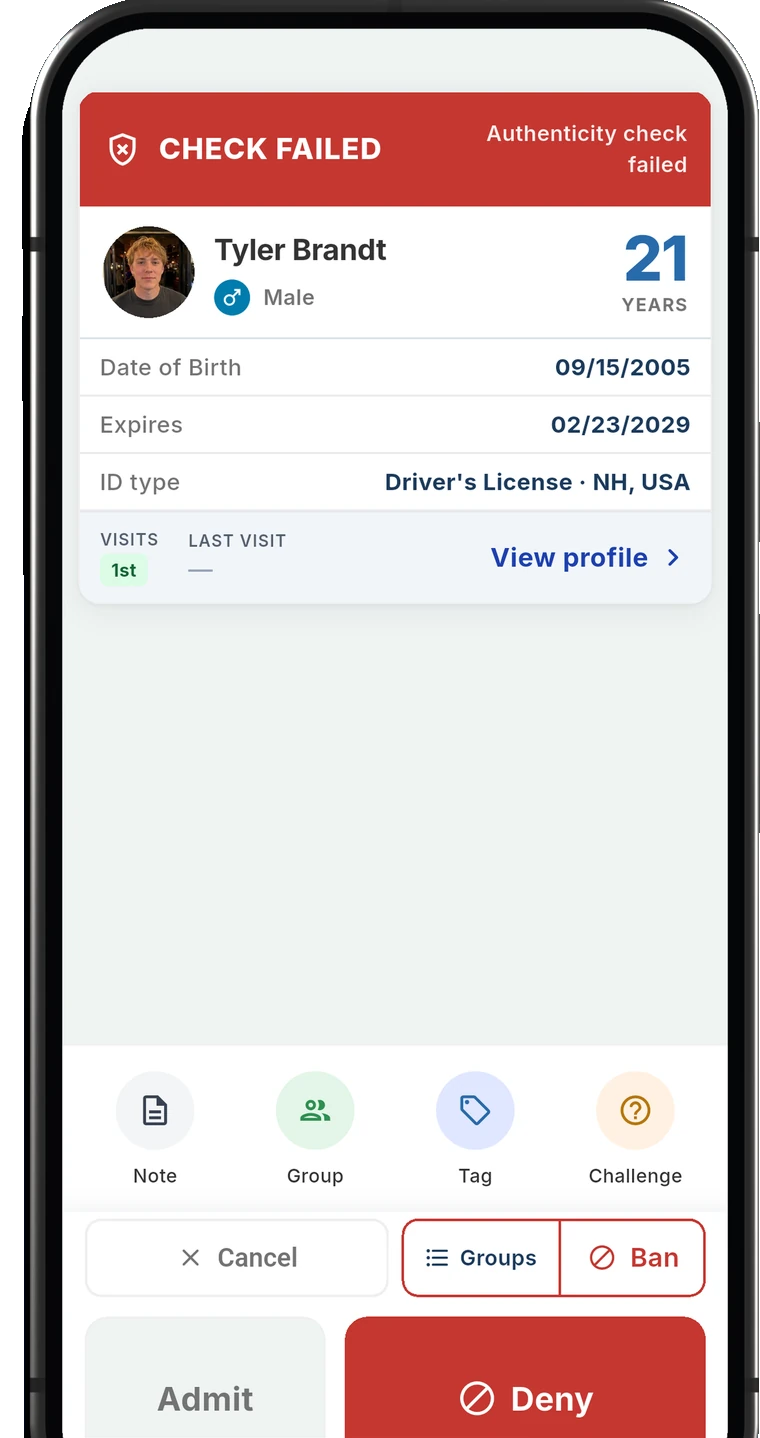
AgeShield ID Scanner
One Banned list across your own venues
A guest on your Banned list comes up as BANNED with Do not admit, and a ban can cover every venue you own. You choose what each scan keeps.
What decides whether a banned list can be shared
None of the state laws in the table below names a banned list. Two rules decide the question instead: what a venue may use information from an ID scan for, and whether it may pass that information to anyone else.
A banned list built from scans keeps scan information for another purpose, and sending it to another venue passes it on. How long should a bar ban last? covers the ban itself, and what a bar sees when it scans your ID covers what a scan keeps.
What state laws say about using and sharing scan data
- State
- Utah
- Using it beyond the check
- Bars, taverns and restaurants may use or keep information from the required check only to verify age, for seven calendar days.
- Passing it to others
- No disclosure except as the state's alcohol law provides.
- State
- Montana
- Using it beyond the check
- A business scanning to check age for an age-restricted sale uses the data only to determine age and deletes it within 180 days.
- Passing it to others
- No transfer or sale to another party.
- State
- Rhode Island
- Using it beyond the check
- Businesses may read six details from a license only to determine age, and may not store, record or retain them.
- Passing it to others
- The section bars keeping the information and does not mention disclosure.
- State
- Nebraska
- Using it beyond the check
- Alcohol, lottery and tobacco retailers may store only the age and ID number, for use by law enforcement alone.
- Passing it to others
- No sharing with any other person or entity. Trading, selling or sharing license data is a felony.
- State
- Ohio
- Using it beyond the check
- Permit holders may use scan information only for the purposes of the state's scan defense.
- Passing it to others
- No sale or dissemination to any third party, except on a court order or where another section allows.
- State
- New York
- Using it beyond the check
- Licensees may use information recorded from a scan only for the purposes of the state's scan defense.
- Passing it to others
- No resale or dissemination to any third person, including for marketing, except on a court-ordered subpoena or where another statute specifically authorizes it.
- State
- Connecticut
- Using it beyond the check
- Scanning devices may be used only for the purposes the statute lists, such as checking an ID before an alcohol sale.
- Passing it to others
- No sale or dissemination to any third party for any purpose, except on a court order.
- State
- Pennsylvania
- Using it beyond the check
- The scanning section sets no separate use limit.
- Passing it to others
- No sale or dissemination to any third party, except to the state's liquor regulators or law enforcement, or on a court order.
- State
- New Jersey
- Using it beyond the check
- A retail establishment may not keep what age or authenticity scans collect.
- Passing it to others
- No sale or dissemination to a third party for any purpose, apart from listed fraud and legal exceptions.
- State
- Hawaii
- Using it beyond the check
- A business may scan when it reasonably doubts a customer's age, and may not keep the information.
- Passing it to others
- No sale or dissemination to a third party for any purpose, apart from listed exceptions.
- State
- Oregon
- Using it beyond the check
- A business that scans a license to verify age may not store the personal information.
- Passing it to others
- No sale or sharing.
- State
- Florida
- Using it beyond the check
- A business that scans a license to verify age may not store the personal information. A customer may consent to a scan that stores it, once told what is collected and why.
- Passing it to others
- No sale or sharing of information from an age-check scan.
- State
- Virginia
- Using it beyond the check
- A merchant may not keep information from a scan made only to check age.
- Passing it to others
- No sale or dissemination to a third party for marketing, advertising or promotion.
- State
- Illinois
- Using it beyond the check
- Information from a license or state ID shown to identify the holder or show their age is kept no longer than strictly necessary and used only to identify them or complete the transaction, unless they give express permission.
- Passing it to others
- No sale, lease or provision to a third party, except for detecting or prosecuting crime or fraud, or where law requires it.
- State
- Arizona
- Using it beyond the check
- A retailer may keep and use license or state ID information only to verify age, establish identity, confirm driving privileges or disclose it to listed recipients.
- Passing it to others
- The listed recipients include a business, to detect or reduce the risk of fraud, abuse, identity theft or other crimes. Otherwise, only law enforcement, for an investigation.
- State
- Texas
- Using it beyond the check
- Information read under the alcohol code's scanning section may not be retained. Compiling or maintaining a database of electronically readable license data is a separate offense, with listed exceptions.
- Passing it to others
- Information read under that section may not be marketed in any manner.
- State
- New Hampshire
- Using it beyond the check
- Knowingly scanning, recording or storing license details electronically is a misdemeanor unless the state authorizes it. Alcohol and tobacco licensees may scan to check age without storing identifying details.
- Passing it to others
- Details from the face of a license may pass to another person in non-electronic form, with the holder's consent unless it goes to law enforcement.
- State
- Vermont
- Using it beyond the check
- No one may compile or maintain a database of electronically readable license data, except for law enforcement or government purposes or to prevent fraud, abuse or other crime.
- Passing it to others
- The section does not mention passing it on, or say whether a banned list counts as a database.
Each state guide covers that state's other ID scanning rules.
Utah Admin. Code R82-4-101Utah Code 32B-1-407Mont. Code Ann. 16-3-313R.I. Gen. Laws 31-10-26Neb. Rev. Stat. 60-4,111.01Ohio Rev. Code 4301.61N.Y. Alco. Bev. Cont. Law 65-bConn. Gen. Stat. 30-8647 P.S. 4-495N.J.S.A. 56:11-54 (P.L.2017, c.124)HRS 487J-6ORS 807.750Fla. Stat. 322.143Va. Code 59.1-443.3625 ILCS 5/6-117.115 ILCS 335/14DA.R.S. 44-7701Tex. Alco. Bev. Code 109.61Tex. Transp. Code 521.126RSA 263:12, XRSA 179:8, III23 V.S.A. § 7(c)
Read by a scan, or taken down by hand
Of the 18 laws in the table, 14 are written about what a scan or swipe reads from the card: the barcode, the magnetic stripe or other machine-readable data. Four reach further.
- Illinois covers information obtained from a license or state ID, and for a state ID that includes the text printed on its face
- Arizona covers information from a customer's driver's license or other state-issued ID
- New Hampshire bars recording or storing license details in any electronic form
- Utah's limit also covers the details staff write down when the device cannot verify the ID
625 ILCS 5/6-117.115 ILCS 335/14DA.R.S. 44-7701RSA 263:12, XUtah Admin. Code R82-4-101
Exceptions to the sharing rules
Most sharing rules in the table speak of a third party, a third person, another party or any other person or entity, and some leave narrow openings. Pennsylvania allows release to the state's liquor regulators and law enforcement, and New York, Ohio, Connecticut and Pennsylvania allow release on a court order or subpoena. Illinois allows a transfer for detecting or prosecuting crime or fraud, and Arizona a disclosure to a business to detect or reduce the risk of fraud, abuse, identity theft or other crimes.
47 P.S. 4-495N.Y. Alco. Bev. Cont. Law 65-bOhio Rev. Code 4301.61Conn. Gen. Stat. 30-86625 ILCS 5/6-117.1A.R.S. 44-7701
Where the guest's consent changes the answer
Illinois's use limits do not apply where the person gave express permission for that use. Florida lets a customer agree to a scan that collects and stores personal information once told what is collected and why, and a customer who declines can give the details by hand instead. Hawaii, Oregon and Virginia go the other way: any waiver of their scanning law is void.
625 ILCS 5/6-117.1Fla. Stat. 322.143HRS 487J-6ORS 807.750Va. Code 59.1-443.3
How AgeShield handles a Banned list
In AgeShield, a guest on the venue's Banned list, or in a group set to deny entry, comes up as BANNED with Do not admit. A ban can cover one venue or all of the owner's venues, and the result then reads "Do not admit · all venues". Banned, VIP and Regulars lists come with every plan, and custom lists that block entry are a Pro feature.
A list entry can come from a scan or be entered by staff. The app recognizes a banned guest from a one-way code of the ID number, and the full number is never stored. A banned guest's details are kept while the ban lasts, outside the venue's normal retention window.
At the strictest privacy settings, bans can no longer be added from a scan, banned and group alerts stop firing at the door and the Ban List becomes a manual lookup. Guest records are not shared between the owner's venues either. Scanning, the fake ID check and the underage and expired alerts keep working.
AgeShield ID Scanner
Where AgeShield fits a Banned list
AgeShield checks each guest against the venue's Banned list and shows BANNED with Do not admit, and a ban can cover all of an owner's venues. Owners choose what each scan keeps and for how long, and at the strictest settings the Ban List becomes a manual lookup that no scan adds to.
Common questions
Can a bar share its banned list with other bars?
Where the list holds details from ID scans, several states limit it. New York, Pennsylvania, New Jersey, Connecticut, Hawaii, Ohio and Illinois bar passing scan information to a third party, with narrow exceptions, Montana bars transferring or selling it to another party, Oregon bars sharing it and Nebraska bars sharing it with any other person or entity.
Is it legal to keep a banned list built from ID scans?
It depends on the state. Utah, Montana and Rhode Island limit scan information to checking age, Rhode Island, Hawaii, Oregon, New Jersey and Virginia do not allow information from an age-check scan to be kept, and New Hampshire makes keeping license details electronically a misdemeanor unless the state authorizes it.
Do these laws cover a banned list typed in by hand?
Most of them are written about what a scan reads. Illinois, Arizona and Utah also cover details taken from the ID by other means, and New Hampshire bars recording license details in any electronic form.
Can a guest's consent allow a venue to share scan data?
In Illinois, the use limits do not apply where the person gave express permission for that use. Florida's consent rule covers collecting and storing scan data but not sharing it, and Hawaii, Oregon and Virginia make any waiver of their scanning law void.
Sources
- Utah Admin. Code R82-4-101
- Utah Code 32B-1-407
- Mont. Code Ann. 16-3-313
- R.I. Gen. Laws 31-10-26
- Neb. Rev. Stat. 60-4,111.01
- Ohio Rev. Code 4301.61
- N.Y. Alco. Bev. Cont. Law 65-b
- Conn. Gen. Stat. 30-86
- 47 P.S. 4-495
- N.J.S.A. 56:11-54 (P.L.2017, c.124)
- HRS 487J-6
- ORS 807.750
- Fla. Stat. 322.143
- Va. Code 59.1-443.3
- 625 ILCS 5/6-117.1
- 15 ILCS 335/14D
- A.R.S. 44-7701
- Tex. Alco. Bev. Code 109.61
- Tex. Transp. Code 521.126
- RSA 263:12, X
- RSA 179:8, III
- 23 V.S.A. § 7(c)
This page is for informational purposes only and is not a substitute for professional legal advice. We research each rule and link its source, so you can check it against your own venue. Questions are welcome at support@ageshield.bar.
Still unsure what your state says about banned lists?
Tell us what type of venue you run and we'll point you to the published rules we know of that may apply.