
Records, privacy and banned lists
How long should a bar ban last?
Published October 27, 2026 · 2 sources linked
The short answer
As long as the venue's own ban policy says, with each length tied to what the guest did. Our example policy sets 30 days for refusing to leave or abusing staff, six months to a year for theft or a fake ID and an indefinite ban, reviewed after a year, for violence, threats or weapons. The same policy says who can ban, how the guest is told and how a ban ends.
A ban policy at a glance
- How lengths are set
- By behavior, in levels, each ban with an end date or a review date
- Who decides
- Named by role, with long and indefinite bans confirmed by the owner or general manager
- What each ban records
- The date, what the guest did, who decided, the level and when it ends
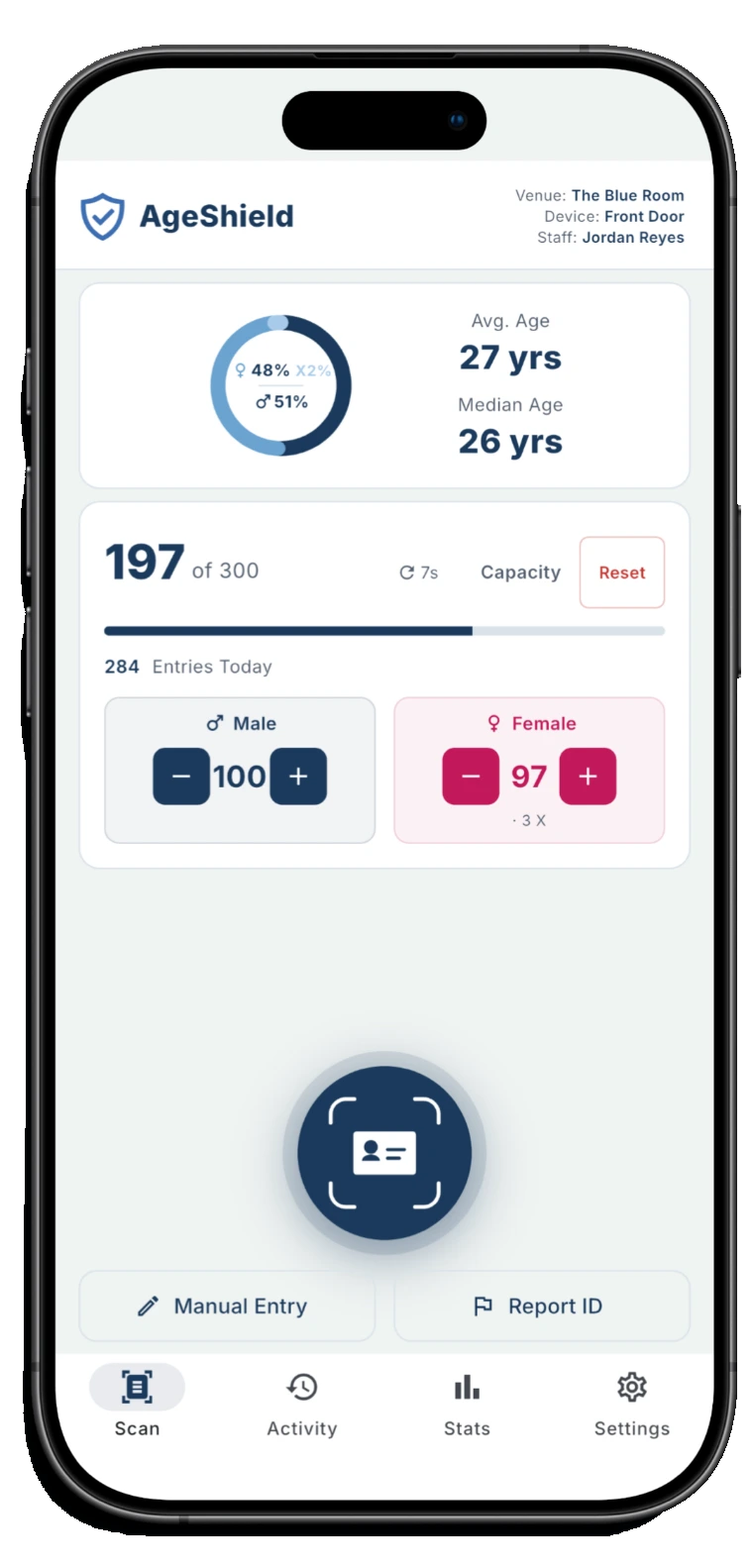
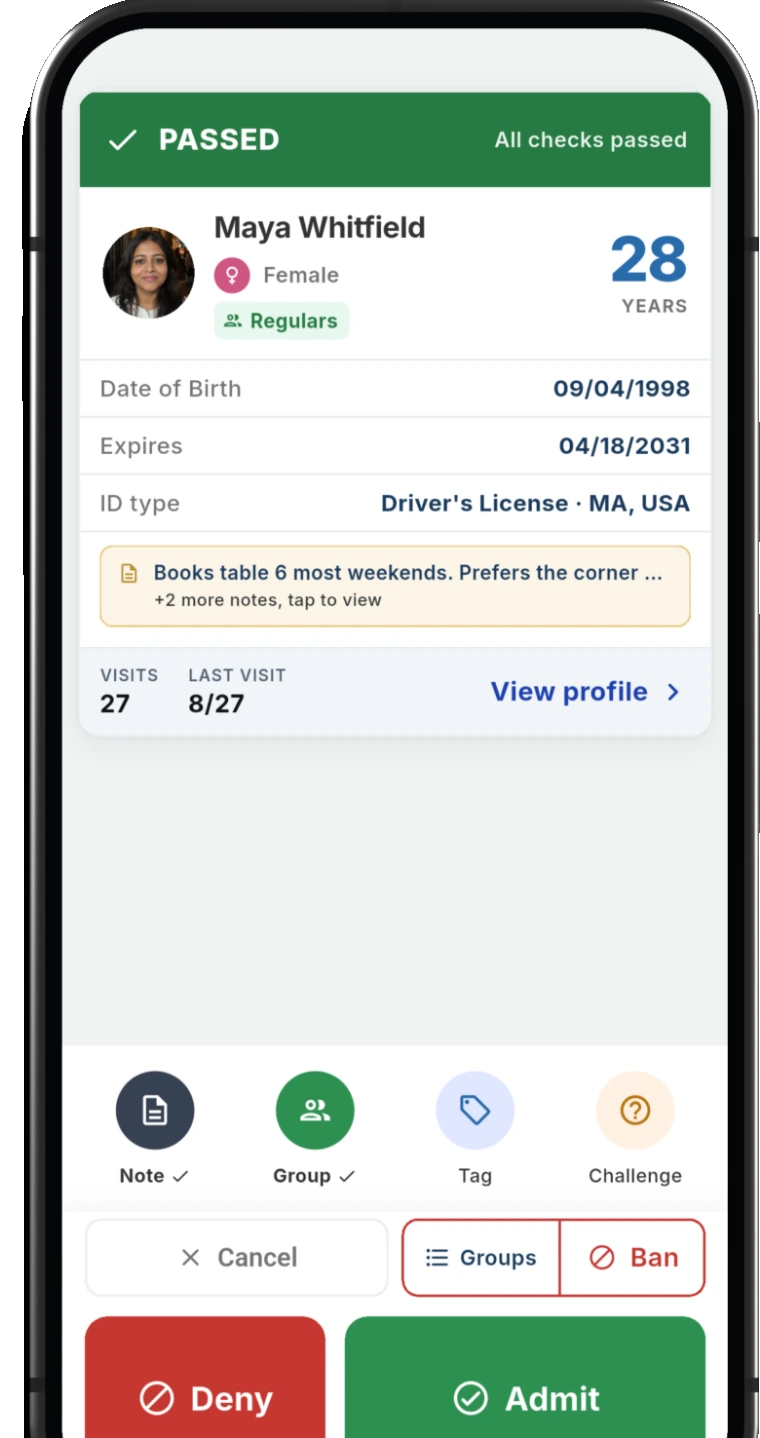
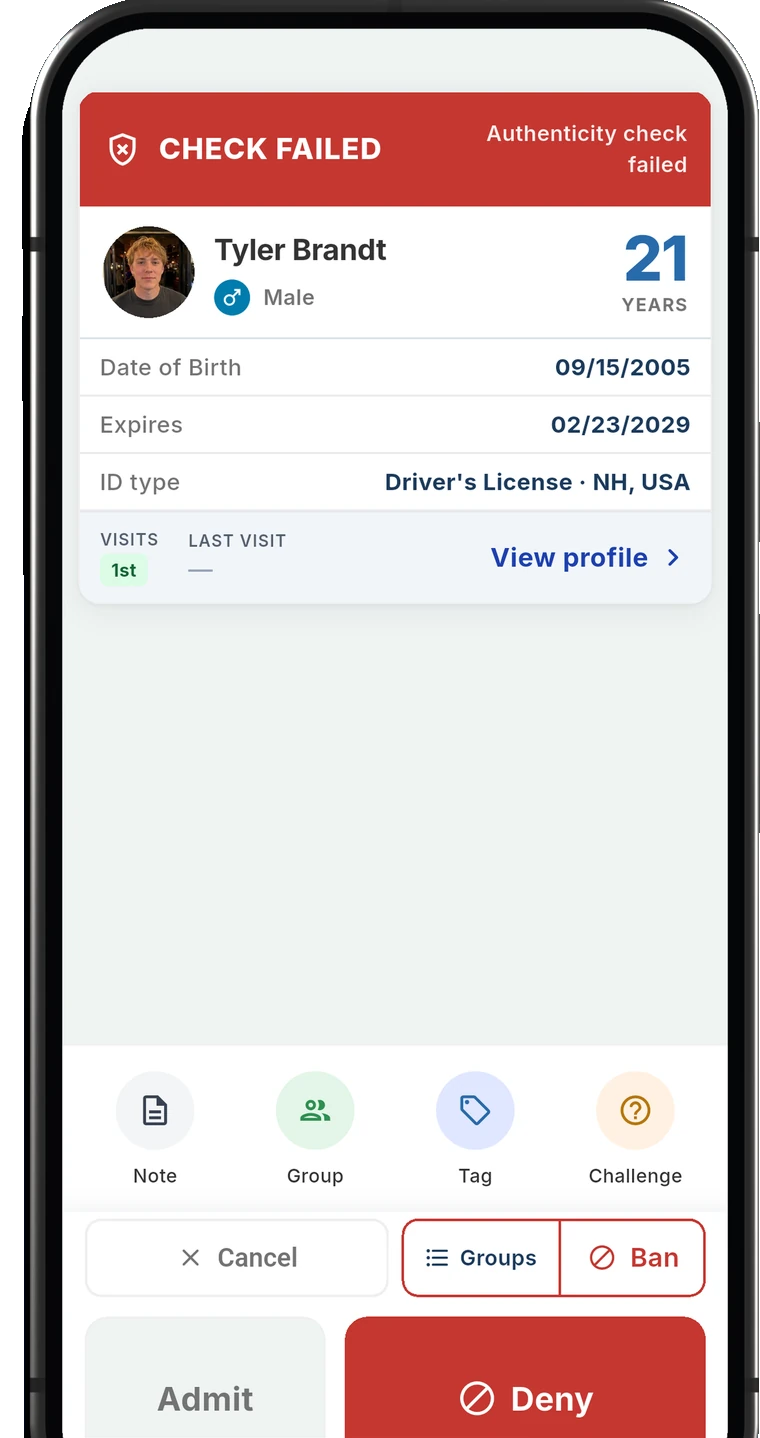
AgeShield ID Scanner
A ban the door sees on the next scan
The Banned list is on every phone, and a guest on it comes up as BANNED with Do not admit. Letting a banned guest in stays off until the owner switches it on, and every override is saved with a reason.
What a ban policy decides
At the door, a ban may be decided in seconds, often after an argument. Without a written policy, two guests who did the same thing can leave with different bans depending on who was on shift, and six months later nobody remembers whether a ban was meant to end.
A ban policy settles five things ahead of time: which behavior leads to which length, who can issue and lift a ban, how the guest is told, what is written down and how a ban ends. The bar door policy template gives bans one line among the door's other rules, and the ban policy is that line written out in full.
The nightlife guides published by the New York City and Boston police departments both recommend keeping identifying information on ejected or arrested guests in a banned or barred list, and not letting those guests back in. Neither guide says how long a ban lasts or how it ends.
New York City Police Department and NYC Hospitality Alliance, Best Practices for Nightlife Establishments (2018)Boston Police Department, Best Practices in Public Safety for Nightclubs and other Licensed Premises (2019)
Ban lengths set by behavior
Tie each length to what the guest did, not to how heated the situation became. When the behavior is written down in advance, the policy chooses the length rather than the staff member who was shouted at, and a guest who asks why gets the same answer from everyone.
- Level
- Asked to leave
- Example behavior
- Too intoxicated to serve, breaking the dress code, a first argument that ends when staff ask
- Example length
- For the night, no ban
- Level
- Short ban
- Example behavior
- Refusing to leave at closing, abusing staff, a second removal for intoxication, minor damage
- Example length
- 30 days
- Level
- Long ban
- Example behavior
- Theft, harassing guests or staff, a fake or borrowed ID, deliberate damage
- Example length
- Six months to a year
- Level
- Indefinite ban
- Example behavior
- Violence, threats, carrying a weapon, selling drugs
- Example length
- No end date, reviewed after a year
Write each length as days or months and each end as a calendar date. "Banned for a while" is a rule a staff member who started last week cannot apply. A policy can also add two rules that keep the levels honest: a second ban moves the guest up one level, and a ban for something staff did not see, such as one guest's account of another, waits for the manager's review instead of being issued on the spot.
Issuing a ban, step by step
Name roles rather than people, so the policy outlasts staff turnover. One workable split gives door staff the power to remove a guest for the night, the manager on duty the power to issue a short ban and the owner or general manager the final say on long and indefinite bans.
Remove the guest for the night
Door staff or the manager ask the guest to leave. Nobody argues the ban's length at the door.
Write it down before the shift ends
The manager on duty writes the incident log entry: what happened in plain facts and who saw it.
Set the level
The manager picks the level the policy gives for that behavior. A long or indefinite ban starts as a short one until it is confirmed, so the guest stays out during the review.
Confirm long and indefinite bans
Within a few days, the owner or general manager reads the log entry, watches any video and confirms the level or lowers it.
Tell the guest and update the list
The guest hears the length and the end or review date, and the guest goes on the list the door checks.
The split works in reverse too: whoever can issue a ban at a level can lift it early, and nobody below that level lifts it as a favor at the door. If the owner runs several venues, the policy also says whether a ban covers one venue or all of them. Sharing a list with venues someone else owns is a separate question: Can bars share a banned list? covers it.
Telling the guest
Where it is safe, the guest hears the length and the reason in one sentence about the behavior. If the guest is angry or the door is busy, it can wait for a phone call or an email the next day. Either way, the guest leaves knowing when the ban ends and how to ask for a review.
When a banned guest comes back before the end date, the door turns them away with the same short line it uses for any refusal. How to refuse entry at a bar covers the words.
How a ban ends or is reviewed
Each ban gets its end date, or for an indefinite ban its review date, on the day it is issued. On that date, whoever keeps the list takes the entry off or brings the indefinite ban to the owner, so no ban lasts forever only because nobody remembered it.
An appeal route can be short and written. The guest emails or writes to the owner, the owner reads the record and talks to the staff involved, and the decision and its date go on the record. A policy can set a wait before an appeal, such as half the ban's length, and allow one appeal per ban.
Lifting a ban early is a decision like issuing one, so it is recorded the same way: who lifted it, when and why.
What is recorded, and for how long
Each ban record holds:
- The date and time and the guest's name as it appears on the ID
- What the guest did in plain facts and who saw it
- Who issued the ban and who confirmed it
- The level and the end date or review date
- Where the incident is logged and any video saved
A reason written as facts, such as "pushed a door staff member at 1:40 am", still makes sense to the owner reading it months later. A label such as "troublemaker" does not.
The policy also sets how long a record is kept after the ban ends. Keeping it for a while lets a second ban start one level up, and keeping it indefinitely means holding a guest's details long after they serve a purpose. A set period, such as a year after the end date, settles both.
Keeping bans consistent
A ban reason describes something the guest did. It never describes who the guest is, such as their appearance, where they are from or a group they belong to. If a reason cannot be written as an action someone saw, it does not belong on the list.
The levels apply to regulars, friends of staff and big spenders exactly as they apply to strangers. Our Colorado and Michigan guides cover how those states' civil rights laws bear on the reasons a venue records.
Once a quarter, the owner can read the list from top to bottom: which levels were used by whom and for what, and whether every ban that should have ended did.
Where a scan fits in a ban policy
A ban only holds if the door recognizes the guest next time, which is hard when the manager who issued it is off and the person on the door has never seen the face. In AgeShield, the Banned list is on every phone that scans, and a guest on it comes up as BANNED with Do not admit. When the ban covers all of the owner's venues, the result reads Do not admit · all venues.
Up to 10 notes per guest show to staff on the scan result, so the behavior behind a ban is in front of the door when it matters. A banned guest's details are kept while the restriction lasts, so the door still recognizes them even at a venue that keeps other guests' details for a short time. Privacy controls covers how long everything else is kept.
Letting a banned guest in is its own setting, off for a new venue until the owner switches it on. Once it is on, staff who admit past a ban pick a reason from a fixed list, such as Restriction Expired Or Lifted. The reason is saved with the visit, and the override is written to the audit log with the staff member and the time. How a scan works lists every reason.
Two limits belong in the policy. At the strictest privacy settings, with guest records off and retention at 0, banned alerts stop firing at the door and the Ban List becomes a manual lookup. And each phone checks the copy of the list it last downloaded: if that copy has not synced for 30 minutes, the app tells staff to verify the guest by hand.
Download the one-page template
Ban policy
A one-page ban policy with room to write your ban levels, who decides, what is recorded and how a ban ends, ready to fill in and sign.
Common questions
Should a bar ban be permanent?
Our example policy gives the most serious behavior, such as violence, threats or weapons, an indefinite ban with a review date a year after it starts. The ban has no end date, but the owner looks at it again on purpose rather than never.
Who decides how long a bar ban lasts?
Whoever the venue's policy names, by role. One workable split lets the manager on duty issue short bans and leaves long and indefinite bans to the owner or general manager, after they read the incident log.
How does a banned guest appeal a bar ban?
Through the route the venue's policy sets. A short written route works: the guest writes to the owner, the owner reads the record and talks to the staff involved, and the decision is written down with its date.
What should a bar write down when it bans someone?
The date and time, the guest's name as it appears on the ID, what they did in plain facts, who saw it, who issued and confirmed the ban, the level and the end or review date.
Does a ban cover all of an owner's bars?
Only if the policy says so. In AgeShield, a ban can cover all of the owner's venues, and the scan result then reads Do not admit · all venues.
Sources
Writing your ban policy?
Tell us how your door handles bans today and where the policy gets stuck, and we'll answer by email.