
Busy nights and seasons
Holiday parties and buyouts: who checks IDs at a private event?
Published November 25, 2026 · 8 sources linked
The short answer
In the five states covered here, the license holder remains responsible for its premises when a company books the room or pays the tab. New Jersey's alcohol regulator says so of open-bar private parties, and the New York, North Carolina, Texas and Massachusetts rules on the licensee's premises make no exception for private events. A host's assurance that everyone is over 21 is not an ID, so the booking can specify who checks IDs, where and until when.
Private events at a glance
- Responsible for service
- The license holder, whoever books the room, in the states cited here
- Open bars
- New Jersey, New York and Texas exempt private parties from some limits on drink specials
- The host's assurance
- Not an ID. Texas ties its criminal defenses to the ID, not to anyone's word
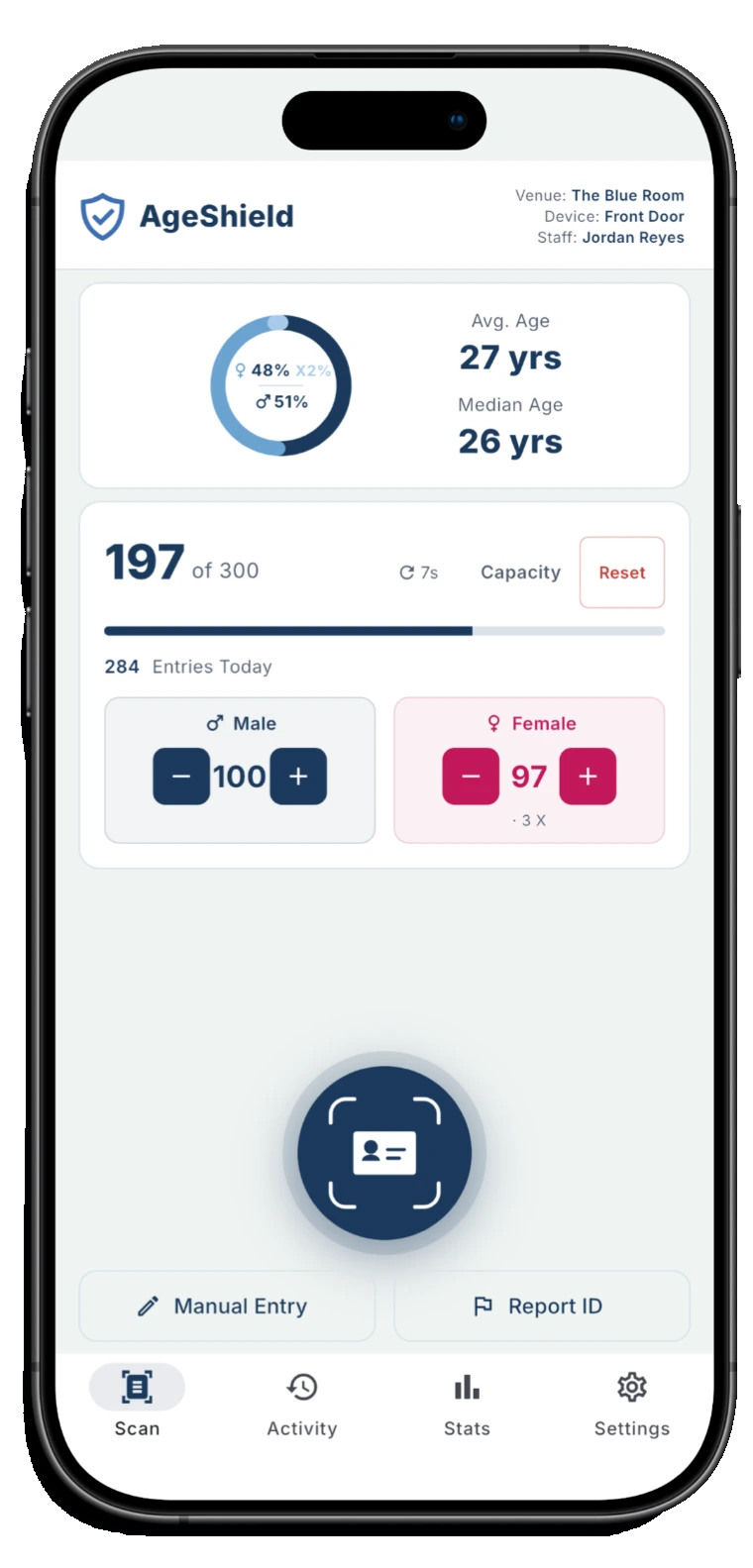
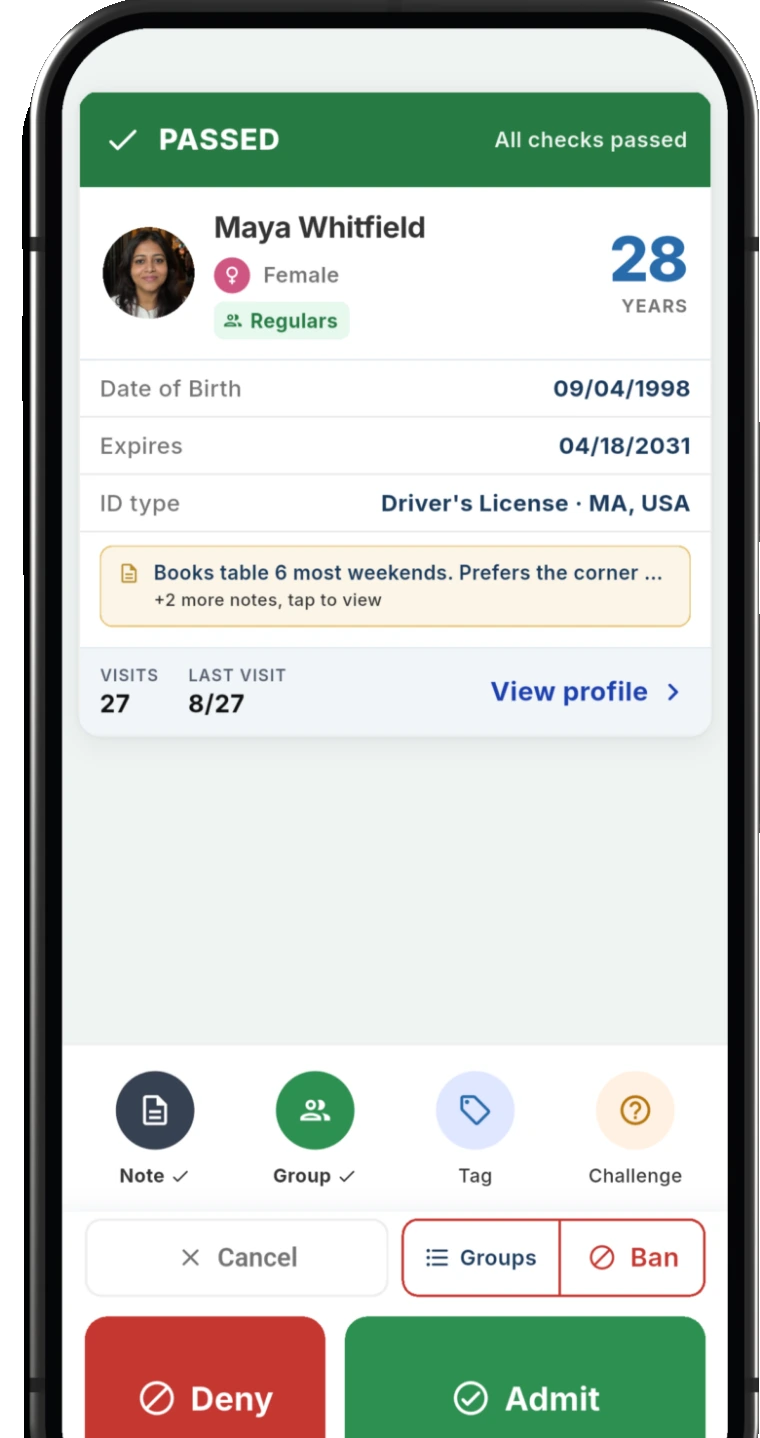
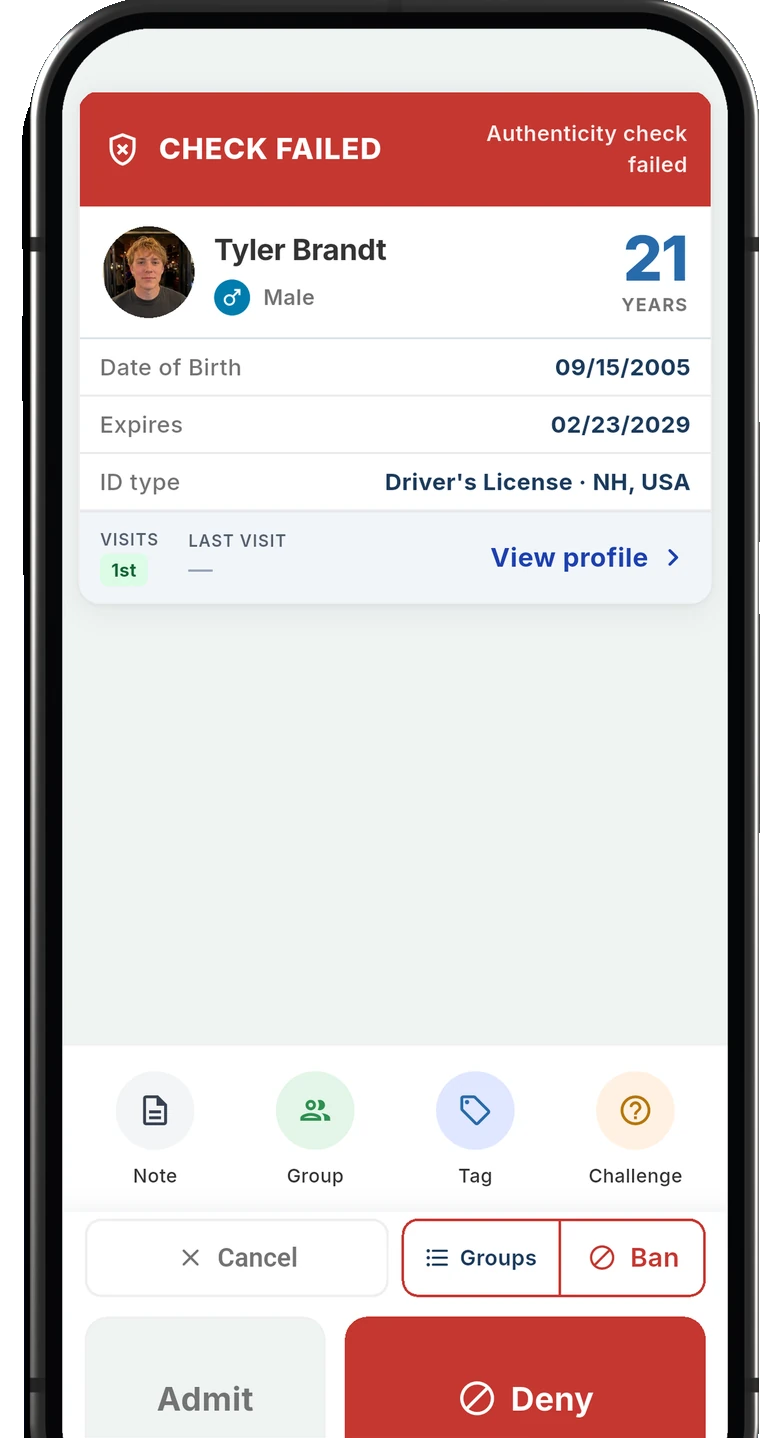
AgeShield ID Scanner
A phone for the private room door
Three devices scan at once on every plan, so a private event can have its own door. Every decision is recorded, and on Pro staff can tag a visit with an event.
Who is responsible when a company books the room
At a holiday buyout or private-room event, the host chooses the guests and often pays the tab. The drinks are still served on the venue's licensed premises.
New Jersey's alcohol regulator speaks to private parties directly. Its handbook for retail licensees, after setting out when a private party may include an open bar, says:
Licensees are reminded that they continue to be responsible for the alcoholic beverage activity which takes place at such functions or parties held on their licensed premises, including, but not limited to, the obligation to ensure that no underage persons or people who are actually or apparently drunk or intoxicated are served or consume alcoholic beverages.
Other states put it in rules that apply to the premises whatever the event:
- State
- New York
- What the rule or regulator says
- The State Liquor Authority tells licensees they are responsible for the activities of employees and patrons in all parts of the licensed premises, and for "indirect deliveries", when another person gives a minor a drink. It can discipline the licensee whether the licensee or an employee served the minor.
- State
- North Carolina
- What the rule or regulator says
- The ABC Commission's rules make it the duty of the permittee and its employees to determine the age of anyone consuming or possessing alcohol on the licensed premises. The permittee also has to see that employees and patrons follow the Commission's rules on the sale, possession and consumption of alcohol there.
- State
- Texas
- What the rule or regulator says
- TABC says it is a violation for a licensed business to sell, serve or deliver alcohol to a minor, and generally a violation to allow a minor to consume or possess alcohol on its licensed premises.
- State
- Massachusetts
- What the rule or regulator says
- The state's alcohol rules say no licensee shall permit any illegality of any kind on the licensed premises, and that the licensee is responsible for it whether present or not.
None of these rules makes an exception for private events. Each state guide lists the IDs that count as proof of age there.
New Jersey Division of Alcoholic Beverage Control, Handbook for Retail Licensees (October 2026)
When the host says everyone is over 21
The host knows the guest list, not necessarily the guests' ages. An office party can include interns and a family party can include teenagers, so the host's assurance covers people the host has never carded.
Texas law spells out what does count. Under the Alcoholic Beverage Code, a person who sells alcohol to a minor does not commit an offense if the minor falsely claimed to be 21 or older by showing an apparently valid government-issued ID whose photo and physical description match the minor's appearance. The host's assurance is not an ID. The Texas guide covers that defense and a second one for a scan.
Whether guests under 21 may be in the room at all is a separate question, and it turns on the state and the type of license. Can minors go in bars with their parents? covers what state laws say.
Open bar, drink tickets and passed drinks
Some states relax their drink-special rules for private parties. New Jersey's handbook bars unlimited drinks for a set price except at private parties the licensee does not sponsor, such as weddings and birthday parties, and two other kinds of event. New York's limit on unlimited drinks has an exception for private functions not open to the public. Texas lifts several of its limits on drink specials, all-you-can-drink offers among them, when all or part of the premises is used for a private party under an agreement with the licensee.
Those exceptions concern drink pricing and service. New Jersey pairs its open bar exception with the reminder quoted above, and New York's regulator holds the licensee responsible when another person hands a minor a drink. The Texas rule says nothing in it relieves a server of the responsibility not to serve an underage or intoxicated consumer, and its ban on any practice that would impair the licensee's ability to monitor or control drinking still applies at a private party.
An open bar or drink tickets can make that hand-off easy: a guest who is 21 collects a drink or a ticket and passes it on. Handing out tickets or bands only after the ID check, and having bartenders ask for an ID from anyone without one, ties the bar's check to the door's. In North Carolina, the ABC rules say wristbands and ink stamps are not reasonable indications of age at the time of sale, and the bar re-entry policy covers bands and marks.
New Jersey Division of Alcoholic Beverage Control, Handbook for Retail Licensees (October 2026)New York State Liquor Authority, What you need to know if you're a licensed retailerN.Y. Alco. Bev. Cont. Law 117-aTexas Alcoholic Beverage Commission, Administrative Rules, Rule 45.103 (16 Tex. Admin. Code 45.103)North Carolina ABC Commission rules, 14B NCAC 15B .0201 and .0224
Guests who arrive after the door closes
A private event may have a checker at the door initially but no one there an hour later. Guests who come after work or after another party then walk straight in, sometimes through the main bar.
The booking can specify when door staffing ends and who checks IDs afterward, such as the bartender serving the room. A guest list shows who was invited, not their age, so it does not stand in for an ID.
Groups that move between venues on one night are covered in holiday pub crawls, and a full line at the main door in how long an ID check takes on a busy night.
Outside caterers and bartenders
Some hosts ask to bring their own caterer, bartender or alcohol. Whether that is allowed on a licensed premises is a question of the state's alcohol law and the venue's license, so the state's rules are the place to start.
The rules in the table address the license holder, its staff and its premises. None of them mentions a host's own staff. A venue that allows outside staff can give them the house ID rules before the event and name who checks IDs, so a bartender the venue has never met is not the only check. A written door policy is where those rules already live.
ID terms for the booking
The questions above can be settled in writing when the event is booked:
- Where IDs are checked: the room door, the bar or both
- Who checks them, and until what time the event door is staffed
- How guests checked as 21 or older are marked, and when drink tickets go out
- Whether guests under 21 attend, and where they may be
- Outside caterers or bartenders, and who briefs them on the house rules
- Who the host and the venue call on the night
If the event has its own entrance, a phone can scan there. AgeShield includes three devices on every plan, so the private room can have one while the main door keeps its own. Each scan ends in one tap to admit or deny, every decision is recorded and on Pro staff can tag a visit, for example with an event. The ID scanner for bars shows how the phones work together, and a New Year's Eve buyout also has that night's door plan.
AgeShield ID Scanner
A scanner at the event entrance
AgeShield ID Scanner runs on the phones your staff already carry, with three devices scanning at once on every plan, so the event entrance can have its own while the main door keeps its own. Every decision is recorded, and on Pro staff can tag a visit with an event.
Common questions
Does a bar have to check IDs at a private party?
State law sets what a license requires, and the rules cited here make no exception for private events. New Jersey's alcohol regulator says licensees remain responsible at open-bar private parties on their premises, including making sure no one under 21 is served, and North Carolina's rules make it the duty of the permittee and its employees to determine the age of anyone drinking on the premises.
Is an open bar allowed at a private event?
It depends on the state. New Jersey, New York and Texas each have an exception for private parties in their limits on unlimited drinks or drink specials. New Jersey's regulator adds that licensees stay responsible for making sure no one under 21 is served at those parties, and the Texas rule says the same of servers.
Who checks IDs when the host brings an outside bartender?
Whether a host may bring outside staff onto a licensed premises is a question of the state's law and the venue's license. Where they do pour, the booking can name who checks IDs and give them the house ID rules. The state rules cited here are written about the license holder and its premises.
Is a guest list enough to let someone into a private event?
A guest list shows who was invited, not how old they are. In Texas, the defense for a seller charged with selling to a minor turns on an apparently valid government-issued ID the minor showed, with a photo and physical description that match.
Sources
- New Jersey Division of Alcoholic Beverage Control, Handbook for Retail Licensees (October 2026)
- Tex. Alco. Bev. Code 106.03
- New York State Liquor Authority, What you need to know if you're a licensed retailer
- N.Y. Alco. Bev. Cont. Law 117-a
- Texas Alcoholic Beverage Commission, Administrative Rules, Rule 45.103 (16 Tex. Admin. Code 45.103)
- North Carolina ABC Commission rules, 14B NCAC 15B .0201 and .0224
- Texas Alcoholic Beverage Commission, Age Verification
- 204 CMR 2.05(2), Massachusetts Alcoholic Beverages Control Commission (Cornell LII copy)
This page is for informational purposes only and is not a substitute for professional legal advice. We research each rule and link its source, so you can check it against your own venue. Questions are welcome at support@ageshield.bar.
Still unsure who checks IDs at your private events?
Tell us what type of venue you run and we'll point you to the published rules we know of that may apply.