
Which IDs a bar can accept
Can minors enter a bar with a parent?
Published November 3, 2026 · 18 sources linked
The short answer
It depends on the state and license type. Wisconsin and Alaska allow a person under 21 on licensed premises with a parent, guardian or spouse who is 21 or older and Pennsylvania with a parent or legal guardian. Utah's bars and California's bars licensed as public premises are closed to people under 21 even with a parent, with narrow exceptions, while Indiana and North Dakota allow it only under conditions, such as a meal at a table or leaving the bar area by 10 p.m.
Examples by state
- Open with a parent, guardian or spouse 21 or older
- Wisconsin and Alaska
- Open with a parent or legal guardian
- Pennsylvania, which also counts a supervisor 25 or older
- Closed to people under 21, even with a parent
- Utah bars and California bars licensed as public premises
- Only for a meal or until a set hour
- Indiana bar rooms and North Dakota restaurant bar areas
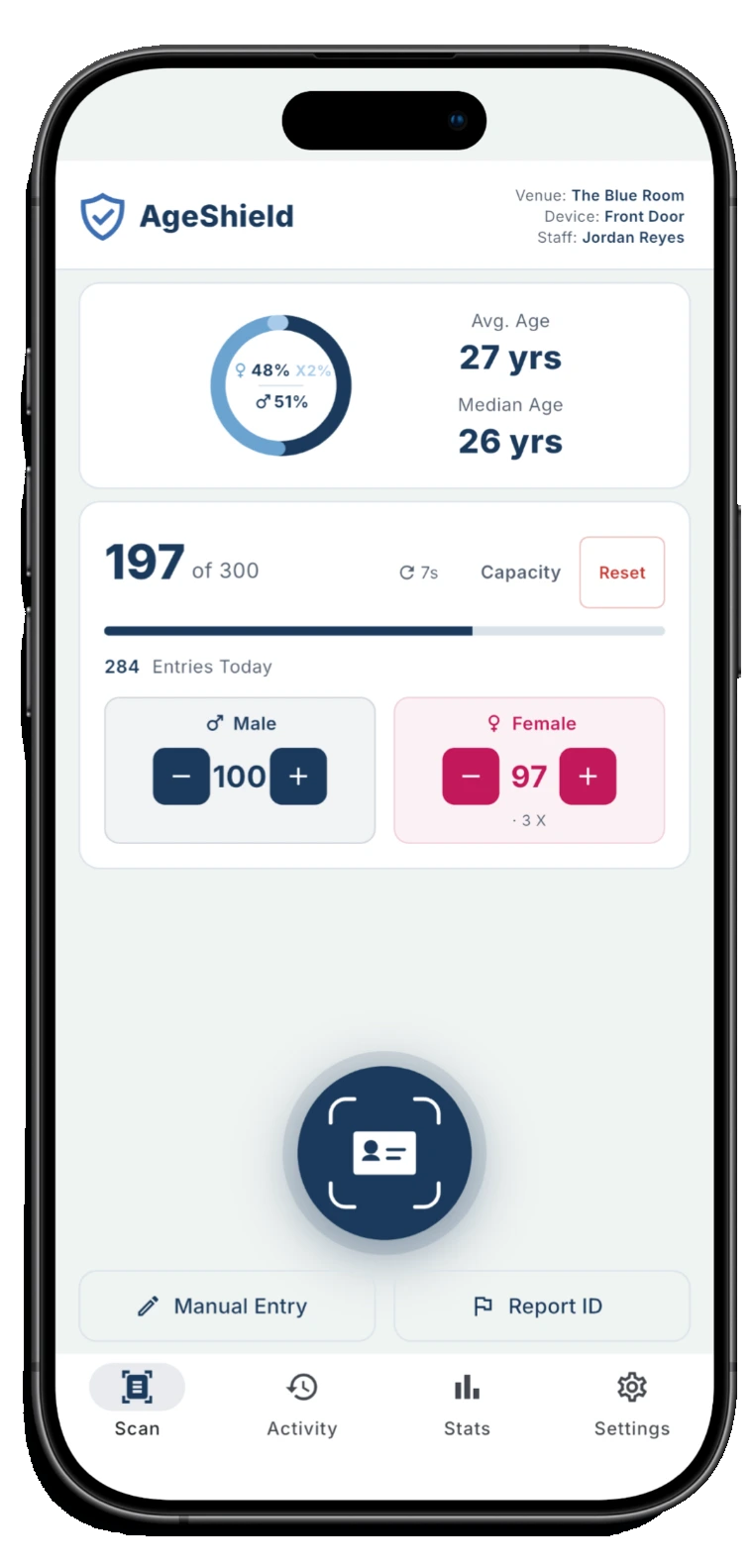
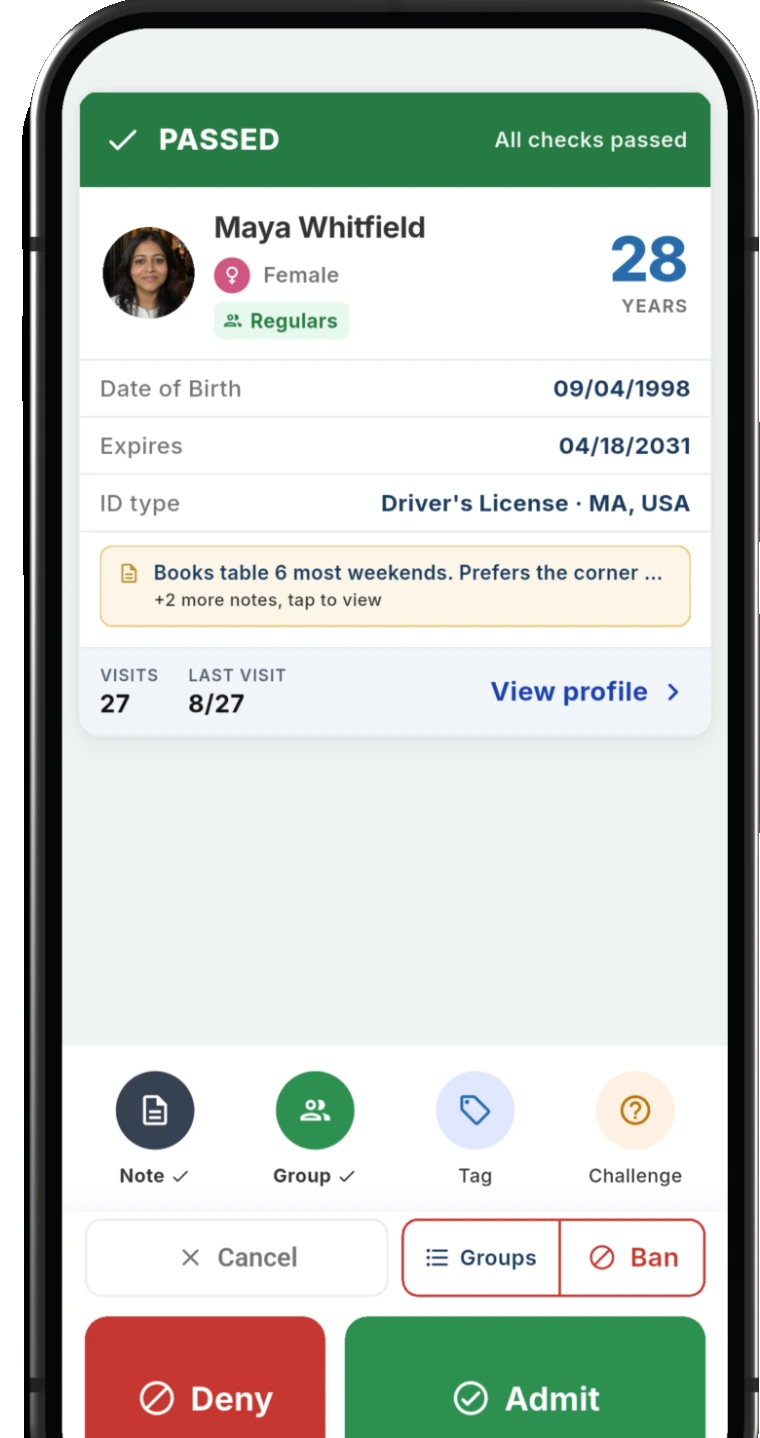
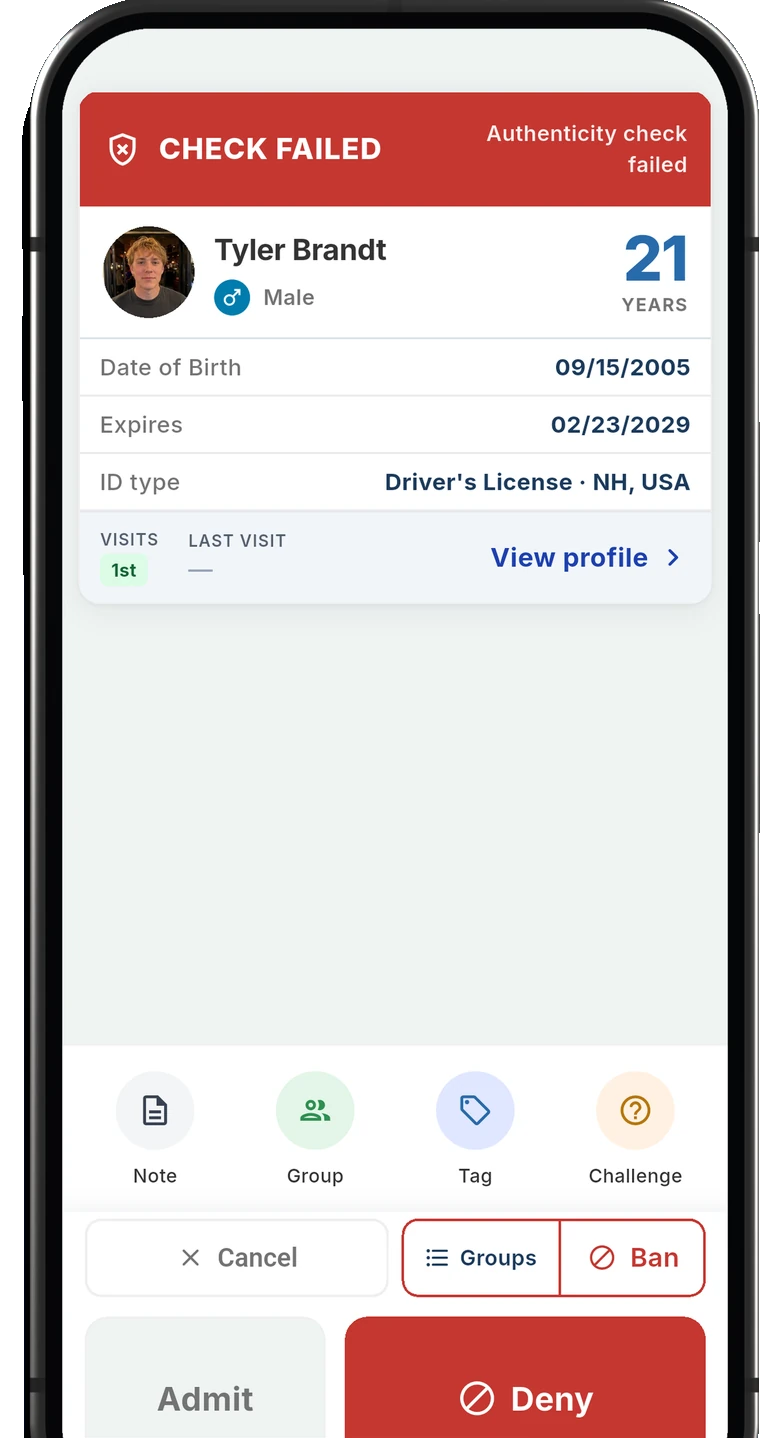
AgeShield ID Scanner
The venue's minimum age, checked at every scan
AgeShield checks the date of birth against your venue's minimum age, which starts at 21 and is set in the hub. Staff have no override for an underage result.
Why the type of license matters
In the states below, the answer often turns on the license. California's alcohol regulator says minors are allowed in restaurants licensed as eating places (types 41 and 47) and at on-sale beer licensees (type 40), but may not enter and remain in bars licensed as public premises (types 42, 48 and 61).
Food sales and separate dining areas change the answer in four other states. Pennsylvania allows minors, with no parent needed, in a restaurant, hotel or retail dispenser whose food and nonalcoholic drinks are at least half its food and alcohol sales, though not at the bar counter. Indiana's rule does not cover the part of a restaurant separate from the bar room and Wisconsin's does not cover a licensed restaurant whose principal business is that of a restaurant. North Dakota allows minors in a restaurant separated from the bar area whose food sales at least equal its alcohol sales there.
California Department of Alcoholic Beverage Control, License TypesCal. Bus. & Prof. Code 2303940 Pa. Code 5.321IC 7.1-5-7-11Wis. Stat. 125.07N.D. Cent. Code 5-02-06
What each state says about minors with a parent
- State
- Alaska
- What the law says
- A person under 21 may not knowingly enter or remain in licensed premises unless with a parent, guardian or spouse who is 21 or older, or under another exception such as a restaurant license. The licensee may still refuse them entry or service where alcohol is sold, served or consumed.
- Source
- AS 04.16.049
- State
- California
- What the law says
- A public-premises licensee that lets a person under 21 enter and remain without lawful business there commits a misdemeanor, and so does the person under 21. The statute names no parent exception, and a "No Person Under 21 Allowed" sign is required at each public entrance.
- State
- Indiana
- What the law says
- A minor, meaning anyone under 21, may not be in a tavern, bar or other public place where alcohol is sold, and a permittee who recklessly lets one stay longer than it takes to check ID commits a misdemeanor. A minor may be in a room with a bar with a parent, guardian or family member 21 or older, to eat, seated at a table or booth and not at the bar. Hotels, grocery stores and some restaurants are among the exceptions.
- Source
- IC 7.1-5-7-10, IC 7.1-5-7-11
- State
- New York
- What the law says
- An owner, manager or employee of a place where alcohol is sold who lets a child under 16 enter or remain commits a misdemeanor, unless the child is with a parent, guardian or an adult a parent or guardian authorized, or another listed exception applies.
- Source
- N.Y. Penal Law 260.21
- State
- North Dakota
- What the law says
- A licensee who lets a person under 21 remain while alcohol is sold or displayed commits a misdemeanor, unless an exception applies. At the owner's discretion, a person under 21 with a parent or guardian may be in a restaurant and its bar area, not seated at or within three feet of the bar counter and not in the bar area after 10 p.m.
- Source
- N.D. Cent. Code 5-02-06
- State
- Pennsylvania
- What the law says
- Minors may be on licensed premises only with a parent or legal guardian, under the supervision of someone 25 or older, at a social gathering with no alcohol served or under the food-sales exception above. The liquor board says a minor with a parent or legal guardian can sit anywhere, the bar area included.
- Source
- 47 P.S. 4-493(14), PLCB FAQ
- State
- Utah
- What the law says
- A minor, meaning anyone under 21, may not be admitted into or be in a bar licensee's premises, apart from some dance or concert halls permitted on or before May 11, 2009 and kept separate from the bar. The law has staff verify that each person is 21 or older before admitting them to a bar or tavern.
- State
- Wisconsin
- What the law says
- A person under 21 who is not with a parent, guardian or spouse who is 21 or older may not enter or be on licensed premises, except on business with the licensee, which does not include eating, drinking or amusement. Exceptions include hotels, grocery stores, bowling centers and restaurants whose principal business is that of a restaurant.
- Source
- Wis. Stat. 125.07
A state missing from this table is not a state without a rule. Each state guide covers that state's ID check.
AS 04.16.049Cal. Bus. & Prof. Code 25665California Department of Alcoholic Beverage Control, On-Sale Licensee Informational Guide: MinorsIC 7.1-5-7-10IC 7.1-5-7-11N.Y. Penal Law 260.21N.D. Cent. Code 5-02-0647 P.S. 4-493(14)Pennsylvania Liquor Control Board, Minors on the Licensed Premises (PDF)Utah Code 32B-6-406Utah Code 32B-6-406.1Utah Code 32B-1-407Wis. Stat. 125.07
Being in the bar and drinking are separate rules
An entry exception does not automatically allow a minor to drink. Texas, where a minor is anyone under 21, allows a minor to possess alcohol in the visible presence of an adult parent, guardian or spouse and gives a defense for drinking it there, and that adult may also buy it for them while visibly present. The same chapter lets the alcohol commission suspend or cancel a retailer's license or permit for a sale to a minor made with criminal negligence, and that rule names no parent exception.
Wisconsin's sale rule follows its entry rule: a licensee may not sell alcohol to a person under 21 who is not with a parent, guardian or spouse of drinking age. Texas's alcohol code chapter on age sets no general rule on a minor being in a bar; its rules turn on buying, possessing and drinking.
Age floors, hours and events
Some rules apply only below a set age: New York's covers children under 16, and Utah's grandfathered concert halls admit people under 18 only with a parent or legal guardian at all times, or from 14 when no alcohol is sold, furnished or consumed on the bar's premises. North Dakota puts a clock on its restaurant exception instead: 10 p.m. for the bar area.
Special events can have separate exceptions. Pennsylvania allows minors at a social gathering marketed to them, with 48 hours' notice to the state police enforcement bureau and all alcohol removed or locked away, and Wisconsin on a date when no alcohol is sold or consumed, with advance notice to local police.
N.Y. Penal Law 260.21Utah Code 32B-6-406.1Pennsylvania Liquor Control Board, Minors on the Licensed Premises (PDF)47 P.S. 1-102, Proper supervision and Social gatheringN.D. Cent. Code 5-02-06Wis. Stat. 125.07
Where an ID scan fits
In Utah the age check is at the door: the law has bars and taverns verify proof of age before anyone is admitted, electronically unless the ID cannot be verified that way, as the Utah guide explains. The checking routine is in how to check IDs at the door.
AgeShield checks the date of birth against the venue's minimum age, which starts at 21 and is set by the owner in the hub, and the result screen shows the venue's own number. Staff have no override for an underage result. The underage flag only goes away if the owner switches on Allow Underage Entry for that venue, which is off by default. See how a scan works.
Four emails a year
What changed in ID law, before it takes effect
Many state rules on IDs and age checks take effect on January 1 or July 1. Each quarter we send one short summary of the changes we found, with the source for every line, starting with the states you pick.
Common questions
Can a 19-year-old go into a bar with a parent?
It depends on the state. Pennsylvania's liquor board says its rules are the same for an 18, 19 or 20 year old, so a parent or legal guardian opens the door there, and Wisconsin and Alaska also count a spouse who is 21 or older. Utah's bars and California's bars licensed as public premises are closed to people under 21 even with a parent, apart from narrow exceptions.
Can a minor sit at the bar counter with a parent?
Indiana's bar-room rule requires a table or booth, not a seat at the bar, and North Dakota's restaurant rule keeps a minor from sitting at or within three feet of the bar counter. Pennsylvania's liquor board says a minor with a parent or legal guardian can sit anywhere, including the bar area, while a minor there only under the food-sales exception may not sit at the bar.
Does a grandparent or older sibling count?
Only where the law names them. Indiana's bar-room rule counts a family member who is 21 or older, and Pennsylvania counts a proper supervisor: someone 25 or older who is directly responsible for the minor and keeps them within sight or hearing. Wisconsin and Alaska name a parent, guardian or spouse. New York's under-16 rule counts an adult a parent or guardian has authorized. North Dakota defines a guardian as someone with legal responsibility for the minor's health and well-being.
Can a bar turn away minors when state law allows them in?
Alaska's statute says a licensee may refuse entry or service to a person under 21, or ask them to leave, in the part of the premises where alcohol is sold, served or consumed. North Dakota's exceptions apply at the owner's discretion, and Pennsylvania's liquor board says a venue may make house rules that limit when minors are allowed.
What happens when AgeShield scans a guest under the venue's minimum age?
The app checks the date of birth against the venue's minimum age and shows an underage result with the venue's own number. Staff have no override for an underage result. The underage flag only goes away if the owner switches on Allow Underage Entry for that venue, which is off by default.
Sources
- California Department of Alcoholic Beverage Control, License Types
- Cal. Bus. & Prof. Code 23039
- 40 Pa. Code 5.321
- IC 7.1-5-7-11
- Wis. Stat. 125.07
- N.D. Cent. Code 5-02-06
- AS 04.16.049
- Cal. Bus. & Prof. Code 25665
- California Department of Alcoholic Beverage Control, On-Sale Licensee Informational Guide: Minors
- IC 7.1-5-7-10
- N.Y. Penal Law 260.21
- 47 P.S. 4-493(14)
- Pennsylvania Liquor Control Board, Minors on the Licensed Premises (PDF)
- Utah Code 32B-6-406
- Utah Code 32B-6-406.1
- Utah Code 32B-1-407
- Tex. Alco. Bev. Code ch. 106
- 47 P.S. 1-102, Proper supervision and Social gathering
This page is for informational purposes only and is not a substitute for professional legal advice. We research each rule and link its source, so you can check it against your own venue. Questions are welcome at support@ageshield.bar.
Still unsure what your state says about minors?
Tell us what type of venue you run and we'll point you to the published rules we know of that may apply.