
Fake IDs
Do fake IDs scan?
Published November 25, 2026 · 10 sources linked
The short answer
Some do. In 2018, US Customs and Border Protection (CBP) described seized counterfeit licenses ranging from obvious fakes to high-quality cards that barcode readers could scan. A readable barcode shows the data encoded in it, not who made the card, so a scan belongs alongside a check of the card and the guest.
What a scan settles and what it does not
- A barcode that reads
- Shows the details encoded in it, which a fake can carry too
- An altered genuine card
- Can show up when the printed front is compared with the barcode
- A real card in the wrong hands
- Reads cleanly; only the photo, the description and questions show it
- When the scan and the card disagree
- Staff look again, ask for a second ID or refuse, as the house rule says
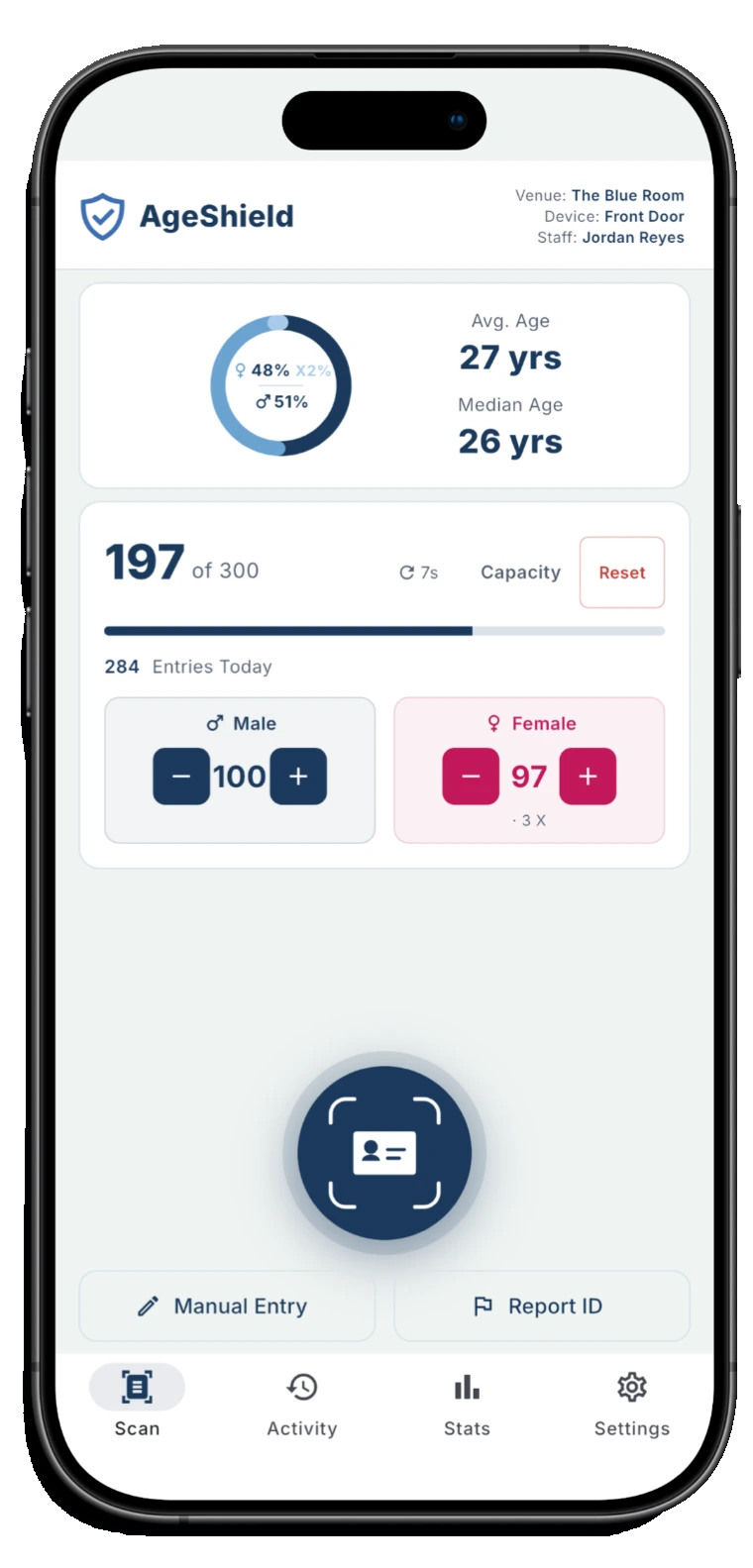
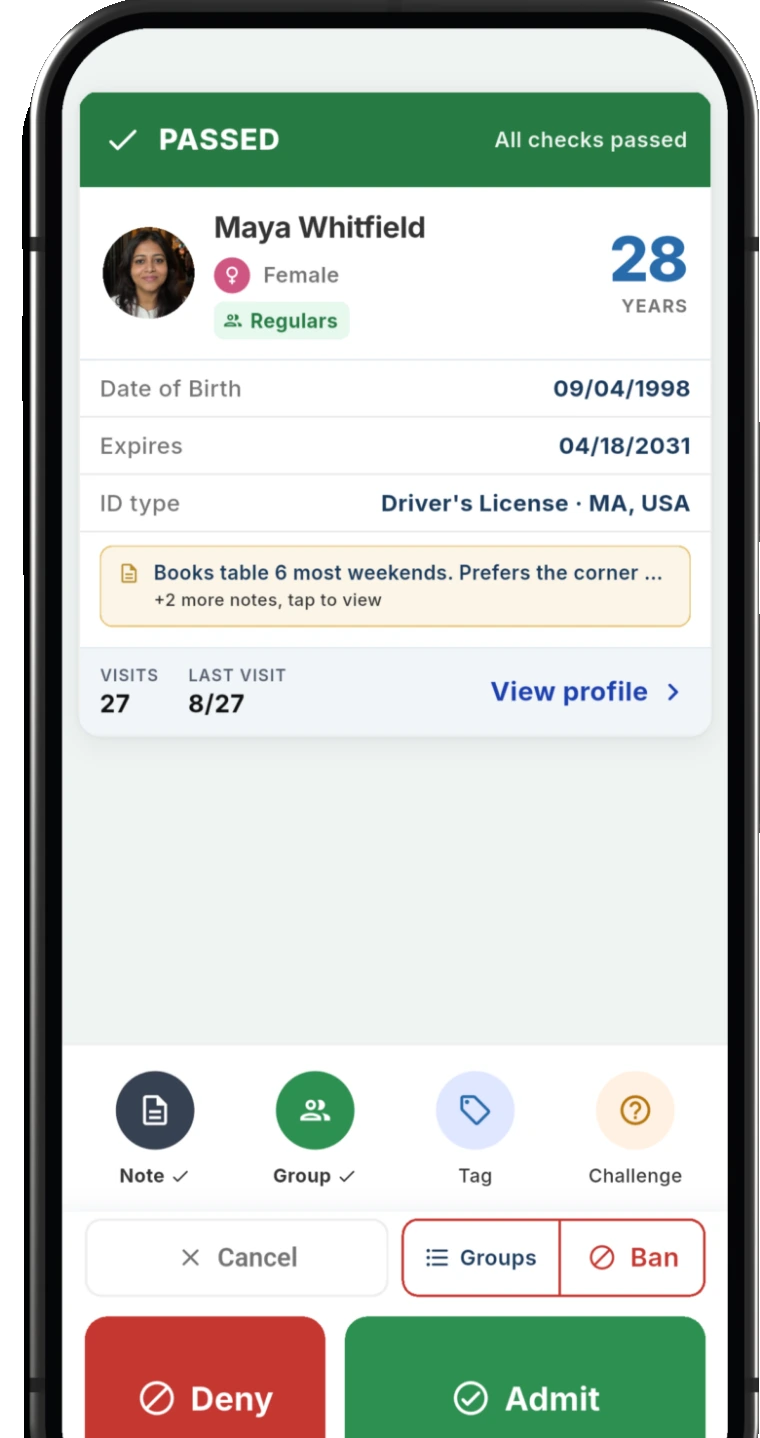
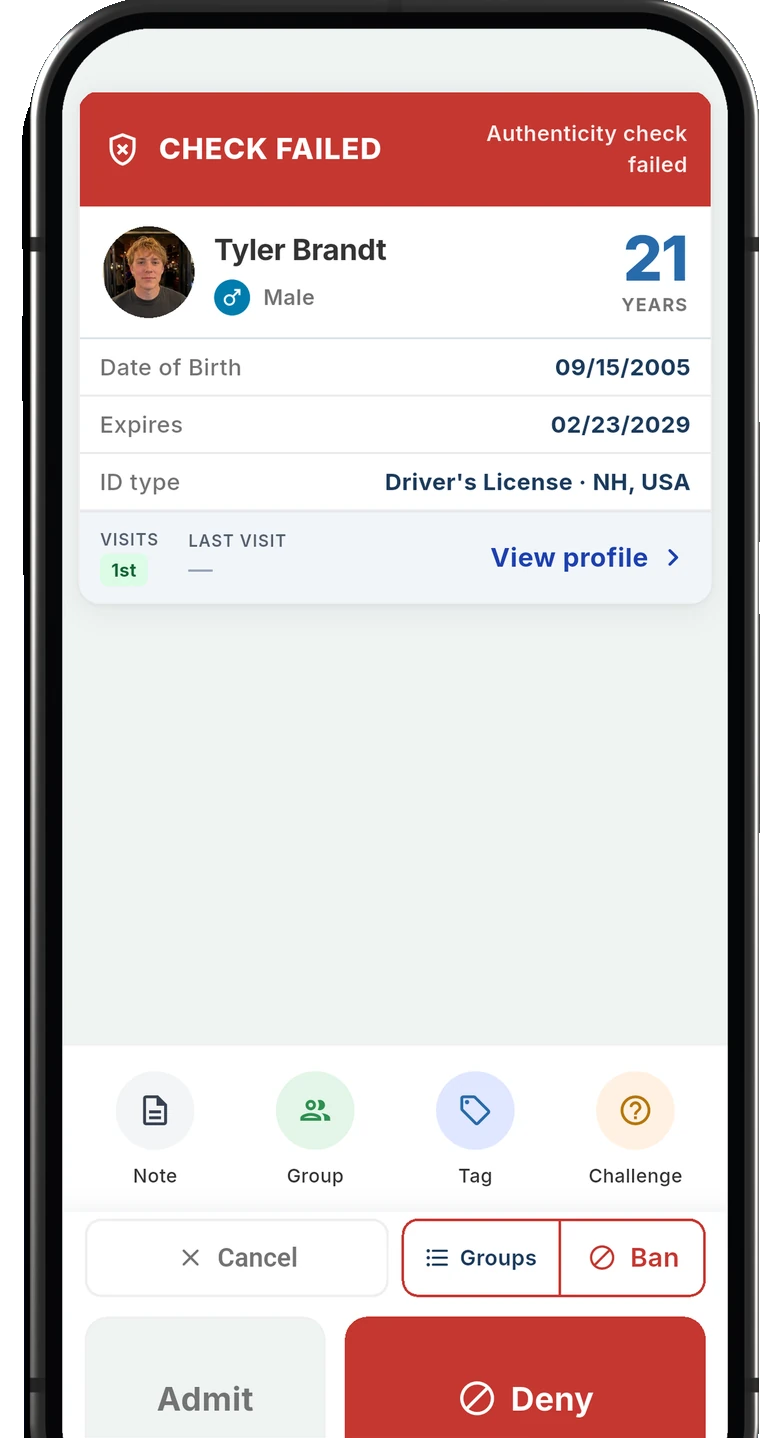
AgeShield ID Scanner
More than reading the barcode
Every mode checks a scanned US or Canadian license or state ID barcode for signs of forgery, and Secure mode compares the printed front with it. A flag tells staff to look closer, and the call stays theirs.
What it means when a fake ID scans
The barcode on the back of a US or Canadian driver's license or state ID is a PDF417 code, the minimum machine-readable technology that the card design standard of AAMVA, the association of US and Canadian motor vehicle agencies, makes mandatory. A scanner decodes the data encoded on the card: name, date of birth, expiry date and other details.
A fake can carry a barcode that reads too. In 2018, describing nearly 500 counterfeit licenses seized from air cargo arriving in Philadelphia, CBP said:
The quality of the licenses ranges from obvious fakes to very good quality that can be scanned with barcode readers.
"It scanned" means the reader decoded a barcode and could work out an age and expiry date from it. Whether a motor vehicle agency issued the card is another question. The card's security features answer part of it, as does a check on the barcode itself.
AAMVA DL/ID Card Design Standard (2025), sections B.3.2, B.3.3 and D.3 (PDF)U.S. Customs and Border Protection, Philadelphia CBP Disrupts Steady Stream of Fake IDs Bound to College Undergrads, August 30, 2018
What a scan can show for each kind of fake
AAMVA's standard names three threats to a license. Counterfeiting produces an imitation card. Falsification alters the holder's details on a genuine card or reuses parts of one. Misuse is a genuine card used by someone posing as its rightful holder. A scan reveals different things about each.
- Kind of fake
- A counterfeit, made to imitate a genuine card
- What a scan can show
- The details in its barcode, which may read cleanly. A scanner that runs a barcode forgery check can flag signs of forgery in the barcode.
- What staff still check
- The card itself. CBP's Chicago releases of 2022 and 2025 say the seized IDs were deemed counterfeit based on a lack of fine line detail and features not consistent with the document type.
- Kind of fake
- A genuine card with altered details
- What a scan can show
- A printed front that no longer agrees with the barcode, where the scanner reads both sides and compares them.
- What staff still check
- The printed details against what the screen shows, and the card for signs of editing.
- Kind of fake
- A genuine card used by someone else
- What a scan can show
- Nothing wrong. The card is real, and no barcode check catches a borrowed ID.
- What staff still check
- The photo and description against the face, and questions from the ID. Borrowed IDs at the door covers the routine.
AAMVA DL/ID Card Design Standard (2025), sections B.3.2, B.3.3 and D.3 (PDF)U.S. Customs and Border Protection, In Two Weeks Chicago CBP Seizes 743 Counterfeit IDs, April 25, 2022U.S. Customs and Border Protection, As the second semester starts, the second surge of fake IDs begins, January 29, 2025
A scan next to a look, not instead of one
AAMVA sorts a card's security features by how they are checked. First line features are visual or tactile, checked at a glance without tools. Second line features need a tool such as a UV light, a magnifying glass or a scanner. The standard, written for the agencies that design the cards, also strongly recommends against placing too much reliance on any single security feature.
Texas writes both checks into its alcohol code for one kind of sale. In a retail sale for off-premises consumption, such as at a package store, the code requires the seller to visually inspect the buyer's driver's license or ID certificate and access the electronically readable information on it, with exceptions that include restaurants. TABC says it will discipline businesses for violations that occur on or after September 1, 2027. The Texas card's own features are in how to spot a fake Texas driver's license.
California's alcohol law speaks to a fake that scanned. Since January 1, 2026, Business and Professions Code 25660 defines the use of age verification software or a device as scanning the magnetic strip or the barcode on the ID to verify the data on it, and says:
The use of an active age verification software or an age verification device to establish the age of a purchaser of alcoholic beverages, that fails to identify a false identification card, shall be considered evidence in a criminal prosecution therefor, or to any proceedings for the suspension or revocation of any license based thereon, provided that the identification is bona fide evidence of majority and identity as described in subdivision (a) and was physically inspected, is seemingly legitimate, and matches the physical appearance of the customer.
The section treats that scan as evidence only when every condition at the end of the quote is met. The California ID scanning guide covers the rest of the section.
The look itself, from the photo and the feel of the card to the questions that catch a borrowed one, is set out in how to spot a fake ID.
AAMVA DL/ID Card Design Standard (2025), sections B.3.2, B.3.3 and D.3 (PDF)Tex. Alco. Bev. Code 109.61(a-1) and (a-4)Texas Alcoholic Beverage Commission, Age VerificationCal. Bus. & Prof. Code 25660(b)(3) and (c)(3), as amended by AB 509, effective January 1, 2026
When the scan and the card disagree
The scan flags a card that looks fine
A flag reports what a check found, and that check can be wrong. Staff can look at the card again, compare the printed details with the screen, ask for a second ID or turn the guest away, as the house rule says. California's alcohol regulator reminds licensees: "You are never required to sell or serve alcohol to anyone."
A refusal does not need to accuse the guest of using a fake. A line about the house rules turns a guest away without calling the card fake, and how to refuse entry at a bar has the wording. Whether staff may hold on to a card they believe is fake is a matter of state law, covered in can a bar keep a fake ID?.
The scan passes a card that looks wrong
A clean read does not outrank what staff see. Alaska's alcohol rules require a licensee or employee who has reason to believe an ID is fraudulent to refuse the person entry and service, and the Pennsylvania liquor board's RAMP guidance on fake IDs puts it plainly: "If you're not convinced, however, do not serve them."
The barcode will not read
A failed read is not a verdict: genuine cards can fail from wear, glare or a laminate, while fakes can fail too. When an ID will not scan covers what the door can do next.
California Department of Alcoholic Beverage Control, Checking Identification3 AAC 305.800(a)Pennsylvania Liquor Control Board, RAMP: Fake IDs
What an AgeShield scan checks
Every mode in the AgeShield ID scanner app checks a scanned US or Canadian license or state ID barcode for signs of forgery, and the check runs on the phone, so it keeps working when the signal drops. In Secure mode the app also reads the printed front and compares it with the barcode, so an edited birth date, expiry or ID number does not match. A front-only scan in Limited mode has no barcode to check, and passports and US green cards, read from their machine-readable zone, get no barcode forgery result. AgeShield does not accept mobile IDs yet.
When the barcode check reports a forged barcode, or a Secure scan finds a front and back that do not match, the phone shows CHECK FAILED; a barcode reported as likely forged shows CHECK FAILED PARTIALLY. Neither result establishes that a card is fake, and no scanner catches every fake, so staff still make the call. AgeShield's Terms ask venues not to tell a guest their ID is fake on the strength of a result. How a scan works lists every result and what it means.
AgeShield ID Scanner
A second check on the barcode, with the call left to staff
AgeShield runs on the phones door staff already carry. Every mode checks a scanned US or Canadian license or state ID barcode for signs of forgery, and Secure mode also compares the printed front with the barcode. A flag tells staff to look closer, and every scan creates a visit record with what they decided.
Common questions
Can a fake ID pass an ID scanner?
Some can. In 2018, CBP described seized counterfeit licenses of very good quality that can be scanned with barcode readers. Reading a barcode shows what it says; a barcode forgery check and a comparison of the front with the barcode look further, and no scanner catches every fake.
Does AgeShield check an ID against DMV records?
No. AgeShield does not query DMV records; its forgery check reads the card itself. Every scan mode checks a scanned US or Canadian license or state ID barcode for signs of forgery, and Secure mode also compares the printed front with the barcode.
What should staff do when the scanner flags an ID?
Look at the card again, compare the printed details with the screen and ask for a second ID, or refuse, as the house rule says. A flag describes what a check observed and can be wrong, so the decision is theirs. A refusal can rest on the house rules rather than calling the card fake.
Sources
- AAMVA DL/ID Card Design Standard (2025), sections B.3.2, B.3.3 and D.3 (PDF)
- U.S. Customs and Border Protection, Philadelphia CBP Disrupts Steady Stream of Fake IDs Bound to College Undergrads, August 30, 2018
- U.S. Customs and Border Protection, In Two Weeks Chicago CBP Seizes 743 Counterfeit IDs, April 25, 2022
- U.S. Customs and Border Protection, As the second semester starts, the second surge of fake IDs begins, January 29, 2025
- Tex. Alco. Bev. Code 109.61(a-1) and (a-4)
- Texas Alcoholic Beverage Commission, Age Verification
- Cal. Bus. & Prof. Code 25660(b)(3) and (c)(3), as amended by AB 509, effective January 1, 2026
- California Department of Alcoholic Beverage Control, Checking Identification
- 3 AAC 305.800(a)
- Pennsylvania Liquor Control Board, RAMP: Fake IDs
This page is for informational purposes only and is not a substitute for professional legal advice. We research each rule and link its source, so you can check it against your own venue. Questions are welcome at support@ageshield.bar.
Still unsure what a scan can tell your door?
Tell us what type of venue you run and we'll point you to the published rules we know of that may apply.