
Compliance checks and penalties
TABC stings: how they work and what follows
Published November 3, 2026 · 29 sources linked
How does a TABC sting work?
A person under 21 tries to buy alcohol under a peace officer's supervision, which is not an offense for the minor, and in 2016 TABC said its decoys use valid IDs and cannot lie about their age. A sale can lead to a Class A misdemeanor charge against the employee and an administrative case against the business; TABC's penalty chart lists an eight- to 12-day suspension for a first violation. Under section 106.14 of the Alcoholic Beverage Code, the employee's sale is not held against the business if it requires TABC-approved seller training, the employee attended it and the business did not encourage the violation.
TABC stings at a glance
- Who tries to buy
- A person under 21, supervised by TABC agents or other peace officers
- The employee's charge
- A Class A misdemeanor: a fine of up to $4,000, up to a year in jail or both
- Standard sanction for a first sale
- A suspension of eight to 12 days, under TABC's penalty chart
- Deadline to claim the training rule
- An affidavit to TABC within 10 days of receiving the notice (TABC has proposed 30)
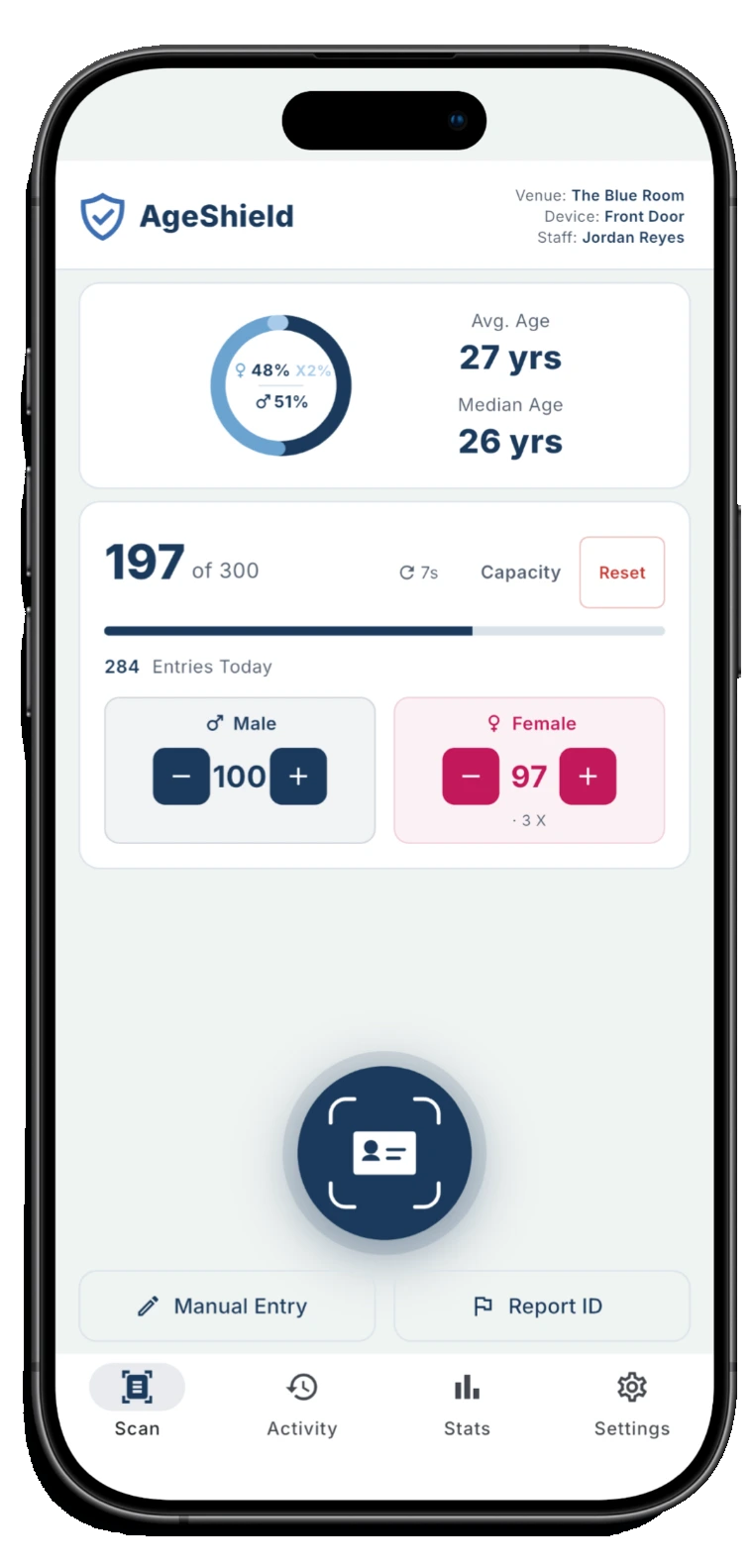
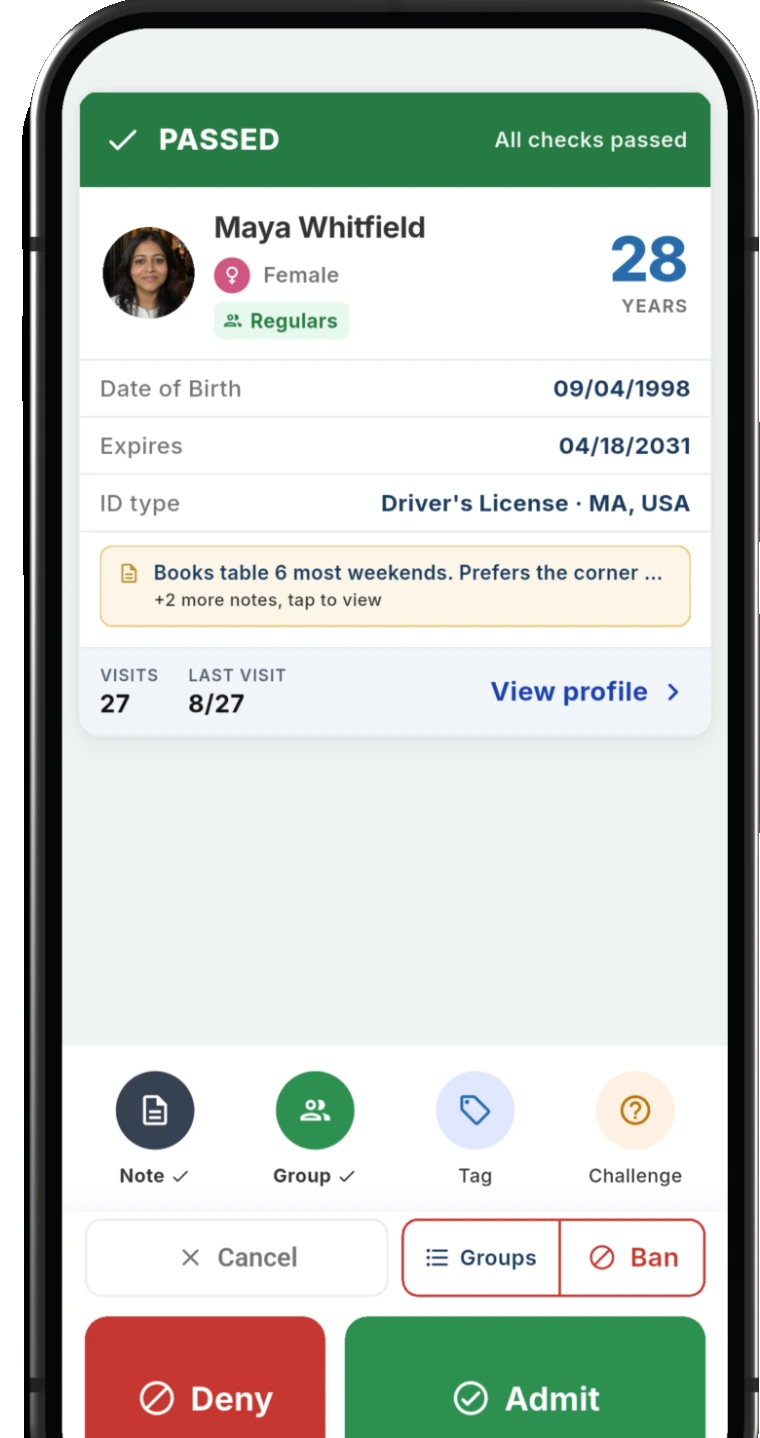
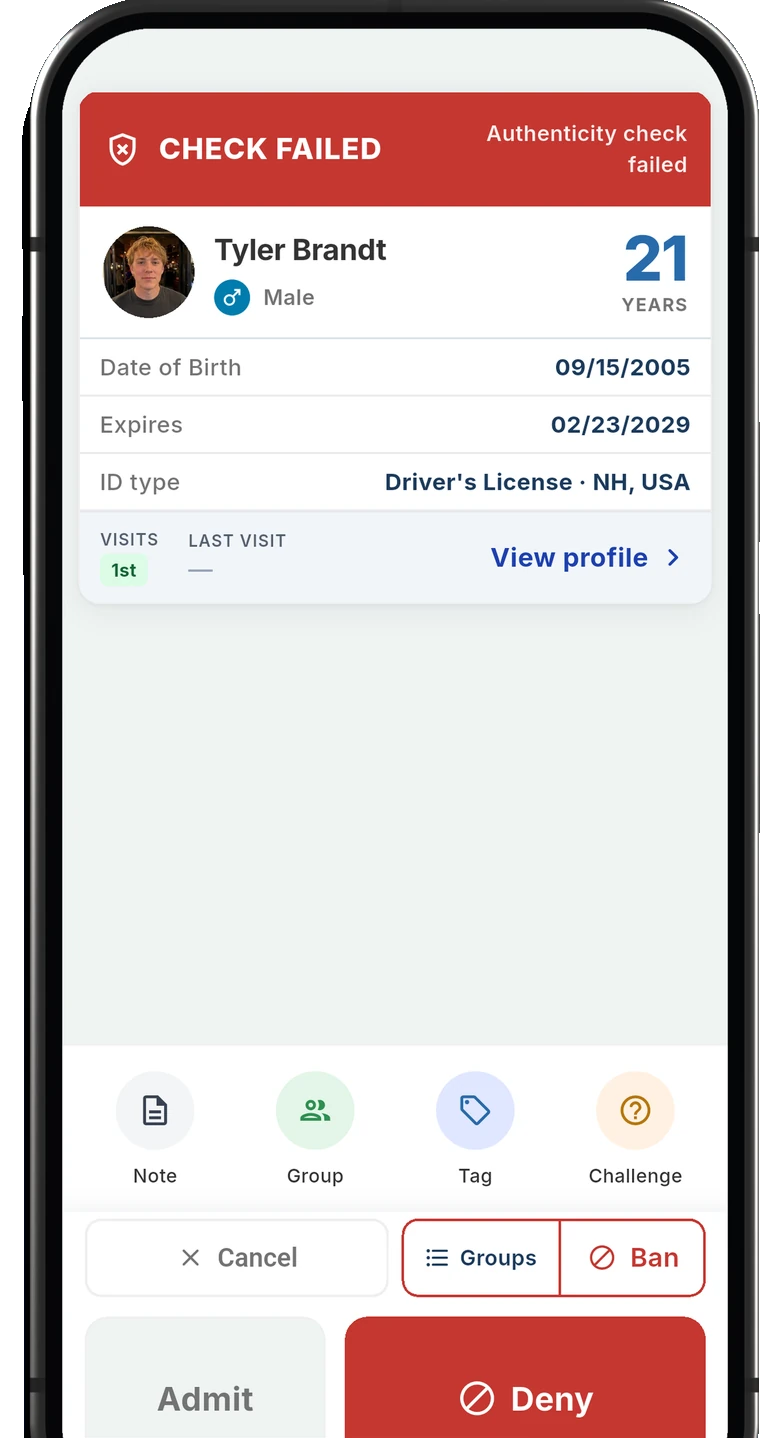
AgeShield ID Scanner
An underage result staff cannot override
The app works out the guest's age from the date of birth and checks it against your venue's minimum, which starts at 21. Staff have no override for an underage result.
Who runs a TABC sting
TABC calls its stings minor sales investigations or underage compliance operations. Its agents are commissioned peace officers with statewide jurisdiction, and its enforcement page describes minors who go undercover into random retail businesses to see whether they are sold alcohol.
TABC runs checks across the state. In 2025 TABC added minor sales investigations over spring break in college cities and on the Gulf Coast, then holiday operations at liquor stores, bars and restaurants.
Section 106.02, which makes buying alcohol an offense for a minor, exempts a sting purchase:
A minor does not commit an offense if the minor purchases an alcoholic beverage under the immediate supervision of a commissioned peace officer engaged in enforcing the provisions of this code.
A matching exemption covers possessing the drink. Both cover any commissioned peace officer enforcing the code, not only TABC agents.
TABC: Public safety and enforcement FAQsTABC: Enforcement initiatives and operationsTABC: Back-to-school undercover operations catch 145 retailers, October 9, 2019TABC: Annual back-to-school undercover operations, August 9, 2022TABC: Spring break and festival safety operation, March 17, 2025TABC: 2025 holiday season operations, December 11, 2025Texas Alcoholic Beverage Code 106.02Texas Alcoholic Beverage Code 106.05
What TABC has said about its decoys
Texas's alcohol code and TABC's rules set no standards for decoys, unlike California's Rule 141. The decoy standards in Texas's Health and Safety Code cover tobacco checks only, and how alcohol compliance checks work compares other states. For alcohol, TABC's news releases describe its operations:
What TABC said in its releases:
- 2016: an under-21 volunteer, with at least two TABC agents, must use their valid ID and may not lie about their age
- 2018 and 2022: if a sale takes place, agents go into the business to tell its managers about the violation
- 2019 and 2022: minor-aged volunteers, supervised by undercover agents, enter licensed businesses and try to buy alcohol
That account matters to the ID defense in section 106.03(b). It applies only when a minor falsely claims to be 21 or older by showing an apparently valid government-issued ID that says they are 21 or older, with a photo and physical description that match them. A decoy who follows TABC's description shows an ID with their real date of birth.
TABC: Results of back-to-school undercover operations, October 3, 2016TABC: Back-to-school undercover operations begin, August 24, 2018TABC: Back-to-school undercover operations catch 145 retailers, October 9, 2019TABC: Annual back-to-school undercover operations, August 9, 2022TABC: Back-to-school undercover operations catch 131 retailers, September 13, 2022Texas Alcoholic Beverage Code 106.03Texas Health and Safety Code 161.088
Which Texas venues get checked
TABC's inspection rule names some premises priority locations, which TABC aims to inspect at least once every six months. Two categories name stings: a business licensed for less than two years for off-premises consumption that has not been the target of an underage compliance operation or other public safety operation, and one licensed for less than two years for on-premises consumption with a late hours certificate that has not been targeted either. In September 2026 TABC proposed widening both to any business not yet the target of an investigative activity.
A public safety violation in the past six months, such as a sale to a minor, also makes a premises a priority location.
TABC Administrative Rules, 16 TAC 34.1, 34.2, 34.4, 34.20, 34.21, 35.3 and 50.28 (TABC, PDF)TABC, proposed amendments to 16 TAC 35.3 and 35.7, September 2026 (PDF)TABC: Violations
The employee's criminal case
Under section 106.03, selling alcohol to a minor is an offense when the seller acts with criminal negligence. The Penal Code defines that as failing to see a substantial and unjustifiable risk the person ought to have been aware of, where missing it is a gross deviation from the care an ordinary person would take.
The Class A misdemeanor carries up to a $4,000 fine, a year in jail or both. TABC notes that these charges are often prosecuted by a local county attorney, apart from the case against the business. Section 106.14 concerns only the employer: TABC's certification FAQ says that where it protects the permit, the seller will probably be arrested all the same.
At an off-premises retailer covered by Texas's ID scanning requirement, skipping a required scan has been a Class A misdemeanor in its own right since September 1, 2025, with defenses for an internet outage and for a buyer aged 40 or older. TABC cannot discipline the business for a missed scan on sales made before September 1, 2027. The Texas ID scanning guide covers which permits the requirement reaches.
Texas Alcoholic Beverage Code 106.03Texas Penal Code 6.03Texas Penal Code 12.21TABC: ViolationsTABC: Certification FAQsTexas Alcoholic Beverage Code 109.61TABC: Age verification
The case against the license or permit
TABC sends the business an administrative notice by email through AIMS, its licensing system. Settling, asking for a hearing and the statute's maximum suspensions are covered in after a failed alcohol compliance check. The standard sanctions come from TABC's penalty chart in 16 TAC 34.2.
- Violation
- First
- Standard suspension
- 8 to 12 days
- Violation
- Second
- Standard suspension
- 16 to 24 days
- Violation
- Third
- Standard suspension
- 48 days to cancellation
Each suspension in the chart carries an optional civil penalty of $300 a day in its place, but for a sale to a minor TABC decides whether to offer that option. In a contested case the chart is a guideline, not a fixed rule.
TABC Public Safety Penalty Chart, 16 TAC 34.2 (PDF)TABC Administrative Rules, 16 TAC 34.1, 34.2, 34.4, 34.20, 34.21, 35.3 and 50.28 (TABC, PDF)Texas Alcoholic Beverage Code 11.64
A later violation of the same provision draws the higher sanction when the business had written notice of the earlier one and the new one falls within 36 months. The rule also applies the higher sanction where the later violation involves covert investigative activities.
Section 11.64 sets a civil penalty in place of a suspension at $150 to $25,000 for each day. In deciding whether to offer it for a sale to a minor, TABC weighs factors that include the business's license type and past violations, and may also weigh what it has done to prevent more.
The commission may reduce a suspension or cancellation if the business shows that the violation could not reasonably have been prevented with due diligence, that it was entrapped or that an employee acted without its knowledge. Section 11.64 adds other grounds, among them good faith, including steps taken to deter future violations.
TABC: ViolationsTABC Administrative Rules, 16 TAC 34.1, 34.2, 34.4, 34.20, 34.21, 35.3 and 50.28 (TABC, PDF)Texas Alcoholic Beverage Code 11.64Texas Alcoholic Beverage Code 106.13
When an employee's sale is not held against the business
TABC's rule, 16 TAC 34.20, sets how the three conditions of section 106.14 work in a case.
The 10-day affidavit
Under the current rule, a business claiming section 106.14 files an affidavit within 10 days of receiving the administrative notice, stating that it met the conditions when the violation occurred. At a hearing it may have to bring more evidence.
A valid certificate
An employee who sells to a minor without a currently valid seller-server certificate does not meet the attendance condition, so the sale is attributed to the business. A certificate expires two years after it is issued.
What counts as encouraging a violation
TABC presumes indirect encouragement if it shows the business fell short of any of these standards:
- Requiring each employee to show a seller-server certificate within 30 days of starting work
- Requiring each employee to keep a currently valid certificate
- Adopting written policies and procedures designed to prevent sales and service to minors and intoxicated persons
- Making sure every employee has read and understood those policies
- Keeping records that show each employee read and understood the current policies, for at least a year after the employee leaves
TABC can also presume encouragement after three or more sales to minors by the business's employees within 12 months, two of them already the subject of final orders, whoever made each sale. Managers who supervise alcohol service count as employees here. Once a presumption is made out, the business has to show that it did not encourage the violation.
After more than one sale to a minor or an intoxicated person in 12 months, TABC can order a business to have all its employees certified. The order lasts until the business has gone 24 months without such a violation.
Texas Alcoholic Beverage Code 106.14TABC Administrative Rules, 16 TAC 34.1, 34.2, 34.4, 34.20, 34.21, 35.3 and 50.28 (TABC, PDF)Texas Administrative Code, Title 16, Part 3 (Texas Secretary of State)TABC: Certification FAQsTABC: Code and rulesTABC, proposed amendments to 16 TAC 34.1 to 34.20, September 2026 (PDF)
What a scan changes in a Texas sting
Two of Texas's scan protections turn on what the scan showed. The defense to prosecution in section 109.61(e)(1) applies when a scanner identified the ID as valid and the person as over 21 and the seller relied on it in good faith. For retailers covered by the off-premises requirement, section 109.61(a-3) bars TABC discipline for a sale to a minor when the scan identified the ID as valid and the buyer as 21 or older. A store owner also has a defense to prosecution under section 109.61(e)(2) if it gave the employee a working scanner and adequate training in using it and did not encourage the violation. Neither 109.61(e) defense applies to action against the license or permit, except as TABC's rules provide.
When staff scan an ID, AgeShield works out the age from the date of birth and checks it against the venue's minimum age, which is 21 unless the owner changes it. Staff have no override for an underage result; the flag only goes away if the owner switches on Allow Underage Entry for that venue, which is off by default. How a scan works shows the result screen, and the Texas guide covers what Texas lets a business keep from a scan.
Four emails a year
What changed in ID law, before it takes effect
Many state rules on IDs and age checks take effect on January 1 or July 1. Each quarter we send one short summary of the changes we found, with the source for every line, starting with the states you pick.
Common questions
Is a TABC sting entrapment?
Texas's Penal Code makes entrapment a defense where a law enforcement agent induced the conduct by persuasion or other means likely to cause people to commit the offense, and it says that conduct merely giving a person an opportunity to commit an offense is not entrapment. Separately, the alcohol code lets the commission relax a suspension or cancellation if the business shows it was entrapped.
Does TABC tell the business right after a sale?
In 2018 and 2022 TABC said that when a sale takes place, its agents go into the business to tell the managers. The formal administrative notice comes by email to the primary user on the business's AIMS account.
Can a TABC decoy lie about their age?
No Texas alcohol statute or TABC rule addresses it. In a 2016 news release, TABC said the minor must use their valid ID and is prohibited from lying about their age.
Do bar staff in Texas have to be TABC certified?
State law does not require it, TABC says. Section 106.14 and TABC's rule tie the business's protection to certification: the business has to require approved training, and an employee without a currently valid certificate does not meet the rule. After repeat violations TABC can also order a business to have every employee certified.
How long does a sale to a minor count against a Texas permit?
TABC's rules apply the higher sanction to a repeat violation within 36 months of the earlier one, once the business had written notice of it, and to a later violation that involves covert investigative activities. The statute also treats a third sale within 36 consecutive months more severely.
Sources
- TABC: Public safety and enforcement FAQs
- TABC: Enforcement initiatives and operations
- TABC: Back-to-school undercover operations catch 145 retailers, October 9, 2019
- TABC: Annual back-to-school undercover operations, August 9, 2022
- TABC: Spring break and festival safety operation, March 17, 2025
- TABC: 2025 holiday season operations, December 11, 2025
- Texas Alcoholic Beverage Code 106.02
- Texas Alcoholic Beverage Code 106.05
- TABC: Results of back-to-school undercover operations, October 3, 2016
- TABC: Back-to-school undercover operations begin, August 24, 2018
- TABC: Back-to-school undercover operations catch 131 retailers, September 13, 2022
- Texas Alcoholic Beverage Code 106.03
- Texas Health and Safety Code 161.088
- TABC Administrative Rules, 16 TAC 34.1, 34.2, 34.4, 34.20, 34.21, 35.3 and 50.28 (TABC, PDF)
- TABC, proposed amendments to 16 TAC 35.3 and 35.7, September 2026 (PDF)
- TABC: Violations
- Texas Penal Code 6.03
- Texas Penal Code 12.21
- TABC: Certification FAQs
- Texas Alcoholic Beverage Code 109.61
- TABC: Age verification
- Texas Alcoholic Beverage Code 11.64
- Texas Alcoholic Beverage Code 106.13
- TABC Public Safety Penalty Chart, 16 TAC 34.2 (PDF)
- Texas Alcoholic Beverage Code 106.14
- Texas Administrative Code, Title 16, Part 3 (Texas Secretary of State)
- TABC: Code and rules
- TABC, proposed amendments to 16 TAC 34.1 to 34.20, September 2026 (PDF)
- Texas Penal Code 8.06
This page is for informational purposes only and is not a substitute for professional legal advice. We research each rule and link its source, so you can check it against your own venue. Questions are welcome at support@ageshield.bar.
Questions about TABC stings?
Tell us what type of venue you run and we'll point you to the published rules we know of that may apply.