Compliance checks and penalties
After a failed alcohol compliance check: the first 30 days
Published October 19, 2026 · 18 sources linked
What happens after a failed compliance check?
In Washington, California and Texas, a failed compliance check can open two separate cases: an administrative case against the license, which starts with a written notice or accusation from the state alcohol agency, and a possible criminal charge or civil penalty for the employee who made the sale. In the first 30 days, owners commonly read the notice for its deadline, gather the records of that shift, hear the employee's account and retrain the team before deciding whether to settle or ask for a hearing.
The process at a glance
- Who buys
- A person under 21, supervised by the alcohol agency or police
- What follows
- A case against the license and a separate one against the seller
- First deadline
- Set by the notice. In Washington, 20 days from receipt
- Repeat violations
- Penalties climb within a look-back window, two years in Washington
AgeShield ID Scanner
What the door did, written down for every scan
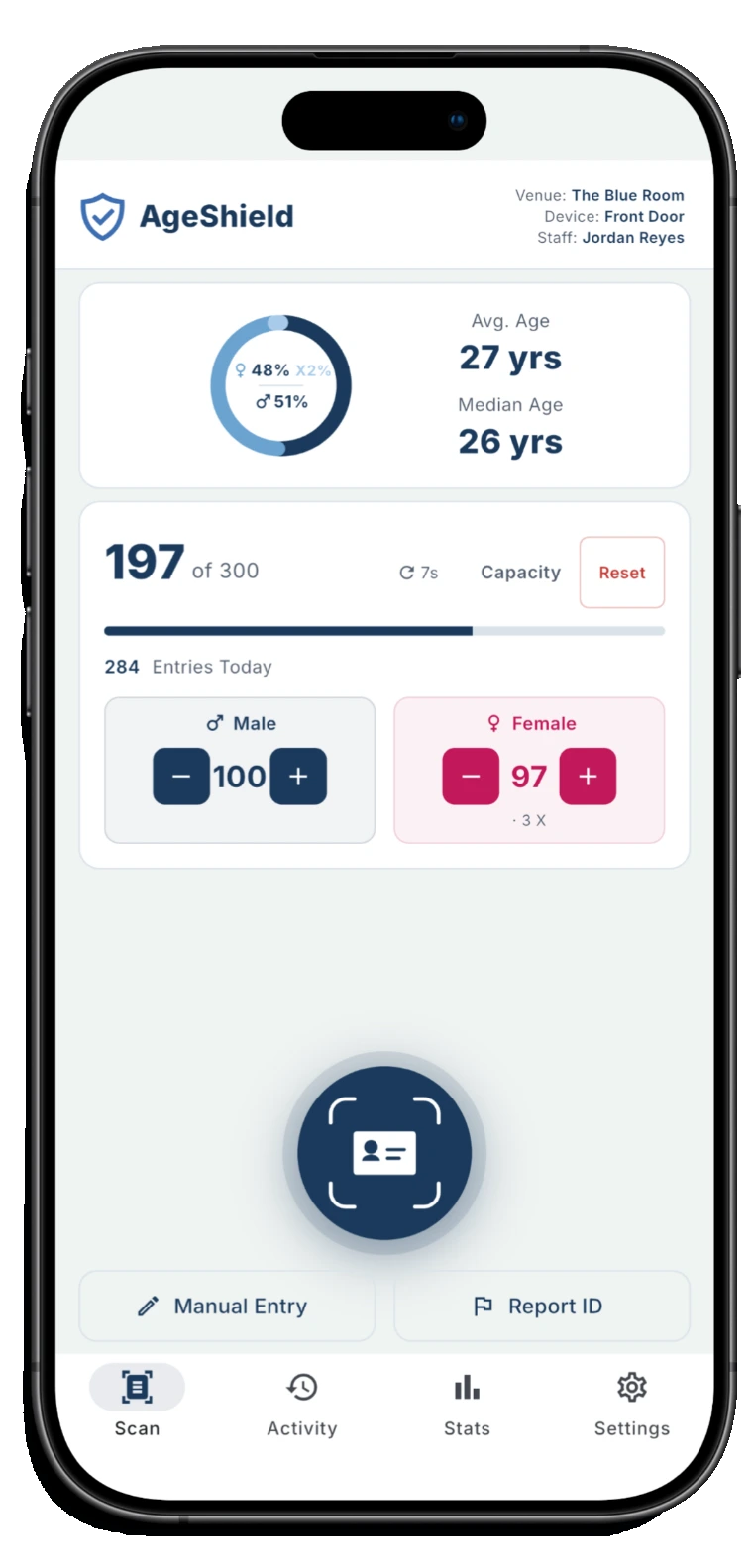
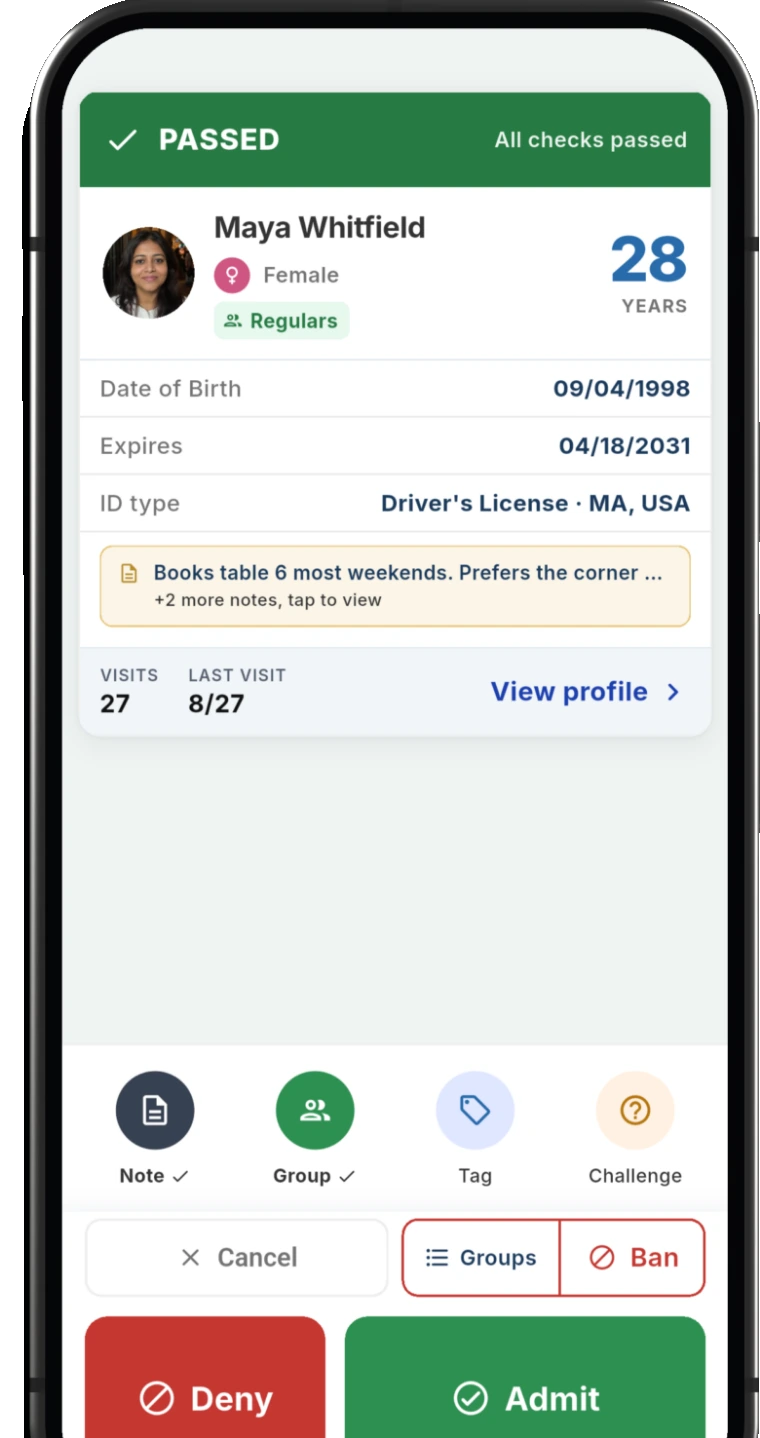
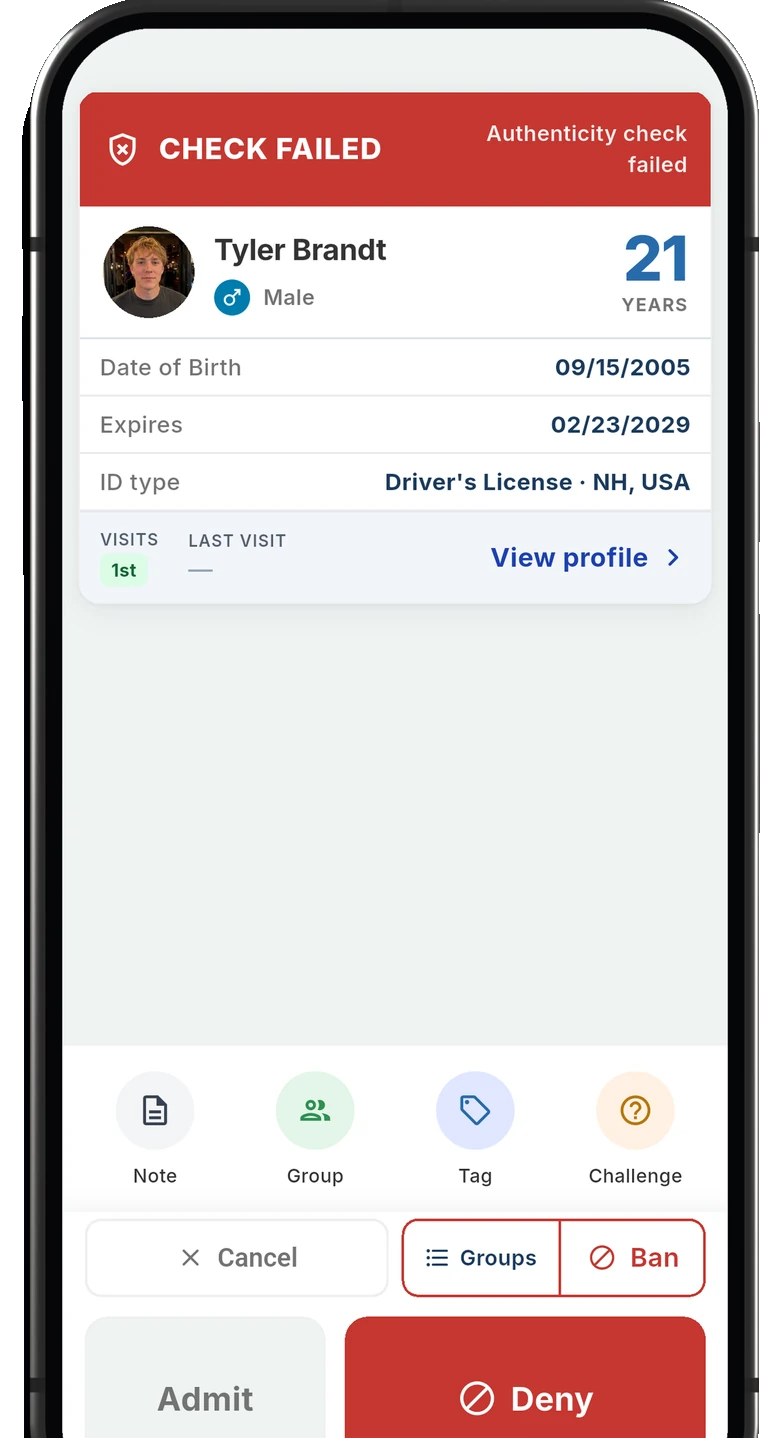
Every scan creates a visit record of who scanned, when, the document type, the result and what staff decided, and owners and managers can export the audit log.
What a compliance check is
A compliance check is a test purchase. A person under 21 tries to buy alcohol while officers from the state alcohol agency or the local police supervise. States call it a compliance check, a minor decoy operation or a sting.
An investigative aide aged 18 to 20 attempts to purchase liquor or tobacco using their real ID. These aides are accompanied by LCB officers.
In Washington, California and Texas the decoy is not using a fake ID. California's decoys are under 20, carry their own ID or none and answer truthfully if asked their age. In a 2016 news release, TABC said the minor in a Texas sting must use their valid ID and may not lie about their age.
In California, once the sale is made, the officer in charge tries to have the decoy identify the seller face to face. The check tests whether staff ask for an ID and read the date of birth correctly, while how to spot a fake ID covers the other half of the job.
Washington State Liquor and Cannabis Board: Retail enforcementCalifornia ABC: Minor Decoy ProgramTABC: Results of back-to-school undercover operations (2016)TABC: Back-to-school undercover operations (2022)
What follows
In all three states, two cases can follow on separate tracks. The business faces an administrative case against its license, and the employee who made the sale can face a case of their own. In California and Texas that can be a criminal case brought by local prosecutors, while Washington's board can impose a civil penalty on the employee instead of a criminal citation.
In Washington the license case starts with a written notice that names the violation and the recommended penalty and sets a deadline to respond. TABC sends its notice by email, and in California ABC files an accusation that the licensee can contest at a hearing. Penalties climb with repeat violations in all three states. Washington counts them within two years and California within 36 months.
Washington's board and California's ABC can accept a payment in place of a short suspension, and in Texas the commission decides whether that option is offered for a sale to a minor. Washington's and California's penalty rules also weigh the circumstances: prior violations count against the business, while documented training and written policies can count for it.
WAC 314-29-005WAC 314-29-010WAC 314-29-015WAC 314-29-020Washington State Liquor and Cannabis Board: Violations and due processRCW 66.44.270California ABC: Disciplinary guidelinesCalifornia ABC: Frequently asked questions on the disciplinary processTABC: ViolationsTexas Alcoholic Beverage Code 106.13Texas Alcoholic Beverage Code 11.64
How it works in Washington, California and Texas
- State
- Washington
- First violation
- 5-day suspension or a $500 monetary option
- Repeat violations
- 7 days, then 30 days, then cancellation, within a two-year window
- After the notice
- 20 days to accept the penalty, ask for a settlement conference or ask for a hearing
- State
- California
- First violation
- 15-day suspension; ABC may accept a payment in place of a suspension of 15 days or less
- Repeat violations
- 25 days for a second within 36 months; revocation for a third
- After the notice
- An accusation that the licensee can contest at a hearing
- State
- Texas
- First violation
- Maximum: cancellation or a suspension of up to 90 days; the commission decides whether a civil penalty can replace a suspension
- Repeat violations
- Maximum: cancellation or up to six months for a second; cancellation or up to 12 months for a third within 36 months
- After the notice
- Accept a settlement offer, if one is made, in AIMS by the deadline in the notice email, or ask for a hearing
Washington and California figures are each agency's standard penalties, which it can raise or lower for aggravating or mitigating circumstances. Texas figures are the maximums the statute allows when the licensee is found, after notice and a hearing, to have sold with criminal negligence.
WAC 314-29-020WAC 314-29-010California ABC: Disciplinary guidelinesCalifornia ABC: Frequently asked questions on the disciplinary processTexas Alcoholic Beverage Code 106.13Texas Alcoholic Beverage Code 11.64TABC: Violations
Washington
A Liquor and Cannabis Board officer mails or delivers an administrative violation notice. The licensee has 20 days from receipt to accept the recommended penalty, ask in writing for a settlement conference or ask for a hearing. If nobody responds within 20 days, the recommended suspension goes into effect.
The employee's case is separate. Washington law makes selling alcohol to a person under 21 a gross misdemeanor, and the board can impose a civil penalty of up to $200 for a first violation instead of a criminal citation. A server who holds a mandatory alcohol server training permit can also face a 5-day permit suspension or a $200 monetary option for a first violation.
Mitigating circumstances that may result in fewer days of suspension and/or a lower monetary option may include demonstrated business policies and/or practices that reduce the risk of future violations.
The rule's examples are a signed acknowledgment of the business's alcohol policy on file for each employee and an employee training plan that includes annual training on liquor laws.
California
The Department of Alcoholic Beverage Control files an accusation against the license. The licensee is entitled to a public hearing before an administrative law judge and may be represented by a lawyer at its own expense. The seller can also be arrested and charged, in a case brought by local prosecutors.
For a retail licensee, a payment in place of a suspension of 15 days or less is called an offer in compromise. ABC can accept it when it finds the substitution would not harm public welfare and morals, and it equals half of the estimated gross alcohol sales for the suspension period. ABC's guidelines list documented training of the licensee and employees, and positive action by the licensee to correct a problem, among the mitigating factors.
Texas
TABC emails an administrative notice to the primary user on the business's account in AIMS, its online licensing system. The email states how many days the business has to act. If TABC offers a settlement, the business can accept it in AIMS and pay any civil penalty, or reject it and ask for a hearing before a judge from the State Office of Administrative Hearings. If nothing is done by the deadline, the case is set for a hearing.
The employee who sold can be charged with a Class A misdemeanor, which TABC lists as punishable by a fine of up to $4,000, up to a year in jail or both. TABC also puts a business with a public safety violation on a priority list for additional inspections over the next six months.
Two sections of the Texas Alcoholic Beverage Code deal with the employer's side. Section 106.14 says an employee's actions are not attributable to the employer if the employer requires its employees to attend a commission-approved seller training program, the employee actually attended one and the employer did not directly or indirectly encourage the violation. Section 106.13 lets the commission relax the suspension and cancellation rules if, at a hearing, the licensee shows to the commission's satisfaction that the violation could not reasonably have been prevented with reasonable care or that an employee acted without the licensee's knowledge.
Washington State Liquor and Cannabis Board: Violations and due processWAC 314-29-010RCW 66.44.270WAC 314-17-105WAC 314-29-015California ABC: Frequently asked questions on the disciplinary processCalifornia ABC: Disciplinary guidelinesCalifornia ABC: Minor Decoy ProgramTABC: ViolationsTABC: Underage drinkingTexas Alcoholic Beverage Code 106.13Texas Alcoholic Beverage Code 106.14
The first 30 days, step by step
The notice sets the real deadlines, so the order below bends around it. These are the steps owners commonly take in the first month.
Read the notice the day it arrives
Note the violation it names, the date and time of the sale, the proposed penalty and the deadline to respond. Put the deadline in the calendar of whoever handles the license, because in Washington, for example, a missed deadline means the recommended suspension takes effect.
Gather the records of that shift
Pull the schedule, who was on the door and the register, the time of the sale and the receipt, plus any scan or refusal records and the training records of everyone on shift. Security video is worth saving early, before the system records over it.
Hear the employee's account
A talk with the employee the same day, written down while it is fresh, can cover whether they asked for ID, what they saw and how busy the shift was. The employee may have a citation of their own, which runs separately from the license case.
Retrain the whole team
Retraining only the person who sold leaves the next shift where it was. Record the date, who attended and what it covered. California's guidelines list documented training and positive action to correct a problem among mitigating factors, and Washington's rule names an employee training plan.
Review the door or register routine
Look at when staff ask for ID, how they read the date of birth and what they do when a customer has none. A written routine that every employee signs, like the bar door policy template, turns the fix into something the next hire reads on day one.
Decide how to answer
With the records in hand, the choice is between accepting or settling and contesting the case at a hearing. In Washington the licensee can ask for a settlement conference, and TABC may offer a settlement before any hearing. At a California hearing the licensee may be represented by a lawyer at its own expense.
Mark the end of the look-back window
Note the date the violation leaves the repeat-violation window. In Texas, a business with a public safety violation also gets additional inspections over the next six months.
WAC 314-29-010WAC 314-29-015California ABC: Disciplinary guidelinesCalifornia ABC: Frequently asked questions on the disciplinary processTABC: Violations
What to keep on file afterwards
Keep one folder for the case: the notice, the response, any settlement or decision, proof of payment and the dates of any suspension. Add the retraining records, the signed policy and the employee's written account.
If the door scans IDs, the scan records for the shift belong there too. Every AgeShield scan creates a visit record of who scanned, when, the document type, the result and what staff decided. Visits show up in Scan Activity and the audit log in the hub, and owners and managers can export the audit log. How a scan works lists what each record holds.
Download the one-page checklist
After a compliance check: 30-day checklist
A one-page checklist for the month after a failed compliance check: the notice, the records, retraining and what to keep.
Common questions
Does the employee who sold to the decoy get charged too?
They can be, in a case separate from the license. In Texas the sale is a Class A misdemeanor and in California the seller can be arrested and charged. In Washington the board can impose a civil penalty on the employee in place of a criminal citation.
Can a bar pay a fine instead of serving a suspension?
In some cases. Washington's standard penalty for a first sale to a minor includes a $500 monetary option, and California's ABC may accept an offer in compromise in place of a suspension of 15 days or less. In Texas the commission decides whether a civil penalty can replace a suspension.
How long does a failed compliance check count against the license?
That depends on the state's look-back window. Washington counts violations within two years and California within 36 months. A later violation inside the window carries a heavier standard penalty.
Can a decoy lie about their age or use a fake ID?
Not in Washington, California or Texas. Washington's aides use their real ID, and California's decoys carry their own ID or none and answer truthfully about their age. In a 2016 news release, TABC said its minors must use their valid ID and may not lie about their age.
Sources
- Washington State Liquor and Cannabis Board: Retail enforcement
- California ABC: Minor Decoy Program
- TABC: Results of back-to-school undercover operations (2016)
- TABC: Back-to-school undercover operations (2022)
- WAC 314-29-005
- WAC 314-29-010
- WAC 314-29-015
- WAC 314-29-020
- Washington State Liquor and Cannabis Board: Violations and due process
- RCW 66.44.270
- California ABC: Disciplinary guidelines
- California ABC: Frequently asked questions on the disciplinary process
- TABC: Violations
- Texas Alcoholic Beverage Code 106.13
- Texas Alcoholic Beverage Code 11.64
- WAC 314-17-105
- TABC: Underage drinking
- Texas Alcoholic Beverage Code 106.14
This page is for informational purposes only and is not a substitute for professional legal advice. We research each rule and link its source, so you can check it against your own venue. Questions are welcome at support@ageshield.bar.
Questions after a compliance check?
Tell us what type of venue you run and we'll point you to the published rules we know of that may apply.