
Fake IDs
Spotting a fake California driver's license
Published November 3, 2026 · 14 sources linked
How do you spot a fake California driver's license?
Start with California's official guidance. The state's alcohol regulator names a laser-engraved tactile signature and date of birth among the security features an ID may contain, and a laser perforation on California cards. A minor's card is vertical with a red strip giving the year the holder turns 21, and cards issued since October 1, 2025 carry a new DMV design with a digital signature in a barcode on the back and no magnetic strip.
California cards at a glance
- Security features the alcohol regulator names
- A laser-engraved tactile signature, a laser-engraved tactile date of birth and a laser perforation
- Under-21 cards
- Vertical, with a red strip naming the year the holder turns 21
- Current design
- Issued since October 1, 2025, with a digital signature in a barcode on the back and no magnetic strip
- Older designs
- Valid until the expiration date printed on them
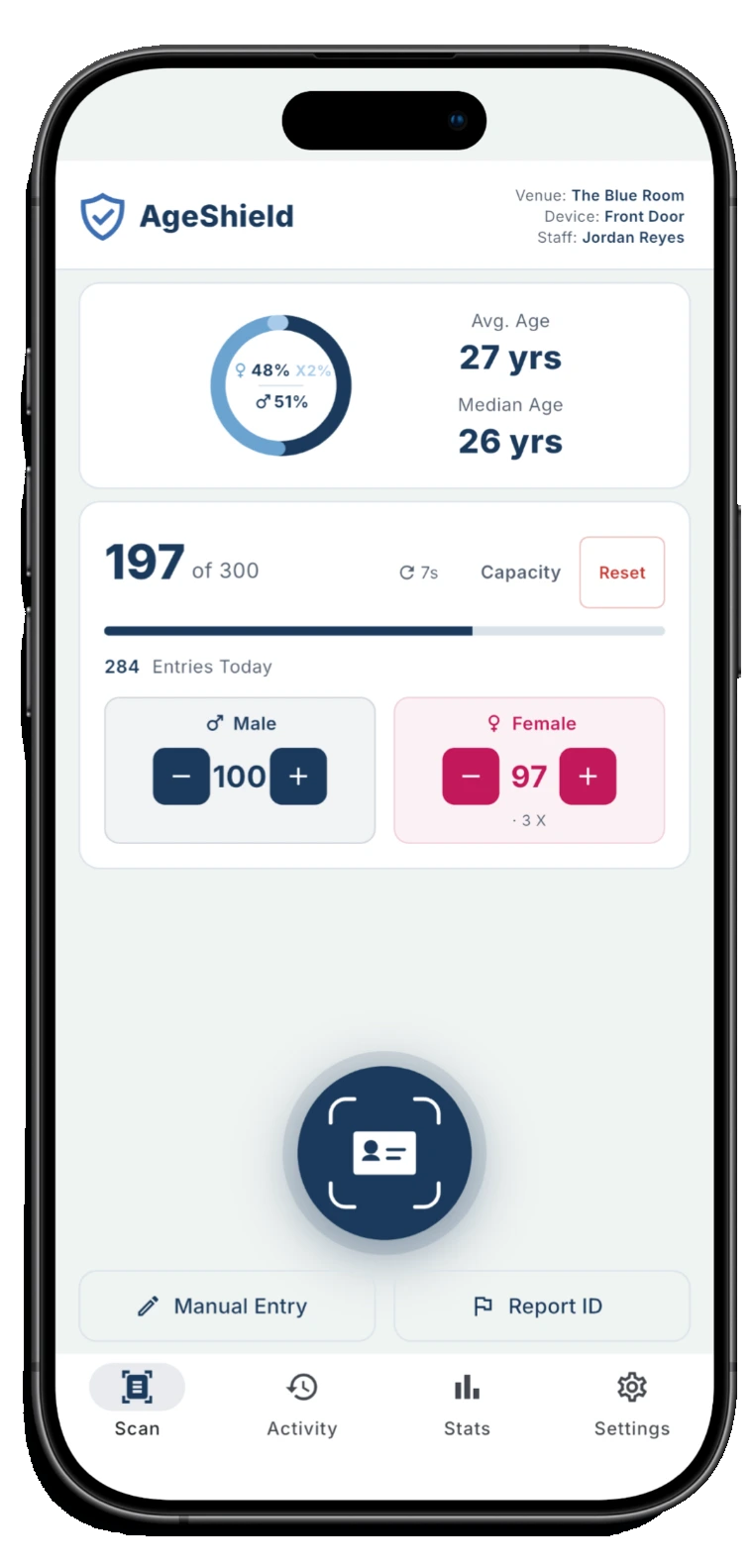
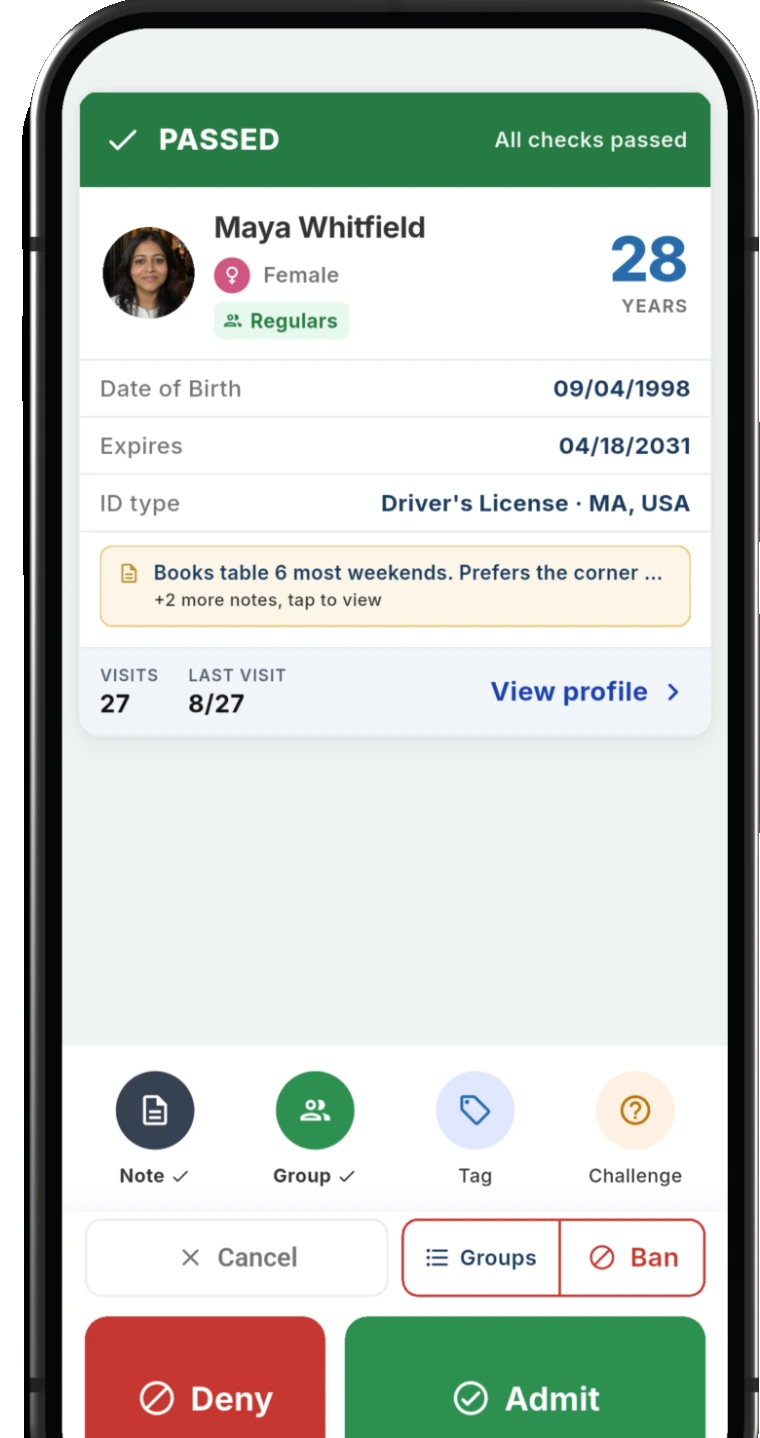
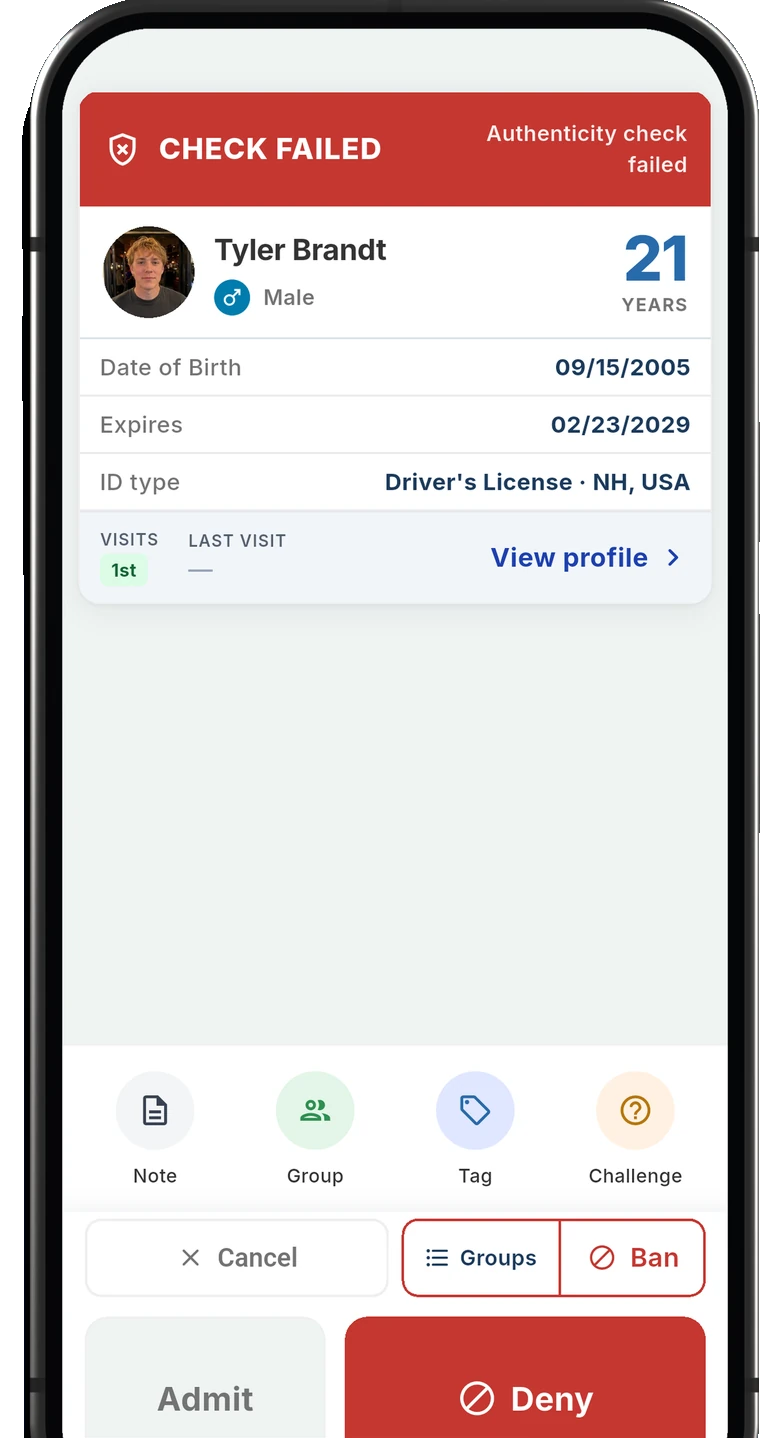
AgeShield ID Scanner
A barcode forgery check in every scan mode
Every mode checks a scanned US or Canadian license or state ID barcode for signs of forgery. Secure mode also reads the printed front and checks that it matches the barcode on the back.
The security features California publishes
Security features vary by state. The AAMVA card design standard calls for a common zoned layout and says each jurisdiction will choose several other security features. California's Vehicle Code tells the DMV to use processes that prevent, as near as possible, a license being altered or reproduced, or a photo being put on it, without ready detection.
California's Department of Alcoholic Beverage Control (ABC) names these in its guidance for licensees and their staff:
- A laser-engraved tactile signature
- A laser-engraved tactile date of birth
- A laser perforation on California cards
ABC presents the engraved signature and date of birth as security features an ID may contain, so a genuine card need not show both. ABC explains these checks on its Checking Identification page, with its points on a card's edges and printing. When a card is in doubt, ABC's questions include asking the holder to say their driver license or ID number and to confirm the personal details on the card. The general routine, how to compare a photo with a face and the rest of ABC's F-L-A-G method are in how to spot a fake ID.
California Department of Alcoholic Beverage Control, Checking IdentificationAAMVA DL/ID Card Design Standard (2025)Cal. Veh. Code 12811
Which California card designs are in circulation
On October 1, 2025, the DMV introduced a design featuring redwoods, poppies and the coastline, along with what it calls enhanced anti-counterfeit elements. It adds a digital security signature to one of the two barcodes on the back, and the new cards no longer have a magnetic strip. The DMV's announcement shows a sample of the new card.
Cards issued before then remain valid until their expiration date, and the DMV says there is no need to replace one early. Its release dates the previous new design and security features to 2010, with a change of look in 2018 when REAL ID began, so more than one genuine California design reaches the same door.
A REAL ID card is marked with a golden bear and star. A card that is not REAL ID reads "Federal Limits Apply", which the DMV says means it cannot be used to board domestic flights or enter secure federal facilities. Both are issued by the DMV. California's alcohol law counts a government document showing the person's name, date of birth, description and picture as evidence of age and identity. It does not mention REAL ID.
California DMV, new driver's license and ID card design, October 1, 2025California DMV, What Is REAL ID?California DMV, Digital SignatureCal. Bus. & Prof. Code 25660
Under-21 and under-18 California cards
A California minor's driver license or ID card is vertical, while an adult's is horizontal. ABC calls this a very important feature. The AAMVA standard makes the vertical format mandatory for US cards issued to people under 21.
ABC also points to a red strip on a minor's card that tells staff when the holder will be 21, with "age 21 in 2021" as its example. ABC's example gives a year, not a date, so during that year the date of birth decides whether the guest is 21 yet. ABC's advice is to do the math: in many decoy programs, it says, the server is cited for asking for ID but failing to work out the customer's age.
A license issued to someone under 18 also displays the words "provisional until age 18", as the Vehicle Code requires. What state alcohol laws say about a vertical card once its holder is 21 is in vertical IDs after 21, and how California's decoy operations work is in California minor decoy operations and Rule 141.
California Department of Alcoholic Beverage Control, Checking IdentificationAAMVA DL/ID Card Design Standard (2025)Cal. Veh. Code 12811
The digital signature on new California cards
The DMV describes the signature as a Verifiable Credential Barcode. Verifying it with a scan checks that the card is a real identity document issued by the DMV and that the data in the PDF417 barcode on the back has not been tampered with.
That signature covers only the barcode. The DMV says the text and photo on the card are not protected by the signature, and that it is important to make sure the information in the barcode matches the text and photo on the card. Checking the barcode and checking the printed front are two separate checks.
The DMV's own Credential Verifier checks the signature from the barcode with a phone camera. The DMV explains that an "Invalid Digital Signature" message means the security feature on the card does not match the data in the barcode or the signature itself has been corrupted, and it asks a cardholder who believes that is an error to bring the card to a field office.
California DMV, Digital SignatureCalifornia DMV, Verifying Digital Signatures on California DL/ID Documents (December 2025)
What California law says about fake IDs
California reaches a fake ID in two codes. Its alcohol law covers the person under 21 who shows one and what a licensee may do about it, and its Vehicle Code covers any fake or altered license or ID card, whoever carries it.
- Who
- A person under 21 who uses one
- What the law says
- Showing a licensee or staff an ID that is false, fraudulent or not the person's own to get alcohol, or possessing a false ID, is a misdemeanor. The penalty is a fine of at least $250, 24 to 32 hours of community service or a mix of the two, and up to $500 or 36 to 48 hours for a second offense.
- Who
- Anyone, whatever their age
- What the law says
- It is unlawful to display or possess a fictitious, fraudulently altered or fraudulently obtained driver's license or ID card, to lend one's own license or ID card to someone else or to show one issued to someone else as one's own. Each is a misdemeanor.
- Who
- The licensee and staff
- What the law says
- They may refuse to sell or serve anyone who cannot show adequate written evidence that they are over 21. They may seize an ID that shows the person is under 21 or that is false, with a receipt to the person and the ID given to the local law enforcement agency within 24 hours. Deciding not to seize an ID creates no civil or criminal liability.
- Who
- The licensee's defense
- What the law says
- Asking for, being shown and relying on a qualifying ID is a defense in a criminal case and in a proceeding against the license. Since January 1, 2026, a barcode or magnetic strip scan that fails to catch a false ID is to be considered evidence in those cases, if the ID was a qualifying one, was physically inspected, seemed genuine and matched the customer.
Selling or serving alcohol to anyone under 21 is itself a misdemeanor in California.
A licensee, or his or her agent or employee, may seize any identification presented by a person that shows the person to be under the age of 21 years or that is false, so long as a receipt is given to the person from whom the identification is seized and the seized identification is given within 24 hours of seizure to the local law enforcement agency that has jurisdiction over the licensed premises.
ABC's own steps for a seizure, and what other states allow, are in can a bar keep a fake ID?. California's ID scanning laws cover scanning and keeping ID data.
Where an ID scan fits on a California card
An AgeShield scan checks a scanned US or Canadian license or state ID barcode for signs of forgery in every mode, including California cards. In Secure mode the app also reads the printed front and compares it with the barcode, so an edited birth date, expiry or ID number does not match. Comparing the photo with the guest's face stays with staff.
The forgery check reads the card, not DMV records. A flag describes what the scan observed and is not proof that an ID is fake, and a clean result is not proof that one is real, so ABC's checks of the card in hand keep their place. In Fast mode, a license scanned from the front only has no barcode to check.
Four emails a year
What changed in ID law, before it takes effect
Many state rules on IDs and age checks take effect on January 1 or July 1. Each quarter we send one short summary of the changes we found, with the source for every line, starting with the states you pick.
Common questions
What security features does California's alcohol regulator name?
California's alcohol regulator names a laser-engraved tactile signature and a laser-engraved tactile date of birth among the security features an ID may contain, and a laser perforation on California cards. Its Checking Identification page describes how staff check them, along with a card's edges and printing.
Does a California under-21 license show when the holder turns 21?
Yes. The state's alcohol regulator says a minor's card has a red strip that tells you when the holder will be 21, such as "age 21 in 2021", and the card is vertical. Its example gives a year, so during that year the date of birth decides.
Are older California licenses still valid after the 2025 redesign?
Yes. The DMV says cards issued before the new design rolled out on October 1, 2025 remain valid until their expiration date, and that a card issued before the digital signature was added can still be used while it is valid.
What does "Federal Limits Apply" mean on a California license?
It marks a card that is not REAL ID. The DMV says such a card cannot be used to board domestic flights or enter secure federal facilities such as military bases. California's alcohol law counts a government document showing the person's name, date of birth, description and picture as evidence of age and identity. It does not mention REAL ID.
Can a California bar take a fake ID?
California law lets a licensee or staff seize an ID that shows the person is under 21 or that is false, as long as the person gets a receipt and the ID goes to the local law enforcement agency within 24 hours. Deciding not to seize an ID creates no civil or criminal liability.
What is the penalty for using a fake ID at a California bar?
For someone under 21 who shows a false ID or one that is not their own to get alcohol, it is a misdemeanor with a fine of at least $250, 24 to 32 hours of community service or both. The Vehicle Code separately makes it a misdemeanor to display or possess a fictitious or fraudulently altered license or ID card.
Sources
- California Department of Alcoholic Beverage Control, Checking Identification
- AAMVA DL/ID Card Design Standard (2025)
- Cal. Veh. Code 12811
- California DMV, new driver's license and ID card design, October 1, 2025
- California DMV, What Is REAL ID?
- California DMV, Digital Signature
- Cal. Bus. & Prof. Code 25660
- California DMV, Verifying Digital Signatures on California DL/ID Documents (December 2025)
- Cal. Bus. & Prof. Code 25658
- Cal. Bus. & Prof. Code 25659
- Cal. Bus. & Prof. Code 25661
- Cal. Veh. Code 13004
- Cal. Veh. Code 14610
- Cal. Veh. Code 40000.11
This page is for informational purposes only and is not a substitute for professional legal advice. We research each rule and link its source, so you can check it against your own venue. Questions are welcome at support@ageshield.bar.
Still unsure what California law says about IDs at your door?
Tell us what type of venue you run and we'll point you to the published rules we know of that may apply.