
Tobacco and vape
What happens in an FDA tobacco compliance check?
Published October 23, 2026 · 15 sources linked
The short answer
In an undercover buy, an underage purchaser working with an FDA-commissioned inspector tries to buy a tobacco or vape product, and neither of them says who they are. The first time an inspection finds a violation, FDA generally sends a warning letter and asks for a written reply within 15 working days. Later violations at the same store can bring civil money penalties that rise with each one, and five repeated violations within 36 months can bring an order to stop selling tobacco.
The federal process at a glance
- Who runs the checks
- FDA-commissioned inspectors from states, tribes, contractors or FDA itself
- Kinds of inspection
- Undercover buys, and advertising and labeling inspections
- After a first violation
- A warning letter, with a written reply asked for within 15 working days
- After later violations
- Rising civil money penalties, then possibly a no-tobacco-sale order
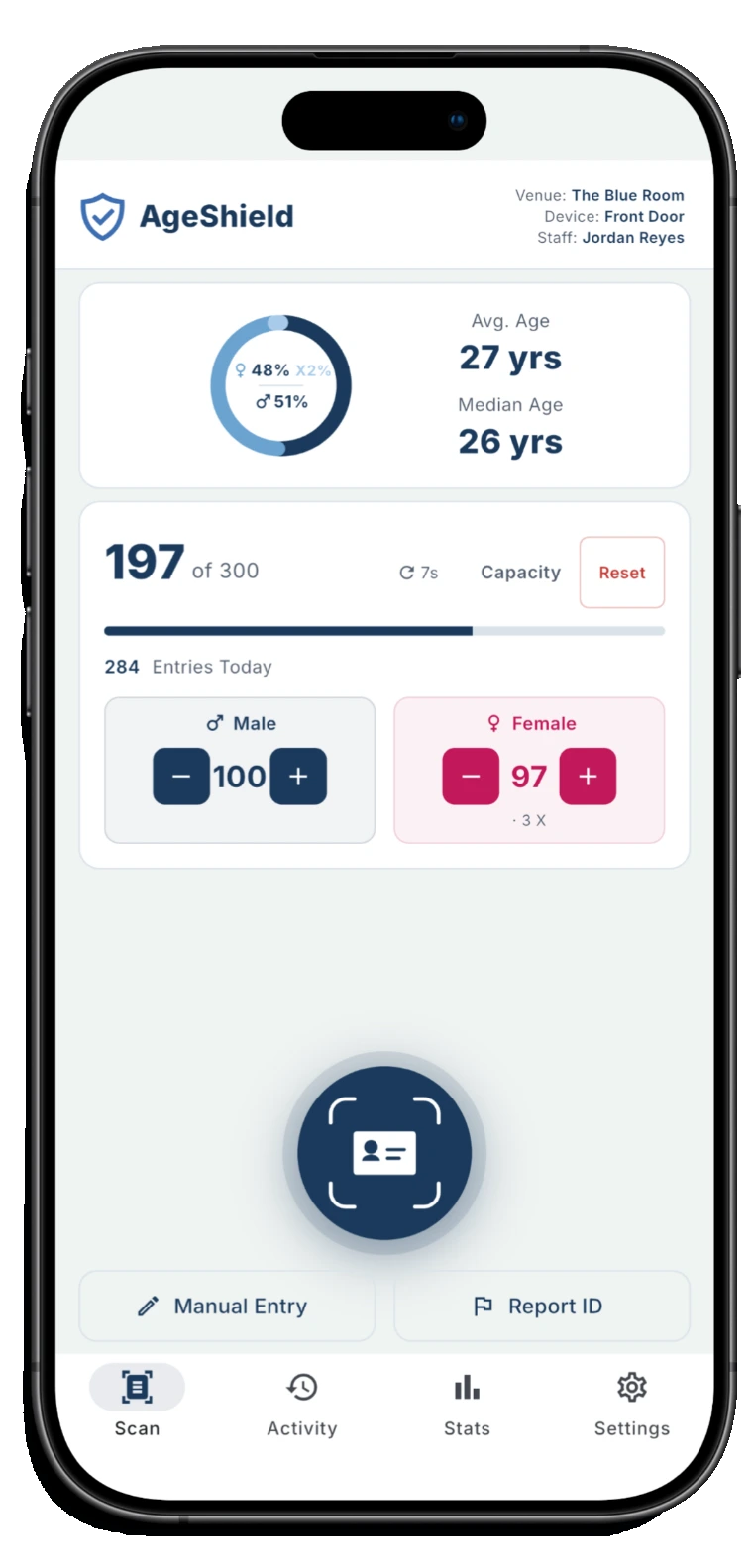
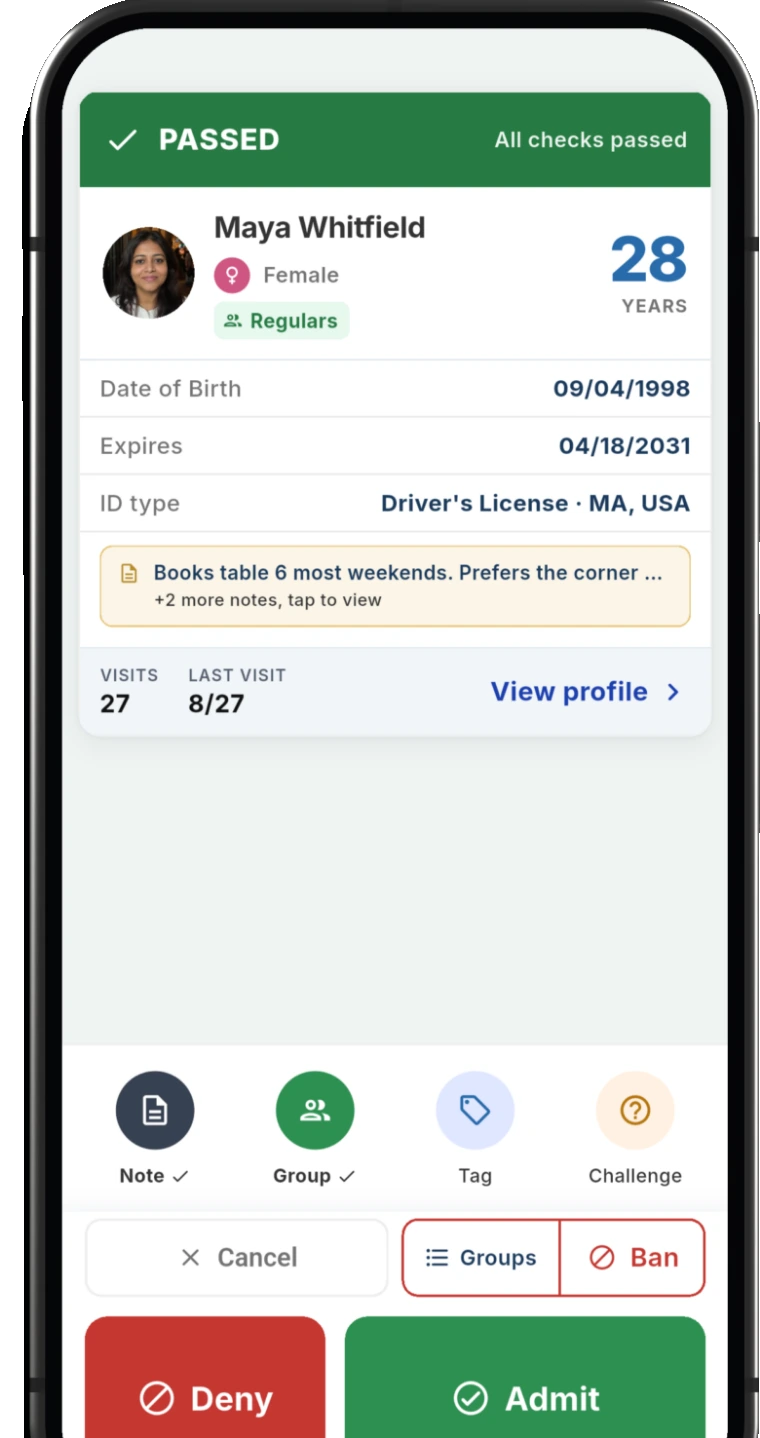
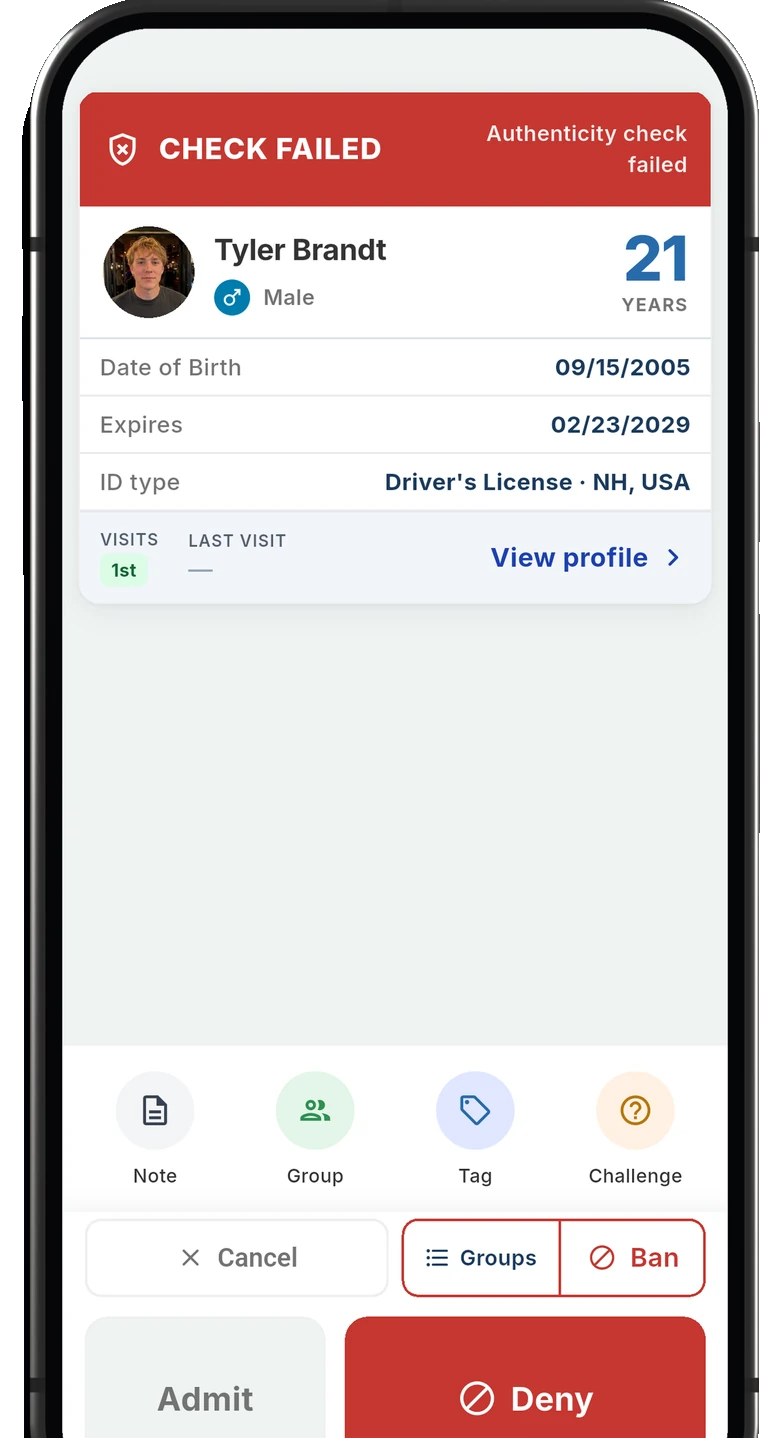
AgeShield ID Scanner
A record of every scan at the counter
The app checks the date of birth against your store's minimum age, which starts at 21. Every scan creates a visit record of who scanned, when, the document type, the result and what staff decided.
Who runs FDA's tobacco checks
FDA-commissioned inspectors carry out FDA's compliance check inspections of tobacco and vape retailers. They work for state agencies, tribes or contractors under FDA contracts, or for FDA itself. A complaint from the public can also lead to an inspection.
A state can also penalize the same sale under its own law, and FDA weighs any penalty already paid to a state for the same violation when it sets its own.
FDA, Tobacco Retail Inspection ContractsFDA, Help the FDA Prevent the Sale of Tobacco Products to Young PeopleTobacco Control Act, section 103 (FDA)
The undercover buy
In an undercover buy inspection, an underage purchaser tries to buy a tobacco product while an FDA-commissioned inspector supervises. The store is not told that an inspection is under way, and neither the purchaser nor the inspector identifies themselves. The inspector collects evidence and reports any potential violation to FDA.
The buy tests the two federal age rules at the counter: no sale to anyone under 21, and a photo ID check for every buyer under 30, as the under-30 ID rule explains. At a follow-up inspection, a sale made without an ID check can count as two violations, one for the sale and one for the missing check.
When the purchaser manages to buy, FDA sends the store a Notice of Compliance Check Inspection shortly afterwards. It gives the date and approximate time and, where known, describes the employee who made the sale. FDA decides whether there was a violation after reviewing the evidence.
FDA, Advisory and Enforcement Actions Against Industry for Selling Tobacco Products to Underage PurchasersFDA guidance, Civil Money Penalties and No-Tobacco-Sale Orders for Tobacco Retailers: Responses to Frequently Asked Questions, December 2016 (PDF)21 CFR 1140.14, Additional responsibilities of retailers (eCFR)
The advertising and labeling inspection
The second kind of inspection uses no underage purchaser. Inspectors check the store against the federal rules other than the age and ID rules, and they generally give the retailer a Notice of Inspection, Form FDA 482. After a warning letter, FDA's unannounced follow-up comes in two parts, usually on different days: one of each kind.
Those rules include no single cigarettes, no free samples and no vending machines or self-service displays of cigarettes and smokeless tobacco where anyone under 21 is present or allowed in. Selling a tobacco product without the marketing authorization the law requires is also a violation, one that FDA's guidance treats as especially serious.
FDA guidance, Civil Money Penalties and No-Tobacco-Sale Orders for Tobacco Retailers: Responses to Frequently Asked Questions, December 2016 (PDF)FDA guidance, Civil Money Penalties and No-Tobacco-Sale Orders for Tobacco Retailers, August 2023 (PDF)21 CFR 1140.14, Additional responsibilities of retailers (eCFR)21 CFR 1140.16, Conditions of manufacture, sale, and distribution (eCFR)FDA, Help the FDA Prevent the Sale of Tobacco Products to Young People
What follows a violation
The warning letter
The first time FDA finds a violation at a store, it generally sends a warning letter rather than seeking a penalty. The letter names the violations, the inspection date and the evidence, asks for a written reply within 15 working days and warns that enforcement can follow without further notice. Warning letters to stores are public: FDA lists them in its compliance check database.
Civil money penalties
If a follow-up or later inspection finds a violation, FDA generally files a complaint seeking a civil money penalty. The maximum rises with each violation counted within set windows. FDA counts one violation from the first inspection, however many the warning letter listed, and generally every violation found after that.
- Violations counted
- 1
- Within
- Any period
- Maximum penalty
- $0, with a warning letter
- Violations counted
- 2
- Within
- 12 months
- Maximum penalty
- $365
- Violations counted
- 3
- Within
- 24 months
- Maximum penalty
- $727
- Violations counted
- 4
- Within
- 24 months
- Maximum penalty
- $2,920
- Violations counted
- 5
- Within
- 36 months
- Maximum penalty
- $7,300
- Violations counted
- 6 or more
- Within
- 48 months
- Maximum penalty
- $14,602
Amounts from the HHS inflation adjustment published on January 28, 2026, which FDA's enforcement page also lists. HHS is required to adjust them every year. FDA applies this schedule to every retailer until it sets standards for approved training programs.
HHS, Annual Civil Monetary Penalties Inflation Adjustment, 91 FR 3665, January 28, 2026 (Federal Register)45 CFR 102.3, Penalty adjustment and table (eCFR)FDA, Advisory and Enforcement Actions Against Industry for Selling Tobacco Products to Underage PurchasersFDA guidance, Civil Money Penalties and No-Tobacco-Sale Orders for Tobacco Retailers, August 2023 (PDF)
The count does not reset after a clean inspection, and violations resolved by a settlement still count toward later cases. Each store location is counted separately.
No-tobacco-sale orders
Under the law, the FDA may pursue a no-tobacco-sale order (NTSO) complaint against retailers that have a total of five or more repeated violations of certain restrictions within 36 months.
An order bars the store from selling tobacco products for a set time or permanently. FDA counts a violation toward the five only when it repeats an earlier violation of the same requirement. Its guidance sets the longest orders it intends to seek: 30 calendar days for a store's first, six months for a second and permanent for a third.
A permanent order has to let the store ask, after a set period, for it to be changed or ended. Selling tobacco while an order is in force is itself a prohibited act.
FDA, Tobacco Retailer Warning Letters: OverviewFDA, Tobacco Retailer Warning LettersFDA guidance, Civil Money Penalties and No-Tobacco-Sale Orders for Tobacco Retailers, August 2023 (PDF)FDA guidance, Civil Money Penalties and No-Tobacco-Sale Orders for Tobacco Retailers: Responses to Frequently Asked Questions, December 2016 (PDF)FDA guidance, Determination of the Period Covered by a No-Tobacco-Sale Order and Compliance With an Order, March 2023 (PDF)FDA, Advisory and Enforcement Actions Against Industry for Selling Tobacco Products to Underage Purchasers
What FDA's compliance check database shows
FDA publishes outcomes in its Tobacco Compliance Check Outcomes database, which anyone can search by retailer name, city, state, ZIP code or decision date. It shows which inspected retailers received a warning letter, a civil money penalty or a no-tobacco-sale order and which had no observable violations.
Civil money penalty complaints against retailers are listed there too. A store's absence from the database does not mean it follows every federal rule, FDA notes.
FDA, Advisory and Enforcement Actions Against Industry for Selling Tobacco Products to Underage PurchasersFDA, Tobacco Retailer Warning Letters
How a retailer can respond
Use the inspection notice
The notice gives the date and approximate time of the sale, so a store can find the shift, hear the employee's account and keep that day's records. If the store scans IDs, each visit record shows who scanned, when, the result and what staff decided, as how a scan works explains.
Reply to a warning letter
FDA asks for a written reply by mail or email within 15 working days, setting out how the store will correct the violations and prevent new ones and giving current contact details.
Answer a complaint within 30 days
A complaint can be paid or agreed to without contest, or answered within 30 days of service. The answer admits or denies each allegation and states every defense and why the penalty should be lower. An allegation not denied counts as admitted.
Ask early for more time
A request for more time has to be filed within the same 30 days. An administrative law judge can grant up to 30 more days for good cause.
Settle or go to a hearing
An answer counts as a request for a hearing, which the store can ask to hold by telephone or at the nearest FDA office. The answer can also ask for settlement talks with FDA, and a settlement means acknowledging the violations.
A store that misses the 30-day deadline loses its hearing. The judge then treats the facts in the complaint as true and imposes the amount sought or the legal maximum, whichever is smaller, unless the store shows that extraordinary circumstances kept it from answering.
In setting a penalty, FDA and the judge weigh factors that include the store's history, its ability to pay, how far it was at fault, any penalty already paid to a state and whether it runs an employee training program.
FDA guidance, Civil Money Penalties and No-Tobacco-Sale Orders for Tobacco Retailers: Responses to Frequently Asked Questions, December 2016 (PDF)FDA, Tobacco Retailer Warning Letters: Overview21 CFR 17.9, Answer (eCFR)21 CFR 17.11, Default upon failure to file an answer (eCFR)FDA guidance, Civil Money Penalties and No-Tobacco-Sale Orders for Tobacco Retailers, August 2023 (PDF)
The steps the law names for preventing underage sales
The Tobacco Control Act gives four examples of the effective steps a retailer can take against underage sales. A sale made in good faith on a false government-issued photo ID that shows a date of birth is not a violation when the retailer has taken such steps, and FDA weighs them in deciding whether to seek a no-tobacco-sale order and for how long.
The act's four examples:
- Adopting and enforcing a written policy against sales to minors
- Telling employees about all the laws that apply
- Setting disciplinary sanctions for employees who do not follow them
- Requiring employees to verify age by photo ID or an electronic scanning device
The federal ID rule itself asks for a photo ID that shows the date of birth and does not mention scanners. What staff can check on a doubtful card is covered in how to spot a fake ID.
Tobacco Control Act, section 103 (FDA)FDA guidance, Civil Money Penalties and No-Tobacco-Sale Orders for Tobacco Retailers, August 2023 (PDF)FDA guidance, Determination of the Period Covered by a No-Tobacco-Sale Order and Compliance With an Order, March 2023 (PDF)21 CFR 1140.14, Additional responsibilities of retailers (eCFR)
AgeShield ID Scanner
Where a phone ID scanner fits at the counter
AgeShield ID Scanner runs on the iPhones and Android phones staff already carry, with three devices on all plans. A scan checks the date of birth against the store's minimum age, which starts at 21, flags an expired ID and checks the barcode on US and Canadian licenses and state IDs for signs of forgery. Staff still make the call, and every scan creates a visit record of who scanned, when, the result and what staff decided.
Common questions
Does FDA tell a store before a tobacco compliance check?
Not before an undercover buy. The store is not told, and neither the underage purchaser nor the inspector says who they are. In an advertising and labeling inspection, inspectors generally present a Notice of Inspection. Follow-up inspections after a warning letter come without further notice.
How much is an FDA fine for selling tobacco to someone under 21?
A first violation brings a warning letter and no penalty. After that the maximum rises with each violation FDA counts, from $365 for a second violation within 12 months to $14,602 for a sixth or later within 48 months, in the amounts HHS published on January 28, 2026. HHS is required to adjust the amounts for inflation every year.
Can FDA stop a store from selling tobacco?
Yes. After five or more repeated violations at one store within 36 months, FDA can seek a no-tobacco-sale order. Its guidance sets the longest order it intends to seek at 30 calendar days for a first order, six months for a second and permanent for a third.
Can a store appeal an FDA civil money penalty?
Yes. A store that answers the complaint in time gets a hearing before an administrative law judge, and it can appeal the judge's decision to the Departmental Appeals Board at the Department of Health and Human Services within 30 days. In a no-tobacco-sale order case, the store can also ask for the hearing at a federal, state or county facility within 100 miles, where one is available.
Is a sale to someone with a fake ID a federal violation?
Not if the store relied in good faith on a false government-issued photo ID showing a date of birth and had taken effective steps to prevent underage sales. The Tobacco Control Act gives a written policy, telling staff the law, disciplinary sanctions and requiring age checks by photo ID or an electronic scanning device as examples.
Sources
- FDA, Tobacco Retail Inspection Contracts
- FDA, Help the FDA Prevent the Sale of Tobacco Products to Young People
- Tobacco Control Act, section 103 (FDA)
- FDA, Advisory and Enforcement Actions Against Industry for Selling Tobacco Products to Underage Purchasers
- FDA guidance, Civil Money Penalties and No-Tobacco-Sale Orders for Tobacco Retailers: Responses to Frequently Asked Questions, December 2016 (PDF)
- 21 CFR 1140.14, Additional responsibilities of retailers (eCFR)
- FDA guidance, Civil Money Penalties and No-Tobacco-Sale Orders for Tobacco Retailers, August 2023 (PDF)
- 21 CFR 1140.16, Conditions of manufacture, sale, and distribution (eCFR)
- FDA, Tobacco Retailer Warning Letters: Overview
- FDA, Tobacco Retailer Warning Letters
- FDA guidance, Determination of the Period Covered by a No-Tobacco-Sale Order and Compliance With an Order, March 2023 (PDF)
- HHS, Annual Civil Monetary Penalties Inflation Adjustment, 91 FR 3665, January 28, 2026 (Federal Register)
- 45 CFR 102.3, Penalty adjustment and table (eCFR)
- 21 CFR 17.9, Answer (eCFR)
- 21 CFR 17.11, Default upon failure to file an answer (eCFR)
This page is for informational purposes only and is not a substitute for professional legal advice. We research each rule and link its source, so you can check it against your own venue. Questions are welcome at support@ageshield.bar.
Questions about an FDA tobacco check?
Tell us what type of venue you run and we'll point you to the published rules we know of that may apply.