
Guide
Can a bar scan a military ID?
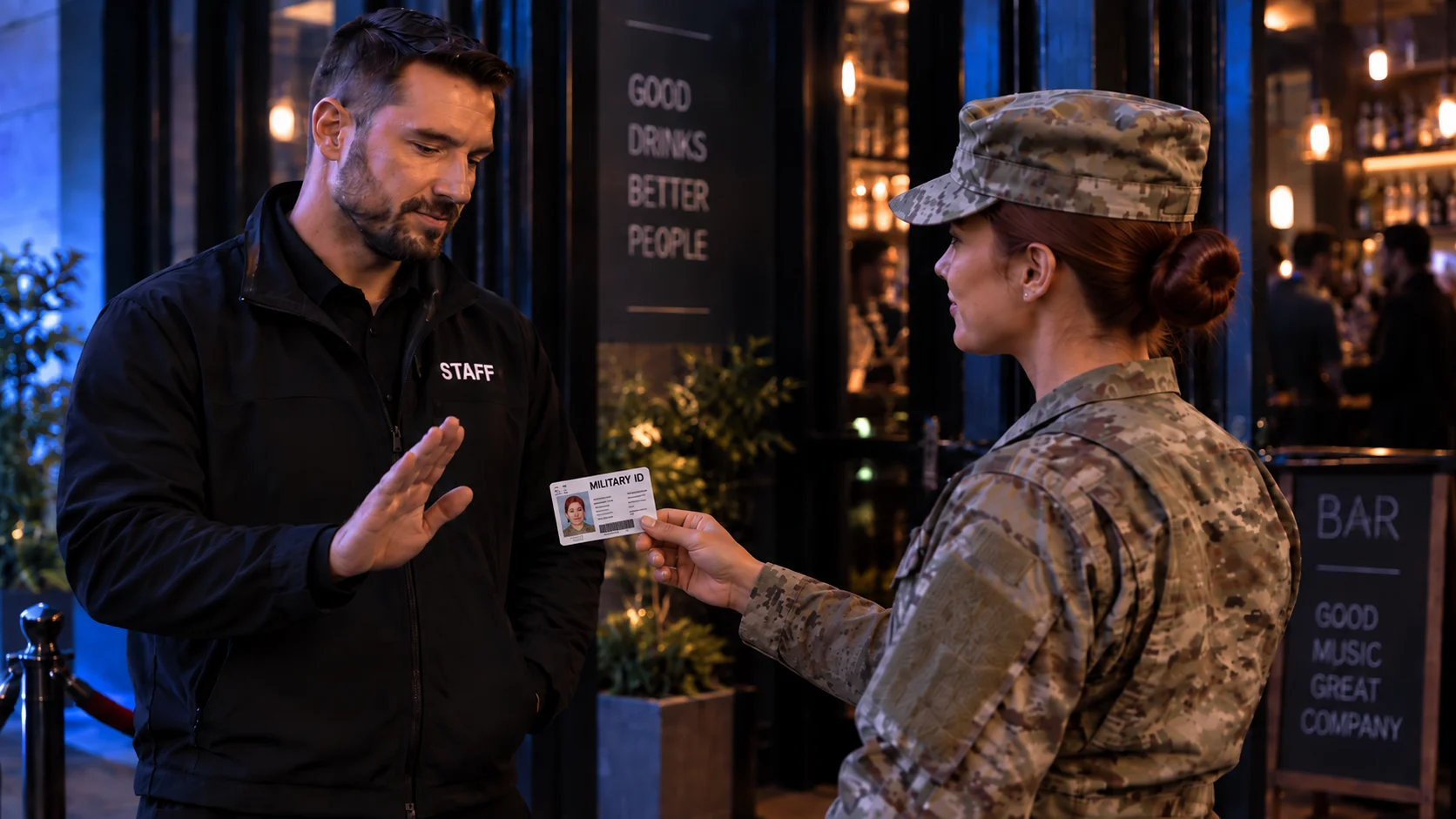
Short answer: no, and it is one of the few ID questions that is the same in all 50 states. Federal law restricts copying US government identification, and the published exceptions are for hospitals, police and benefits offices, not for a door. Here is what the rule actually says, and what your team can do instead.
What the rule says
The statute is 18 U.S. Code section 701. It covers anyone who photographs, prints or in any other manner makes an engraving, photograph, print or impression in the likeness of a US government identification card, except as authorized. The penalty is a fine, up to six months in prison, or both.
“Whoever manufactures, sells, or possesses any badge, identification card, or other insignia, of the design prescribed by the head of any department or agency of the United States for use by any officer or employee thereof, or any colorable imitation thereof, or photographs, prints, or in any other manner makes or executes any engraving, photograph, print, or impression in the likeness of any such badge, identification card, or other insignia, or any colorable imitation thereof, except as authorized under regulations made pursuant to law, shall be fined under this title or imprisoned not more than six months, or both.”
The Army puts it plainly: photocopying a US government ID card violates that section and is punishable by fine and imprisonment. The exceptions it lists are government agencies, police, medical providers confirming TRICARE eligibility, benefits administration and official purposes where no other form of verification exists. Serving a drink is not on that list. The Department of Defense rule behind it is DoD Instruction 1000.13.
Because this is federal, it does not change at a state line. A state that encourages electronic scanning, or offers venues protection for scanning a government ID, has not made this card scannable. The Army's summary is short and worth forwarding to whoever trains your door.
What to do at the door
A service member handing over a military ID is not trying to cause you a problem. Three things keep it quick and polite.
Looking is not copying
The rule is about reproducing the card. Your team can still take the card, look at the photo and the date of birth and make a decision, the way doors worked before scanners.
Ask for another ID
A driver's license, a state ID or a passport all scan normally. Most service members carry one, and asking for it is the simplest way out of the question.
Brief the door
Staff who scan everything by habit will scan this too. Tell them what to do before it comes up, so nobody is arguing about federal law at 11pm with a line outside.
Whether your venue accepts a military ID on sight, and what it records when it does, is your policy and your counsel's call. AgeShield does not give legal advice and has no view on how you run that part of your door.
If this came up at a door
If you serve or have served and a venue turned you away, or insisted on scanning your ID, write to us. We will send you the statute and the official guidance in a form you can hand to a manager, and we will talk to the venue if that helps. It costs us nothing and it usually settles the question.
Venue owners, the same goes for you. If you are not sure what your door should do when a military ID comes out, ask us and we will tell you what we know and where the line sits between us and your attorney.
Thank you for your service.
Why AgeShield will not scan one
AgeShield reads driver's licenses from any country, US state ID cards, US green cards and passports. Military IDs are deliberately not on that list, so the card simply does not read. There is no setting to turn it on.
We could have added them. The scanner engine supports them, and it would have made our comparison tables look better. The statute is written about copies, photographs and likenesses, and Department of Defense guidance tells organizations outside the Department not to scan or copy these cards at all. That was enough for us. We were not going to hand a venue that argument in exchange for one more row in a feature list.
The same thinking runs through the rest of the product. You choose what a scan keeps, down to storing no personal details at all, because the venue carries the consequences of that choice. See the privacy controls
Questions about military IDs at the door
Can a bar scan a military ID for age verification?
Federal law restricts reproducing US government identification, and the exceptions published by the Department of Defense are for government agencies, police, medical providers verifying TRICARE eligibility and benefits administration. A bar door is not among them. Checking the card by eye is a different thing from copying it. AgeShield does not accept military IDs, and we suggest asking for a driver's license, state ID or passport instead. This is not legal advice, so take your own.
Is that a state law or a federal one?
Federal. 18 U.S. Code section 701 applies across every state, so a state rule that encourages electronic scanning does not change it.
Does reading the barcode count as copying?
The statute talks about photographs, prints and impressions in the likeness of the card, so a photo or a photocopy is squarely in it. Whether reading a barcode and keeping the data falls inside that language is not settled. We decided the uncertainty was not ours to hand to a venue, so AgeShield does not read these cards at all.
What does AgeShield do when someone presents a military ID?
Nothing is captured. Military IDs are not in the list of documents the scanner accepts, so the card does not read. Staff handle it the way they would any ID the scanner does not take: look at it, ask for another document or follow whatever policy the venue has set.
Other ID scanners say they read military IDs. Are they wrong?
We are not going to say what is lawful for another company or another venue, and this page does not do that. Read the statute and the Department of Defense guidance, then decide with your own counsel what you want your door to do.
Sources
- 18 U.S. Code section 701, full text
- US Army: the law regarding photocopying CACs
- DoD Instruction 1000.13, the Department of Defense rule on identification cards
Read on 2026-09-15. This is general information about a federal statute and published guidance, not legal advice, and it is not a statement about what any other company or venue may do. For your venue, ask your local attorney.
Keep reading
Handle the IDs and edge cases that catch door staff out: fake IDs, state rules and privacy.
 GuideGuide
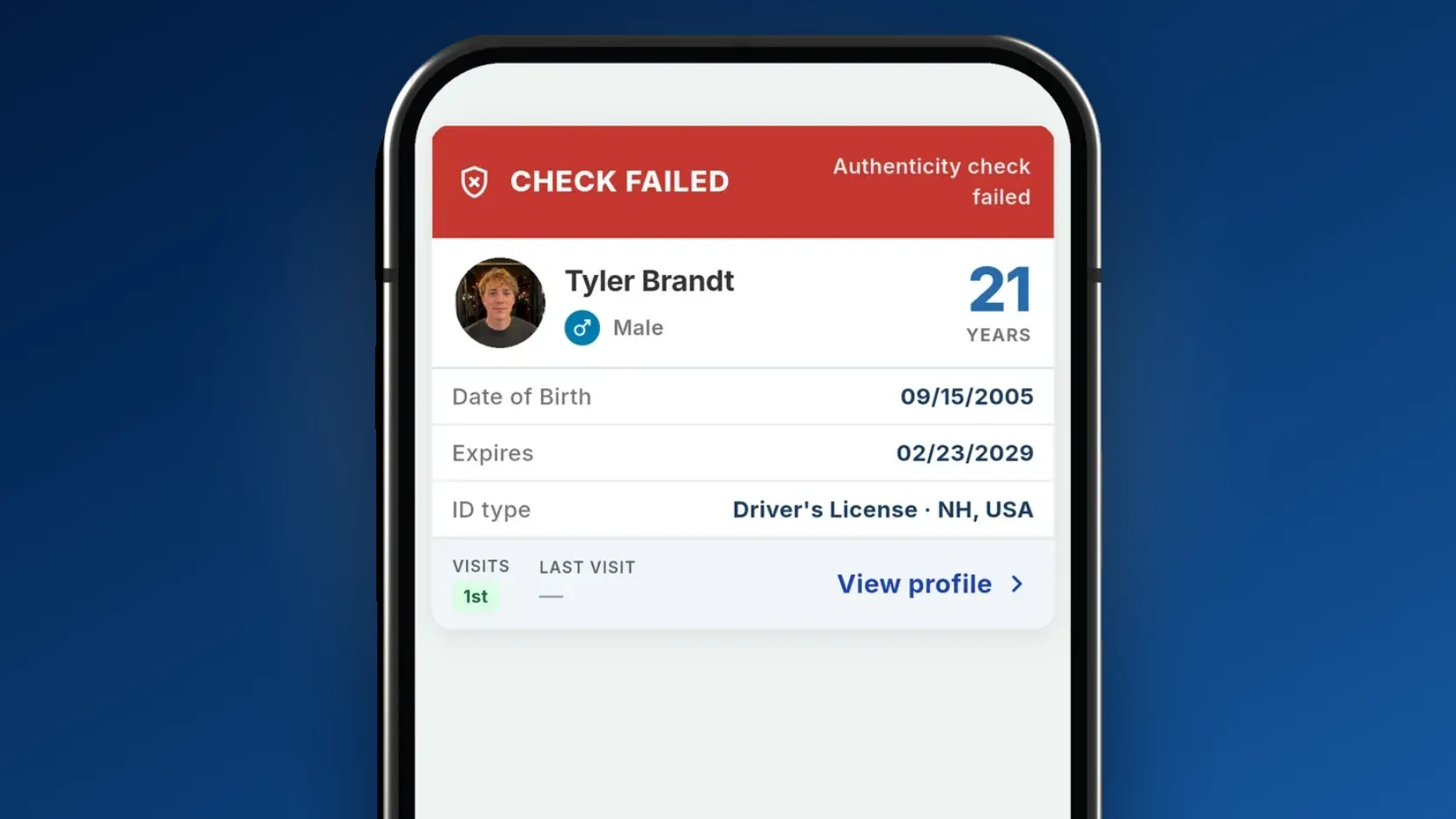
How to spot a fake ID
See what staff can spot by eye, then what a scanner can catch that they cannot.
 State lawState law
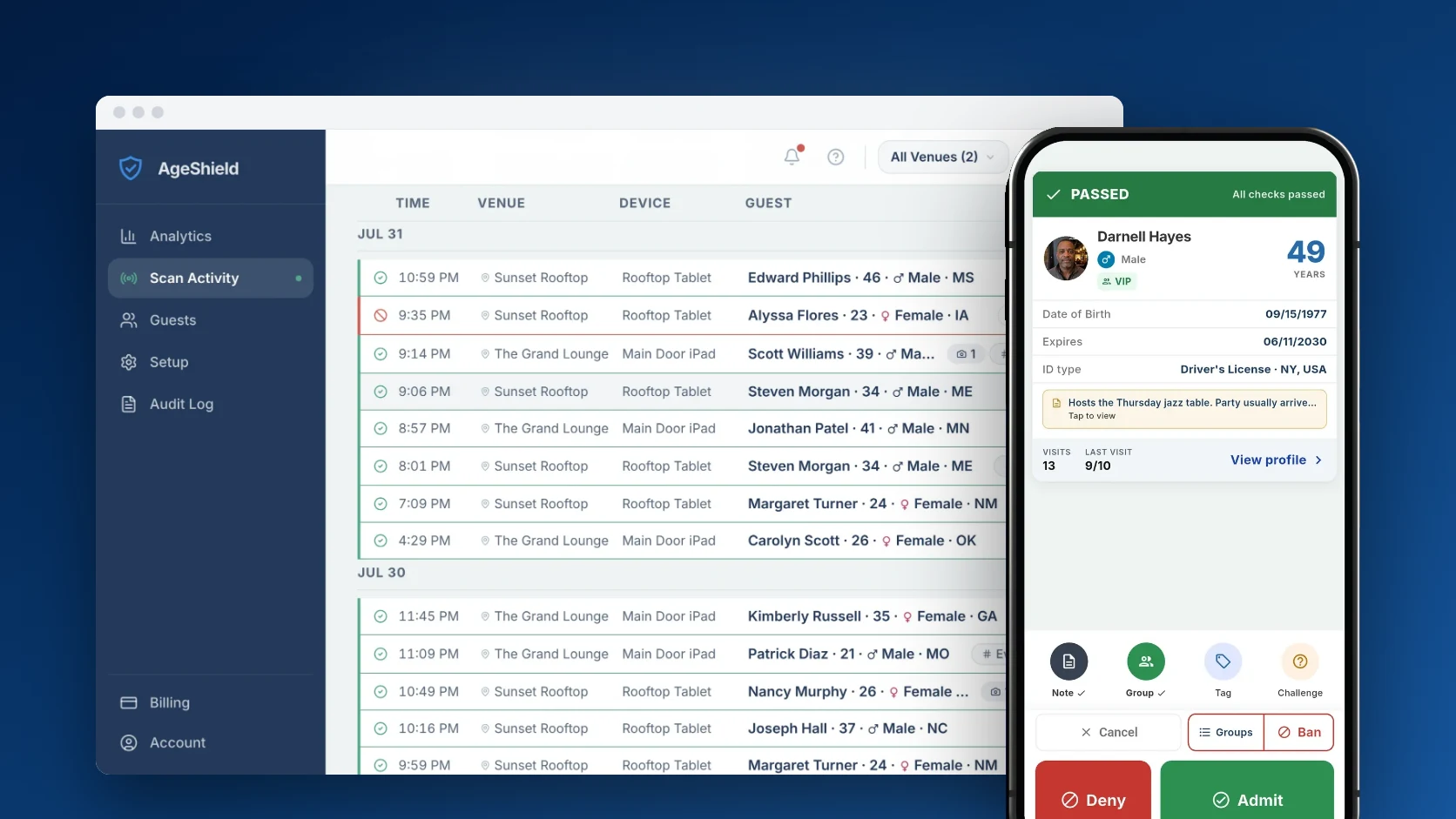
ID scanning laws by state
Check the rules that matter at the door: when to check ID, what you can keep and what protection applies.
 ProductProduct
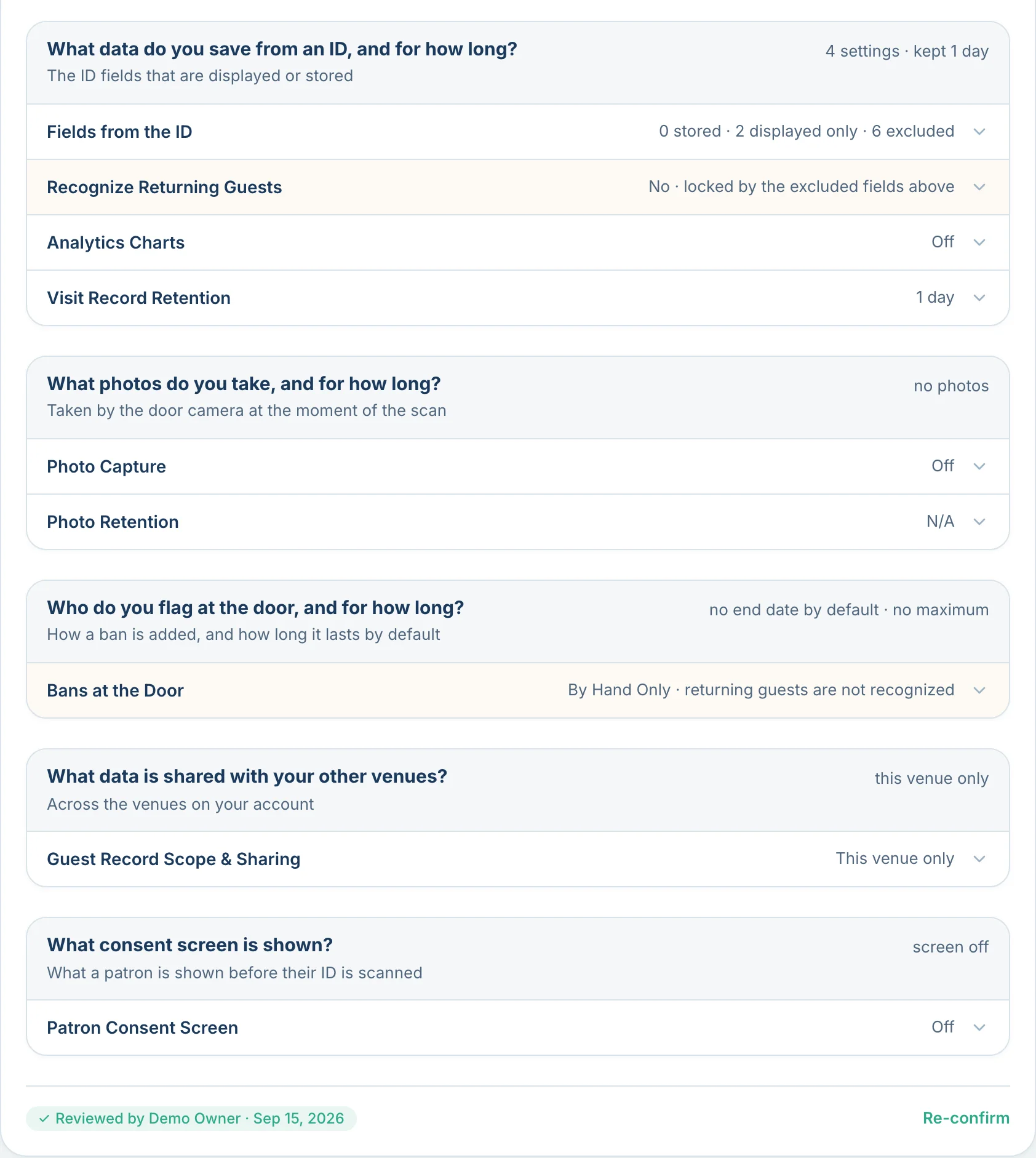
Privacy controls
Choose what you keep and for how long: ID fields, visit retention and tighter data collection.
An ID scanner that leaves the judgment calls to you
Three devices on every plan, a fake ID check that runs on the phone, and settings you control. The trial runs 14 days with Pro features.
Start your 14-day free trial